Loading...
Done


Mamma Mia! Here We Go Again – “When I Kissed the Teacher” (Lyric Video)
Details
21 Jan 2019 00:03:00


Невиди́мка — Ой мама не вернусь (Nevidimka – Oh Mother I Wont Come Back; Official Music Video)
Details
30 Jul 2019 00:03:00
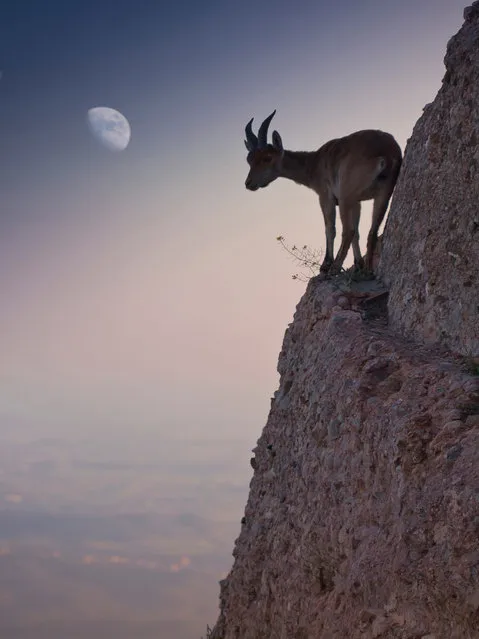
“For a bouquet of flowers”. Photographs made ​​in the last hours of the day. A goat is directed by a dangerous way to eat a small bouquet of flowers. Location: España, Barcelona, Montserrat. (Photo and caption by Renato Lopez Baldo/National Geographic Traveler Photo Contest)

“For a bouquet of flowers”. Photographs made ​​in the last hours of the day. A goat is directed by a dangerous way to eat a small bouquet of flowers. Location: España, Barcelona, Montserrat. (Photo and caption by Renato Lopez Baldo/National Geographic Traveler Photo Contest)

ATTENTION! All pictures are presented in high resolution. To see Hi-Res images – just TWICE click on any picture. In other words, click small picture – opens the BIG picture. Click BIG picture – opens VERY BIG picture.

Details
25 Jun 2013 12:51:00
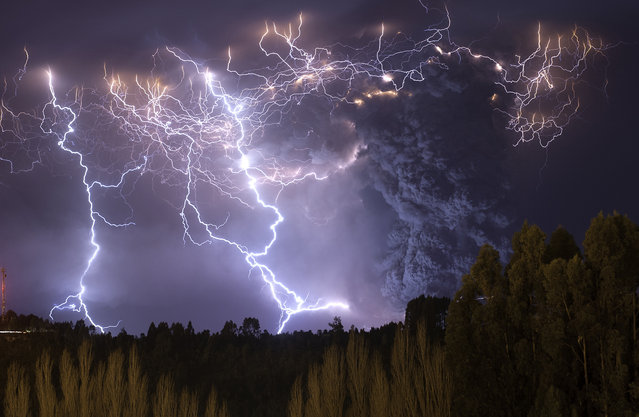
The eruption of Cordon Caulle began on June 4, 2011, located in the Region of Los Rios in Chile. For about 12 months, people and animals became accustomed to living with the daily fall of ash, which also caused problems in the air traffic in South America. The explosions and lightning during first days of the eruption could be seen from hundreds of miles around. This photograph was taken on the second night of eruption from the town of Lago Ranco. (Photo and caption by Francisco Negroni/National Geographic Traveler Photo Contest)

The eruption of Cordon Caulle began on June 4, 2011, located in the Region of Los Rios in Chile. For about 12 months, people and animals became accustomed to living with the daily fall of ash, which also caused problems in the air traffic in South America. The explosions and lightning during first days of the eruption could be seen from hundreds of miles around. This photograph was taken on the second night of eruption from the town of Lago Ranco. (Photo and caption by Francisco Negroni/National Geographic Traveler Photo Contest)

ATTENTION! All pictures are presented in high resolution. To see Hi-Res images – just TWICE click on any picture. In other words, click small picture – opens the BIG picture. Click BIG picture – opens VERY BIG picture.

Details
23 Jun 2013 11:24:00


Guiyu, China is known as the “Town of E-waste.” Thousands of its residents depend on processing electronic waste for a living. Guiyu receives its e-waste from China and from abroad, including places like Japan, Europe and America. Under Chinese law, most of the e-waste imported from overseas is illegal.
Details
01 Apr 2013 11:45:00
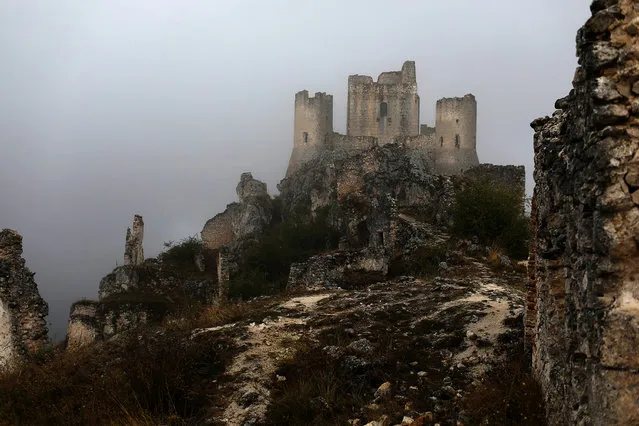
The ruins of a castle stand above the town of Rocca Calascio, close to Santo Stefano di Sessanio in the province of L'Aquila in Abruzzo, inside the national park of the Gran Sasso e Monti della Laga, Italy, September 7, 2016. (Photo by Siegfried Modola/Reuters)

The ruins of a castle stand above the town of Rocca Calascio, close to Santo Stefano di Sessanio in the province of L'Aquila in Abruzzo, inside the national park of the Gran Sasso e Monti della Laga, Italy, September 7, 2016. (Photo by Siegfried Modola/Reuters)
Details
06 Nov 2016 10:56:00
(L-R) Models Kylie Jenner and Kendall Jenner pose during the Universal, NBC, Focus Features, E! Entertainment Golden Globes After Party Sponsored by Chrysler held at the Beverly Hilton Hotel on January 8, 2017. (Photo by Christopher Polk/NBC/NBCU Photo Bank via Getty Images)

(L-R) Models Kylie Jenner and Kendall Jenner pose during the Universal, NBC, Focus Features, E! Entertainment Golden Globes After Party Sponsored by Chrysler held at the Beverly Hilton Hotel on January 8, 2017. (Photo by Christopher Polk/NBC/NBCU Photo Bank via Getty Images)
Details
10 Jan 2017 14:03:00
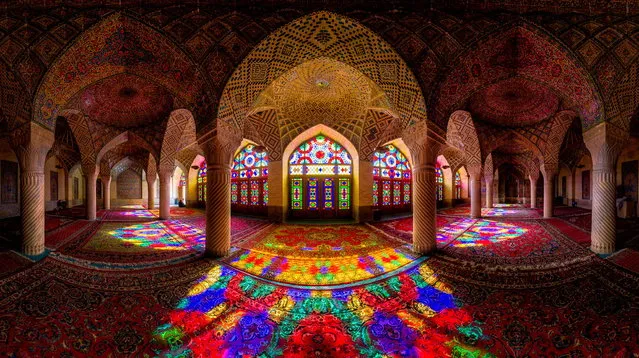
The Nasir Al-Mulk Mosque

The Nasīr al-Mulk Mosque or Pink Mosque is a traditional mosque in Shiraz, Iran, located in Goade-e-Araban place (near the famous Shah Cheragh mosque). The mosque was built during the Qājār era, and is still in use under protection by Nasir al Mulk's Endowment Foundation. It was built by the order of Mirza Hasan Ali Nasir al Molk, one of the lords of the Qajar Dynasty, in 1876 and was finished in 1888. The designers were Muhammad Hasan-e-Memar and Muhammad Reza Kashi Paz-e-Shirazi. The mosque extensively uses colored glass in its facade, and displays other traditional elements such as panj kāseh-i (five concaves) in its design, it is also named in popular culture as Pink Mosque due to the usage of beautiful pink color tiles for its interior design.
Details
26 Mar 2014 14:04:00