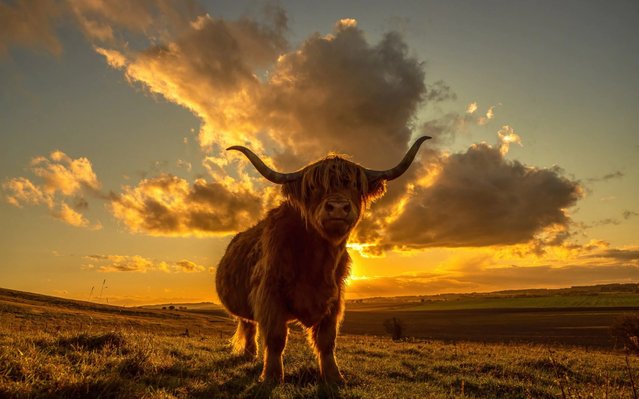
The Prince Albert Cairn, built in 1862 by Queen Victoria, is surrounded by snow and ice, near Balmoral, Aberdeenshire, Scotland, Friday November 22, 2024. (Photo by Jane Barlow/PA Wire via AP Photo)
English social media influencer Grace Keeling, aka GK Barry, won over jungle viewers on I'm A Celeb with her down-to-earth personality to finish in fifth place. Grace went from being a normal student to having more than 4 million followers on TikTok. (Photo by Mark Hayman)
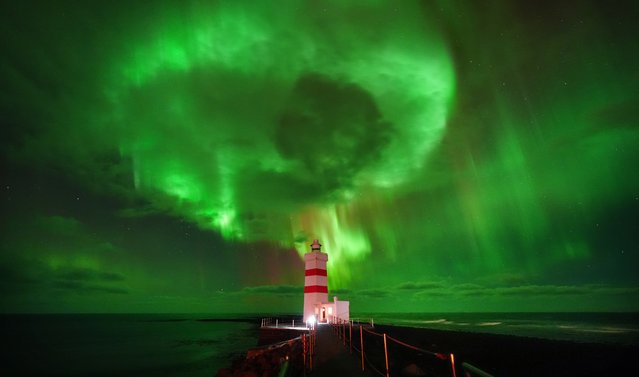
The aurora borealis, also known as the northern lights, visible above Old Gardur Lighthouse on the northern point of the Reykjanes peninsula in Iceland on Sunday, November 24, 2024. The lighthouse dates to 1897, and was one of the first built in Iceland. (Photo by Owen Humphreys/PA Images via Getty Images)
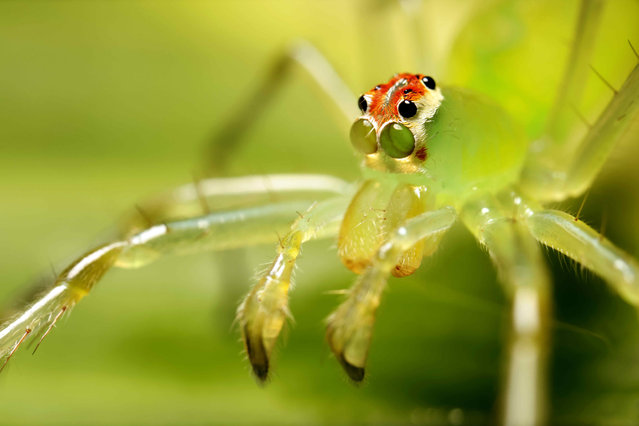
A green jumping spider (Lyssomanes viridis), in a forested area of Cerro de la Muerte, in San Jose, Costa Rica, 20 May 2025. International Day for Biological Diversity is celebrated every 22 May around the world. (Photo by Jeffrey Arguedas/EPA/EFE)
It's that time of year again when dogs with unusually large heads, hairless bodies and other oddities compete to be the World's Ugliest Dog. This year's winner? A 2-year-old mutt named Peanut, whose wild white and brown hair, bulging eyes and protruding teeth belie his sweet, energetic personality. Peanut's owner, Holly Chandler of Greenville, North Carolina, says he was seriously burned as a puppy and she wants to use her pet to raise awareness about animal abuse. She plans to use the $1,500 prize to pay for other animals' veterinary bills. The contest, held at the Sonoma-Marin Fairgrounds in Petaluma, California, is in its 26 year. The dogs are scored by a three-judge panel in several categories, including special or unusual attributes, personality and natural ugliness.
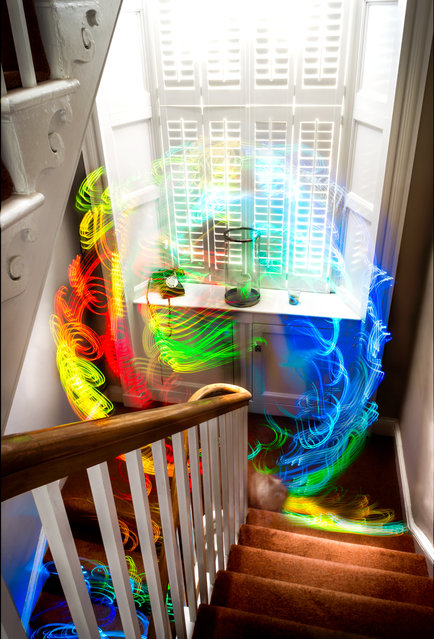
Luis Hernan was always curious about how wireless technologies like radio are transmitted through the air. So after finishing up his studies in architecture, computer science, and design, Hernan decided to research these invisible signals through a PhD at Newcastle University. Hernan set up a system that turned the wireless signals around him into colourful, ghostlike images using long-exposure photography, allowing people to see the strength of the signals around them. (Photo by Luis Hernan)