Loading...
Done


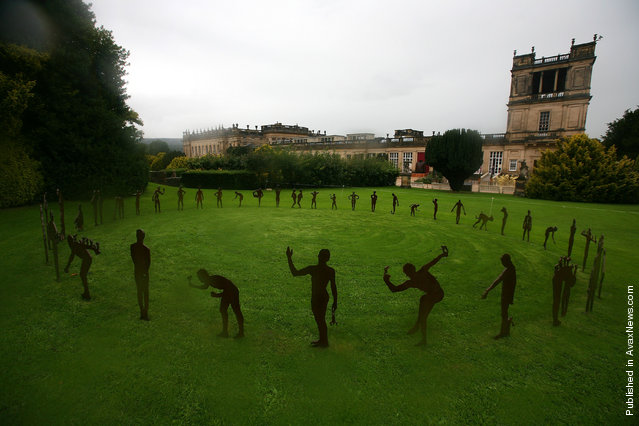
A giant sculpture of a seven-month-old baby by artist Marc Quinn entitled “Planet” contrasts against the stately grandeur of Chatsworth House and the Derbyshire countryside on 4 September, 2008, Chatsworth, England. The bronze sculpture painted white is part of the Beyond Limits exhibition of modern and contemporary sculpture displayed in the gardens of Chatsworth by Sotherby's. More than 20 works will be on display from 9 September to 2 November 2008. In past years acclaimed artists Damien Hirst, Antony Gormley, Salvador Dali and Henry Moore have had work exhibited. (Photo by Christopher Furlong/Getty Images)
Details
15 Mar 2011 09:57:00


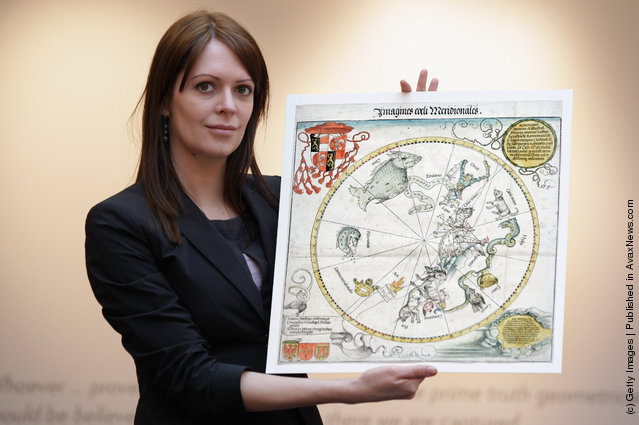
Head of European Prints, Severine Nackers holds a celestial Map of the Southern Sky by Albrecht Durer, at Sotheby's Auction House on March 25, 2011 in London, England. The two woodcut maps depicting the Northern and Southern skies circa 1515, are the earliest printed star charts of their kind ever published in Europe, and are expected to fetch between Ј120,000-180,000 GBP when they go on sale at the “London sale of Old Master, Modern and Contemporary prints” at Sotheby's Auction house on March 30, 2011. (Photo by Dan Kitwood/Getty Images)
Details
25 Mar 2011 14:57:00


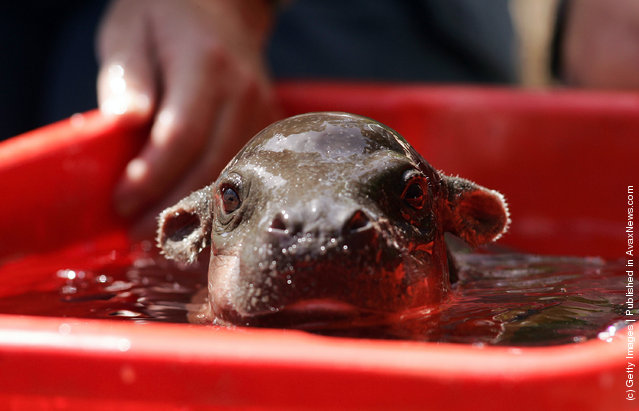
“The pygmy hippopotamus (Choeropsis liberiensis or Hexaprotodon liberiensis) is a large mammal native to the forests and swamps of western Africa (the specific name liberiensis means “of Liberia”, as this is where the vast majority live). The pygmy hippo is reclusive and nocturnal. It is one of only two extant species in the Hippopotamidae family, the other being its much larger cousin the common hippopotamus”. – Wikipedia

Photo: Monifa, a one month old baby Pygmy Hippopotamus takes a morning bath at Taronga Zoo on November 7, 2008 in Sydney, Australia. Monifa is the first Pygmy Hippopotamus to be born at Taronga Zoo in the past twenty three years. (Photo by Sergio Dionisio/Getty Images)
Details
11 Apr 2011 08:11:00


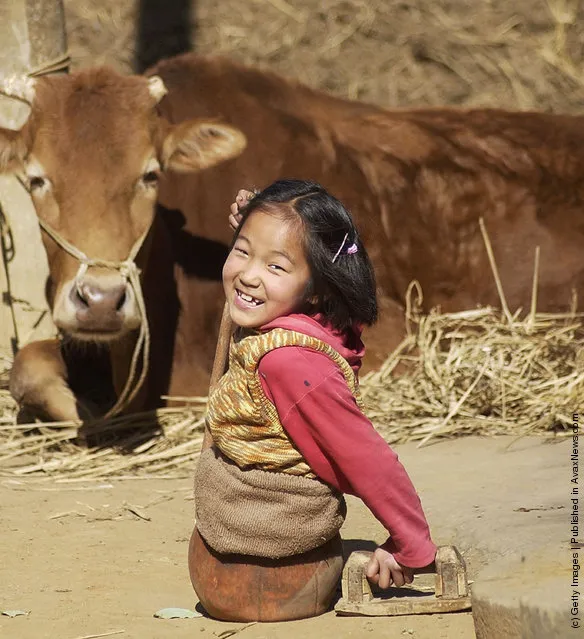
Eight-year-old handicapped Chinese girl Qian Hongyan crawls with two home-made props and part of a basketball at Zhuangxia Village on January 5, 2005 in Luliang County of Qujing City, Yunnan Province, China. The girl who lost both of her legs in a traffic accident in 2000 at the age of three, struggles to live her life with a basketball as an underprop, “walking” between school and home by herself. The girl's story is widely reported in the country, and experts from China Rehabilitation Research Center has come to Qian's home to help her for rehabilitative treatment early 2005. (Photo by China Photos/Getty Images)
Details
29 Jun 2011 11:33:00
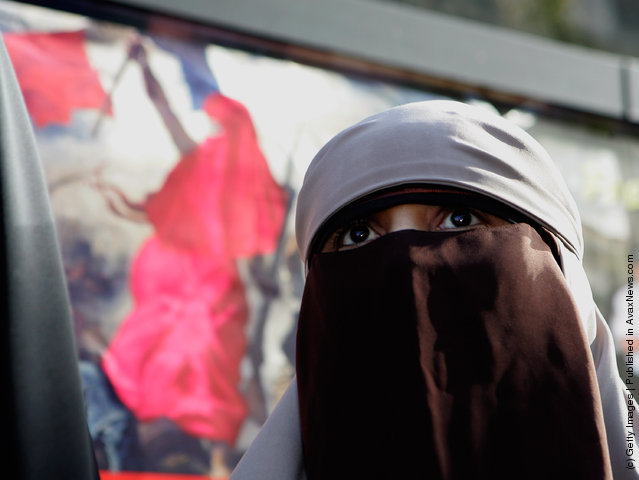
Kenza Drider, 32, announces her candidacy for France's 2012 Presidential election

Kenza Drider, 32, announces her candidacy for France's 2012 Presidential election on September 22, 2011 in Meaux, France. Drider is the first French Muslim woman to wear a niqab and run for President despite France's nationwide ban on the face veil, which today saw 32-year-old mother of three Hind Ahmas and Najate Nait Ali both being fined after being caught wearing the niqab in public in the Parsisan district of Meaux back in May when the law first came into force. (Photo by Franck Prevel/Getty Images)
Details
23 Sep 2011 10:00:00
A man strolls through a narrow alleyway clustered with tiny bars and restaurants at the Golden Gai in the Shinjuku district of Tokyo, July 17, 2019. (Photo by Jae C. Hong/AP Photo)

The Golden Gai is a sliver of old Tokyo in a modern metropolis filled with endless gleaming buildings. It's a one-of-a-kind tourist attraction, for sure. But it's also a place for a few drinks and friendly chatter among exhausted workers known as “salarymen”. Here: A man strolls through a narrow alleyway clustered with tiny bars and restaurants at the Golden Gai in the Shinjuku district of Tokyo, July 17, 2019. (Photo by Jae C. Hong/AP Photo)
Details
14 Aug 2019 00:05:00
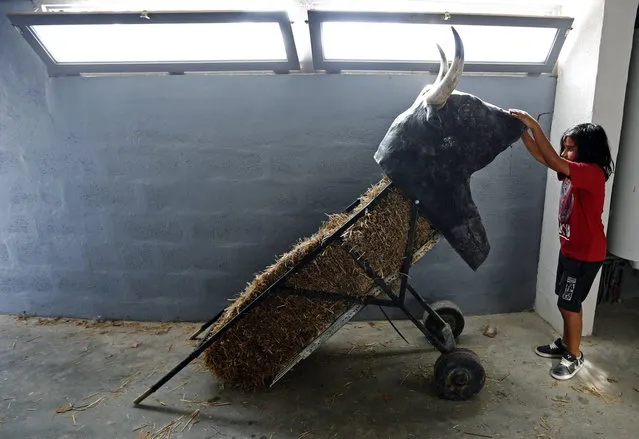
Nino, a ten-year-old toreador apprentice of the French Tauromachy Centre, nicknamed El Nino, touches a practice bull at the bullring of Garons, near Nimes, September 25, 2013. (Photo by Jean-Paul Pelissier/Reuters)

Nino, a ten-year-old toreador apprentice of the French Tauromachy Centre, nicknamed El Nino, touches a practice bull at the bullring of Garons, near Nimes, September 25, 2013. Since 1983, the French Tauromachy Centre in Nimes has trained some 1,000 youths in the art of bullfighting. Twenty of them have gone on to become professional matadors, facing fighting bulls in the arena. Twice a week, students take courses with a matador to learn the movements and gestures of the bullfighter in the ring, but without an animal present. Students train with calves in the surrounding fields during spring, and regularly participate in beginner's bullfights (becerradas) without killing calves. Solal has been taking courses for three years and Nino, for just a year now. Both are normally enrolled in French public schools, but have one thought in mind – bullfighting. They share a passion linked to the city of Nimes, famous for its ferias and bullring. (Photo by Jean-Paul Pelissier/Reuters)
Details
06 Nov 2013 10:12:00
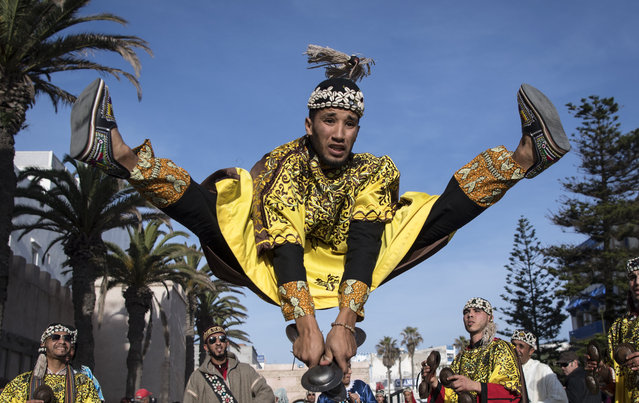
A Gnawa traditional group performs in the city of Essaouira on December 14, 2019, to celebrate the decision of adding the Gnawa culture to UNESCO's list of Intangible Cultural Heritage of Humanity. Gnawa culture, a centuries-old Moroccan practice rooted in music, African rituals and Sufi traditions, was added to UNESCO's list of Intangible Cultural Heritage of Humanity earlier in the week. Gnawa refers to a “set of musical productions, fraternal practices and therapeutic rituals where the secular mixes with the sacred”, according to the nomination submitted by Morocco. Often dressed in colourful outfits, Gnawa musicians play the guenbri, a type of lute with three strings, accompanied by steel castanets called krakebs. (Photo by Fadel Senna/AFP Photo)

A Gnawa traditional group performs in the city of Essaouira on December 14, 2019, to celebrate the decision of adding the Gnawa culture to UNESCO's list of Intangible Cultural Heritage of Humanity. Gnawa culture, a centuries-old Moroccan practice rooted in music, African rituals and Sufi traditions, was added to UNESCO's list of Intangible Cultural Heritage of Humanity earlier in the week. Gnawa refers to a “set of musical productions, fraternal practices and therapeutic rituals where the secular mixes with the sacred”, according to the nomination submitted by Morocco. Often dressed in colourful outfits, Gnawa musicians play the guenbri, a type of lute with three strings, accompanied by steel castanets called krakebs. (Photo by Fadel Senna/AFP Photo)
Details
18 Dec 2019 00:05:00