Loading...
Done
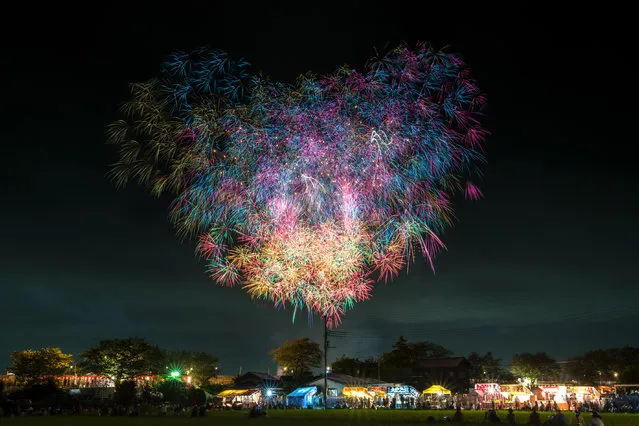
Tsuchiura National Fireworks Competition, Tsuchiura City, Ibaraki Prefecture. (Photo by Makoto Igari/Caters News Agency)

These kaleidoscopic images showcase the sheer beauty of the mammoth firework displays held across Japan every summer. The Japanese word for fireworks, hanabi, means fire flower, and each year, local governments in Japan throw around 7,000 festivals, or hanabi taikai. Here: Tsuchiura National Fireworks Competition, Tsuchiura City, Ibaraki Prefecture. (Photo by Makoto Igari/Caters News Agency)
Details
25 Sep 2018 00:01:00
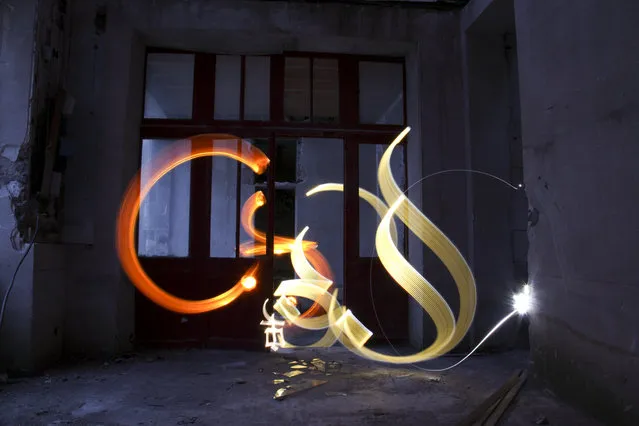
Light Calligraphy By Julien Breton

French artist Julien Breton aka Kaalam started calligraphy in 2001 by copying Arabic calligraphers. Self-taught, he began to incorporate long exposure photography to create incredible light paintings around the world. All of the images in this gallery were created in-camera, meaning there is no Photoshop trickery or post-production manipulation involved in creating these works of art.
Details
28 Jul 2014 06:24:00


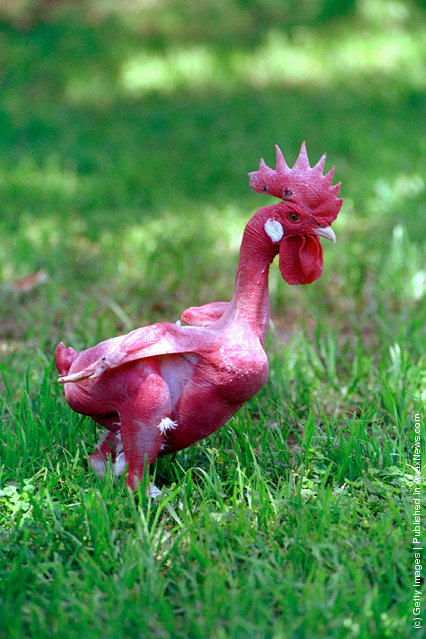
A genetically engineered featherless rooster struts around the campus of the Hebrew University of Jerusalem's Department of Agriculture May 22, 2002 in Rehovot, Israeli. After two years of research, departmental scientists announced the naked chicken, as it has been dubbed, as a low calorie bird because the lack of feathers means the chicken has less fat. It also matures earlier than its feathered counterparts. (Photo by Moshe Milner/GPO/Getty Images)
Details
29 Mar 2011 14:15:00
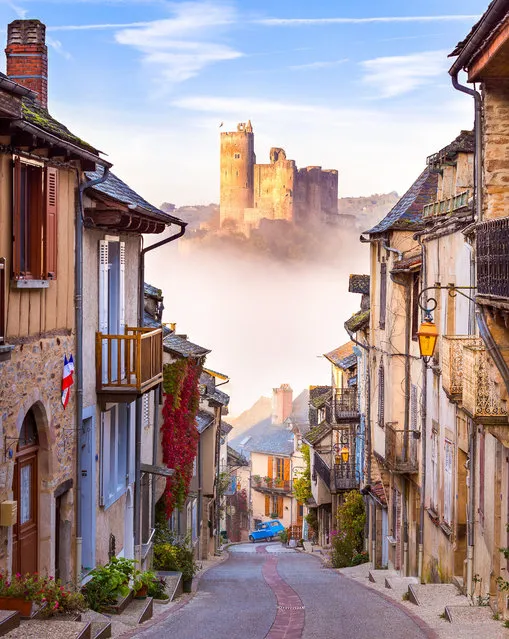
Najac, France. Travel shortlist. (Photo by Aaron Jenkin/@aaronjenkin)

Shortlisted images in the running to be crowned Photobox Instagram photograph of the year range from furry friends to the Holi festival to the meaning of love. Judges, including the Guardian’s former picture editor Eamonn McCabe, have whittled down 180,000 submissions to unearth a shortlist that celebrates the best of social media. Winners will be announced October 3, 2018. Here: Najac, France. Travel shortlist. (Photo by Aaron Jenkin/@aaronjenkin)
Details
27 Sep 2018 00:05:00
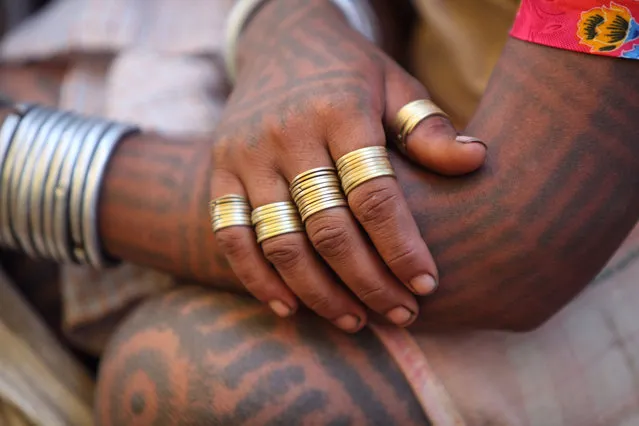
Once applied, the designs are washed using warm water and cow dung. Herbs are applied to promote faster healing. (Photo by Ronny Sen/WaterAid/The Guardian)

For more than 2,000 years, women from the Baiga tribe in the highland district of Dindori, in central India’s Madhya Pradesh state, have been tattooed. Sumintra, 25, from Bona village, has the markings across her forehead, legs and arms. The women who work as tattoo artists are knowledgable about the different types of designs and pigments preferred by various tribes, and their meanings are passed to them by their mothers. The tattooing ‘season’ begins with the approach of winter. (Photo by Ronny Sen/WaterAid/The Guardian)
Details
19 Aug 2017 08:48:00


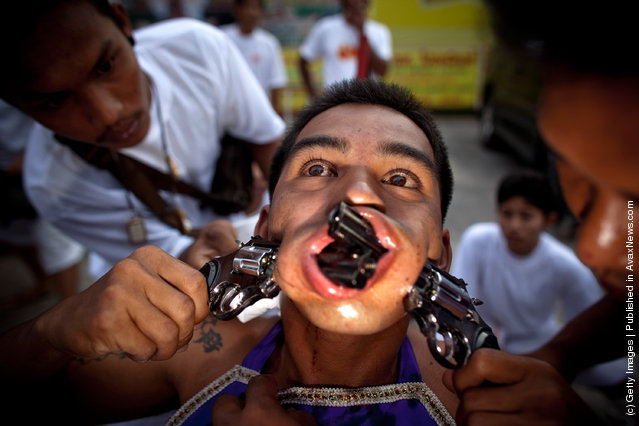
A devotee of the Chinese shrine of Samkong, pierces his cheeks with toy guns during a procession of Vegetarian Festival on October 11, 2010 in Phuket, Thailand. Ritual Vegetarianism in Phuket Island traces it roots back to the early 1800's. The festival begins on the first evening of the ninth lunar month and lasts for nine days. Participants in the festival perform acts of body piercing as a means of shifting evil spirits from individuals onto themselves and bring the community good luck. (Photo by Athit Perawongmetha/Getty Images)
Details
09 Jul 2011 11:55:00
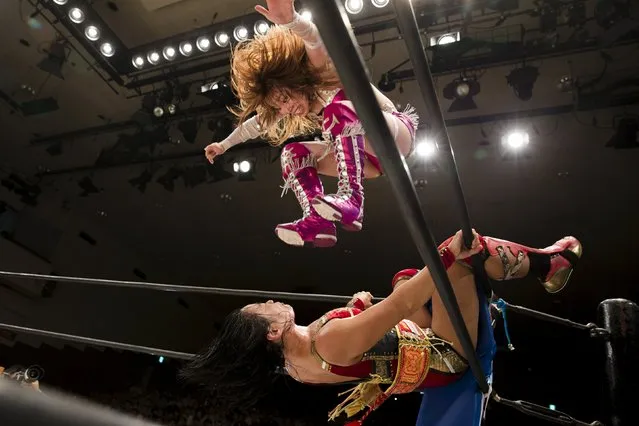
Wrestler Kairi Hojo jumps at her opponent  Mieko satomura during their Stardom female professional wrestling show at Korakuen Hall in Tokyo, Japan, July 26, 2015. (Photo by Thomas Peter/Reuters)

Wrestler Kairi Hojo jumps at her opponent Mieko satomura during their Stardom female professional wrestling show at Korakuen Hall in Tokyo, Japan, July 26, 2015. Professional women's wrestling in Japan means body slams, sweat, and garish costumes. But Japanese rules on hierarchy also come into play, with a culture of deference to veteran fighters. The brutal reality of the ring is masked by a strong fantasy element that feeds its popularity with fans, most of them men. (Photo by Thomas Peter/Reuters)
Details
08 Apr 2016 15:18:00
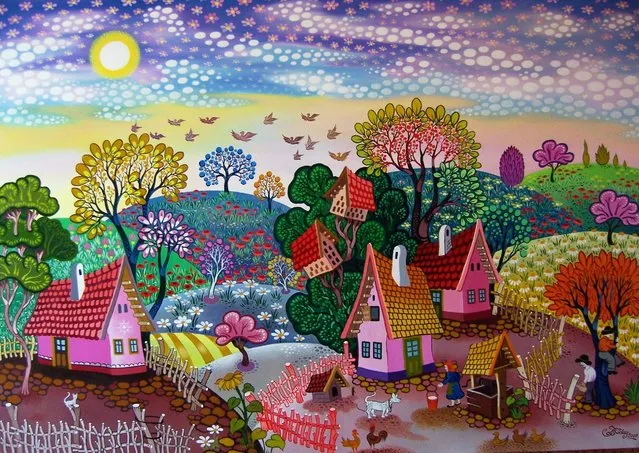
Painting By Koday Laszlo

Laszlo Koday was born in Hungary in 1945. In 1970 he began as a self-tought painter. The life and work of Henri Rousseau made a deep impression on him. His pictures are fairy tales expressed by pictorial means, human, animal and nature are equally important in them. There are bright, with unmixed pure colours, compositions wich spread calmness and gaiety. Kaday's works are know not only in Hungary but in many countries and are included in many private and public collections. His paintings can be found in galleries abroad, for example the GINA Gallery.
Details
23 Jul 2013 09:00:00