Loading...
Done
“Society hurts”. (Photo by Grace Ridge/ESRC)

The Economic and Social Research Council (ESRC) has announced the winners of a UK national photography competition in which we challenged young people aged 14–18 for their unique take on society and the social sciences by asking them to take a picture on the theme of “Where Do I Belong?” – ESRC Press Office. Photo: “Society hurts”. (Photo by Grace Ridge/ESRC)
Details
24 Mar 2014 06:41:00
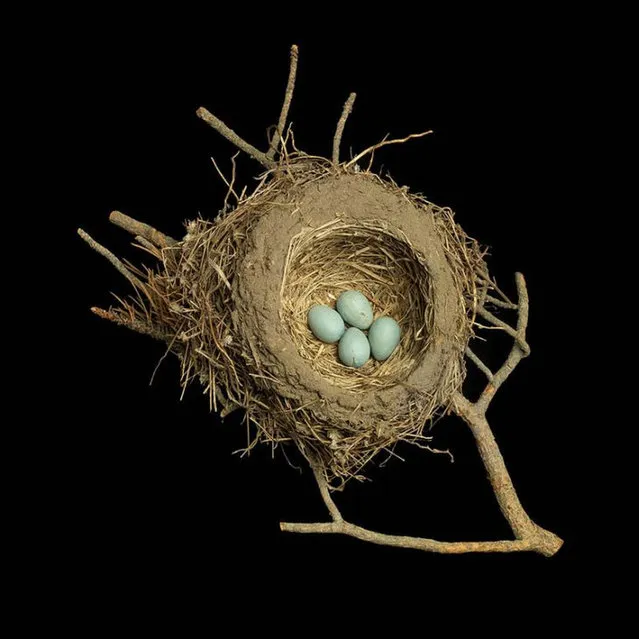
Bird Nest By Sharon Beals

Sharon Beals is a San Francisco based photographer who has photographed nest and eggs specimens collected over the last two centuries at The California Academy of Sciences, The Museum of Vertebrate Zoology, and The Western Foundation of Vertebrate Zoology. While few nests are collected today, these nests and eggs are used for research, providing important information about their builder’s habitats, DNA, diseases and other survival issues.
Details
20 Aug 2013 09:49:00


Cannabis had already dominated the world of medicine. More and more people become convinced of its effectiveness, especially in terms of treating known diseases (e.g., Epilepsy, Depression, and Anxiety). Such commotion resulted in several experts to create and establish pieces of research about cannabis. Factors affecting the pros and cons are identified and verified to know further whether or not it is a capable substance.
Details
22 Jan 2020 08:49:00
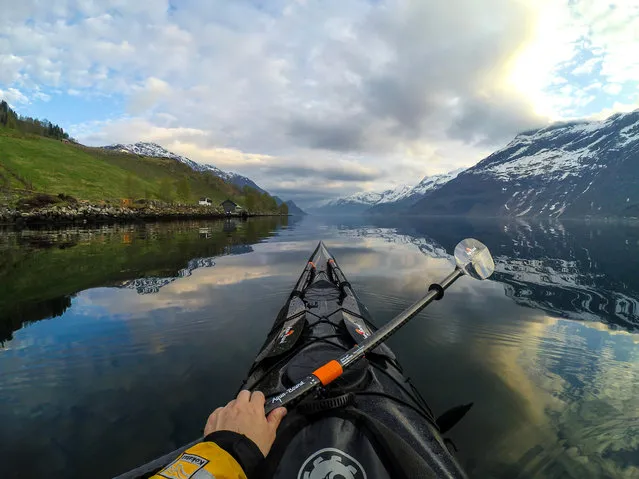
Hardangerfjorden, near Ullensvang. (Photo by Thomasz Furmanek/Caters News Agency)

Marine researcher Tomasz Furmanek, 44, from Bøjarnesveien, Norway, takes stunning images while kayaking through various fjords and lakes in the Scandinavian country. During Tomasz’s free time, he works as a freelance photographer traveling around the lakes, fjords and coastal regions of the beautiful country – and capturing breathtaking photographs. Here: Hardangerfjorden, near Ullensvang. (Photo by Thomasz Furmanek/Caters News Agency)
Details
22 Oct 2018 00:05:00


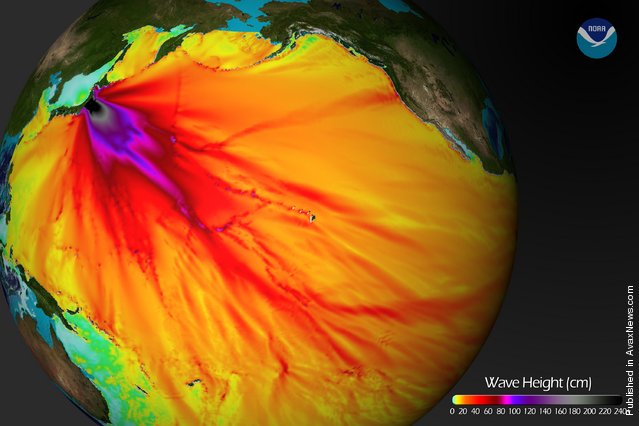
In this handout image provided by the National Oceanic and Atmospheric Administration (NOAA), model runs from the Center for Tsunami Research at the NOAA Pacific Marine Environmental Laboratory show the expected wave heights of the tsunami as it travels across the Pacific basin March 11, 2011. The largest wave heights are expected near the earthquake epicenter, off Japan. The wave will decrease in height as it travels across the deep Pacific but grow taller as it nears coastal areas. In general, as the energy of the wave decreases with distance, the near shore heights will also decrease (e.g., coastal Hawaii will not expect heights of that encountered in coastal Japan). (Photo by NOAA via Getty Images)
Details
13 Mar 2011 14:29:00
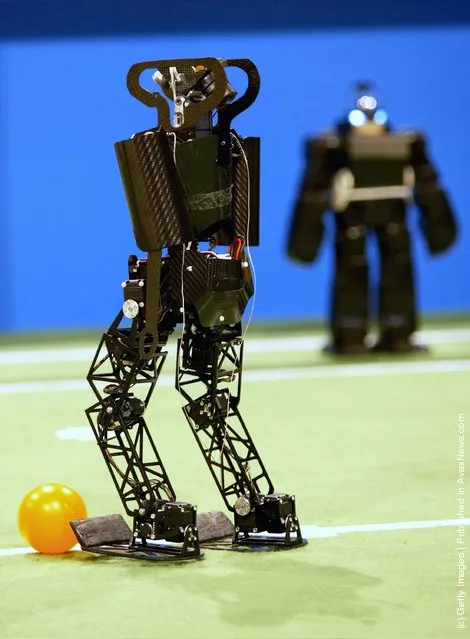
Humanoid robots of the children size league compete during the RoboCup 2006 football world championships

“RoboCup is an international robotics competition founded in 1997. The aim is to develop autonomous soccer robots with the intention of promoting research and education in the field of artificial intelligence. The name RoboCup is a contraction of the competition's full name, «Robot Soccer World Cup», but there are many other stages of the competition such as «Search and Rescue» and «Robot Dancing»”. – Wikipedia

Photo: Humanoid robots of the children size league compete during the RoboCup 2006 football world championships final at the Congress Centre on June 18, 2006 in Bremen, Germany. (Photo by Malte Christians/Bongarts/Getty Images)
Details
25 Oct 2011 13:22:00
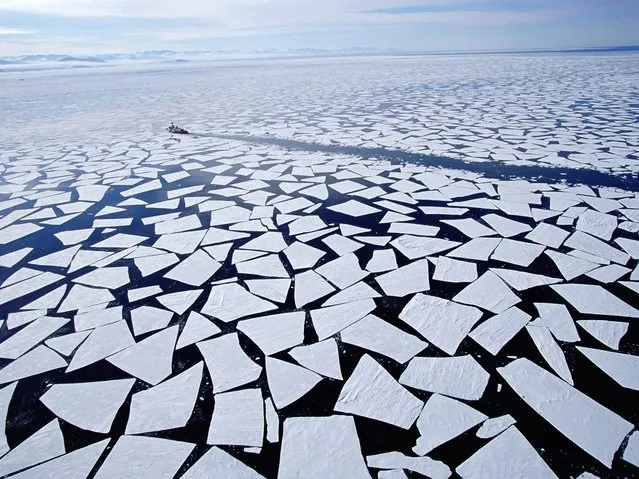
McMurdo Station Antarctic

McMurdo Station is a U.S. Antarctic research centre located on the southern tip of Ross Island, which is in the New Zealand-claimed Ross Dependency on the shore of McMurdo Sound in Antarctica. It is operated by the United States through the United States Antarctic Program, a branch of the National Science Foundation. The station is the largest community in Antarctica, capable of supporting up to 1,258 residents, and serves as the United States Antarctic science facility. All personnel and cargo going to or coming from Amundsen–Scott South Pole Station first pass through McMurdo.
Details
05 Sep 2013 10:18:00
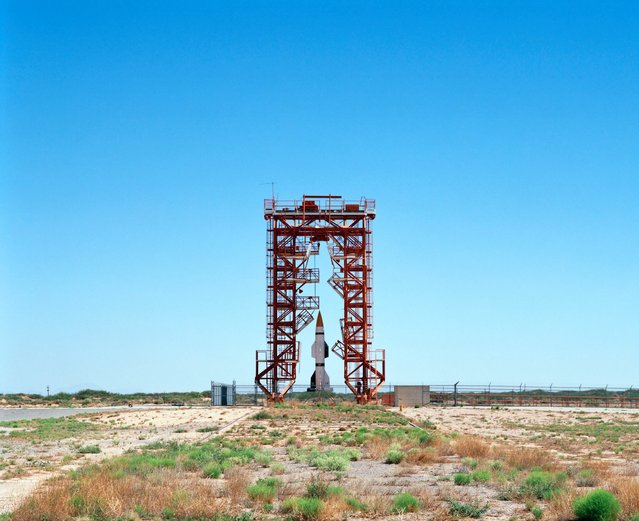
Launch Pad and Gantry with Hermes A-1 Rocket – V2 Launch Complex 33, White Sands missile range, New Mexico in 2006. (Photo by Roland Miller)

Roland Miller is on a mission to document the deserted sites of America’s space race. He has photographed launch pads, bunkhouses and research facilities across the country, some of which no longer exist or are closed to the public on secure military bases. His book, “Abandoned in Place”, is published by the University of New Mexico Press in March. Here: Launch Pad and Gantry with Hermes A-1 Rocket – V2 Launch Complex 33, White Sands missile range, New Mexico in 2006. (Photo by Roland Miller)
Details
25 Feb 2016 11:38:00