Loading...
Done
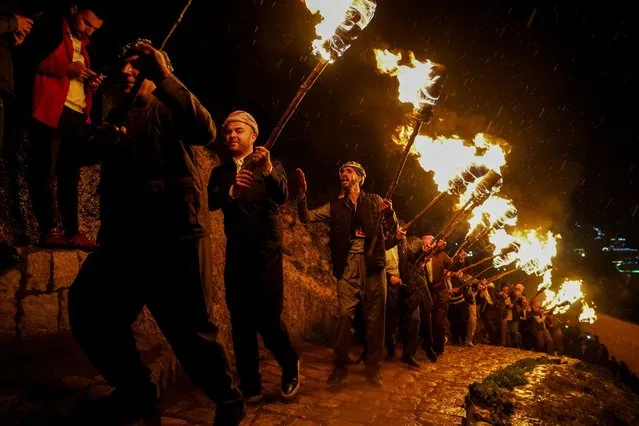
Iraqi Kurds carry fire torches as they celebrate Nowruz Day, a festival marking the first day of spring, Kurdish and Persian New Year in Akre, Iraq on March 20, 2024. Newroz or Nowruz means “new day” in Persian, and is celebrated to mark the arrival of spring and the first day of the Iranian calendar. It is widely celebrated in Persian and neighboring regions and is recognized on UNESCO's Intangible Cultural Heritage of Human List. (Photo by Ismael Adnan/SOPA Images/Rex Features/Shutterstock)

Iraqi Kurds carry fire torches as they celebrate Nowruz Day, a festival marking the first day of spring, Kurdish and Persian New Year in Akre, Iraq on March 20, 2024. Newroz or Nowruz means “new day” in Persian, and is celebrated to mark the arrival of spring and the first day of the Iranian calendar. It is widely celebrated in Persian and neighboring regions and is recognized on UNESCO's Intangible Cultural Heritage of Human List. (Photo by Ismael Adnan/SOPA Images/Rex Features/Shutterstock)
Details
29 Mar 2024 05:30:00
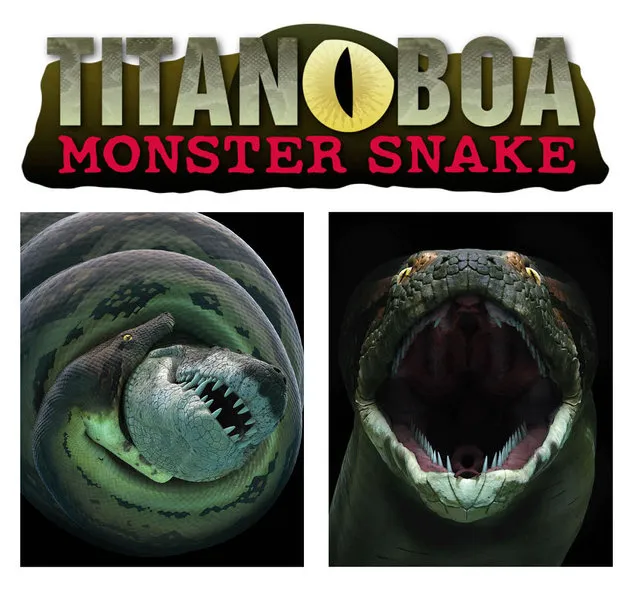
Titanoboa: Monster Snake

Titanoboa, meaning "titanic boa," is an extinct genus of snake that lived approximately 60–58 million years ago, during the Paleocene epoch, a 10-million-year period immediately following the dinosaur extinction event. The only known species is Titanoboa cerrejonensis, the largest, longest, and heaviest snake ever discovered, which supplanted the previous record holder, Gigantophis.

A full-scale model of the snake was unveiled at New York City's Grand Central station before the exhibit opens at the Smithsonian in Washington DC.
Details
06 Feb 2014 12:38:00
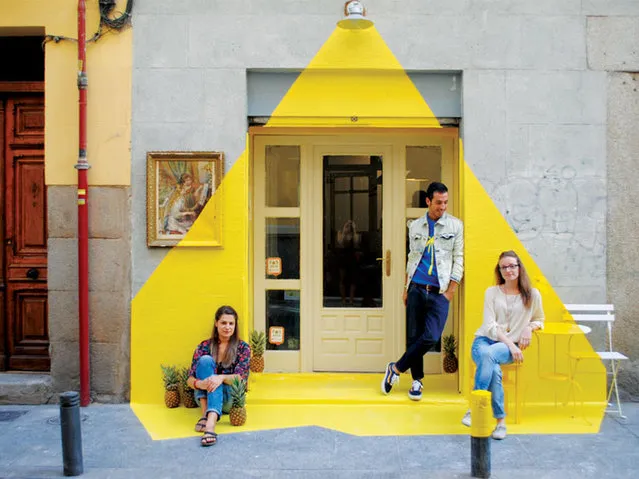
Ephemeral Lighting Installation By (Fos)

(fos) is the name of the first ephemeral installation by the multidisciplinary team (fos). It means light in Greek and melted in Catalan. In this project has been represented by a skin that covers both vertical and horizontal surfaces. The protected façade of the vegan restaurant Rayen at Lope de Vega street in Madrid has been illuminated for 4 days and nights by more than 250lm of yellow duct tape, painted décor items, pineapples and... a lamp. A visual game between perspective and colored volumes that gained the looks.
Details
10 Apr 2014 12:16:00


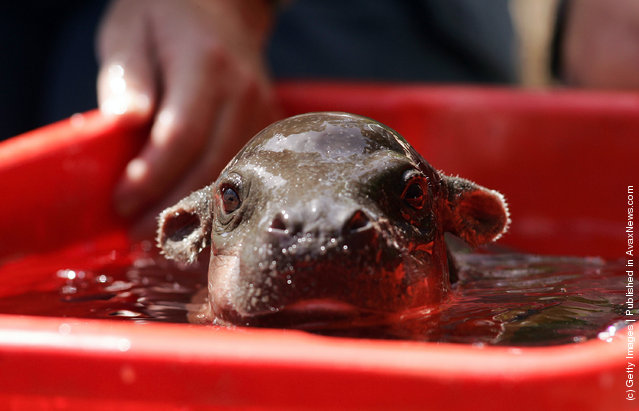
“The pygmy hippopotamus (Choeropsis liberiensis or Hexaprotodon liberiensis) is a large mammal native to the forests and swamps of western Africa (the specific name liberiensis means “of Liberia”, as this is where the vast majority live). The pygmy hippo is reclusive and nocturnal. It is one of only two extant species in the Hippopotamidae family, the other being its much larger cousin the common hippopotamus”. – Wikipedia

Photo: Monifa, a one month old baby Pygmy Hippopotamus takes a morning bath at Taronga Zoo on November 7, 2008 in Sydney, Australia. Monifa is the first Pygmy Hippopotamus to be born at Taronga Zoo in the past twenty three years. (Photo by Sergio Dionisio/Getty Images)
Details
11 Apr 2011 08:11:00


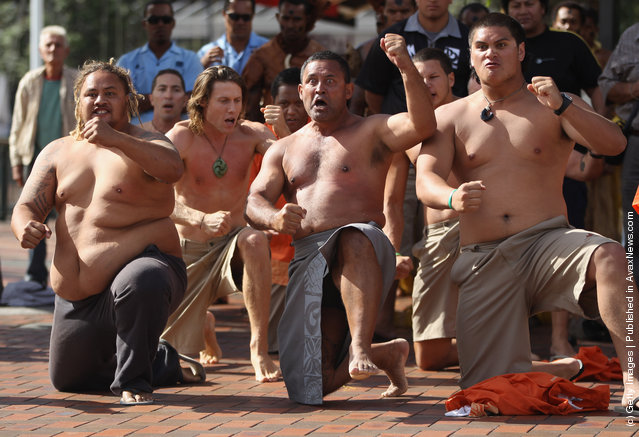
A Haka is performed before the ceremonial departure of the 'vaka' or traditional canoes ahead of their cross-Pacific voyage from Viaduct Harbour on April 13, 2011 in Auckland, New Zealand. Powered by sun and wind only, the 15,000 nautical mile journey to Hawaii via French Polynesia will set off on April 15, aiming to raise awareness of environmental issues such as ocean noise pollution, acidification and anoxic waters, whilst recapturing traditional Pacific voyaging. The votyage is named “Te Mana o Te Moana” meaning “The Spirit of the Sea”. (Photo by Phil Walter/Getty Images)
Details
13 Apr 2011 07:45:00
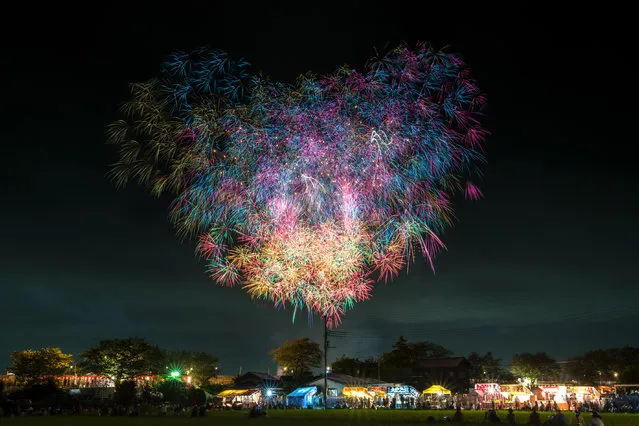
Tsuchiura National Fireworks Competition, Tsuchiura City, Ibaraki Prefecture. (Photo by Makoto Igari/Caters News Agency)

These kaleidoscopic images showcase the sheer beauty of the mammoth firework displays held across Japan every summer. The Japanese word for fireworks, hanabi, means fire flower, and each year, local governments in Japan throw around 7,000 festivals, or hanabi taikai. Here: Tsuchiura National Fireworks Competition, Tsuchiura City, Ibaraki Prefecture. (Photo by Makoto Igari/Caters News Agency)
Details
25 Sep 2018 00:01:00
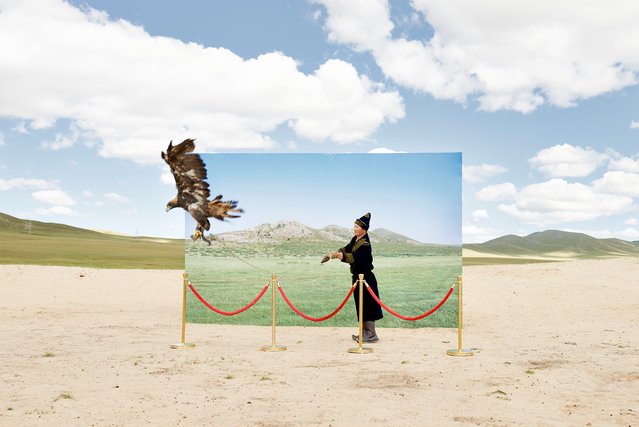
Up to 35% of Mongolians still live a nomadic life, depending on their land to survive. But environmental changes, particularly desertification, means this way of life is under threat. Korean photographer Daesung Lee’s Futuristic Archaeology images show billboard-size backdrops of lush steppe contrasting with actual scenery as former nomads enact scenes of hunting, herding and Mongolian wrestling. (Photo by Daesung Lee)

Up to 35% of Mongolians still live a nomadic life, depending on their land to survive. But environmental changes, particularly desertification, means this way of life is under threat. Korean photographer Daesung Lee’s Futuristic Archaeology images show billboard-size backdrops of lush steppe contrasting with actual scenery as former nomads enact scenes of hunting, herding and Mongolian wrestling. (Photo by Daesung Lee)
Details
24 Nov 2016 08:01:00
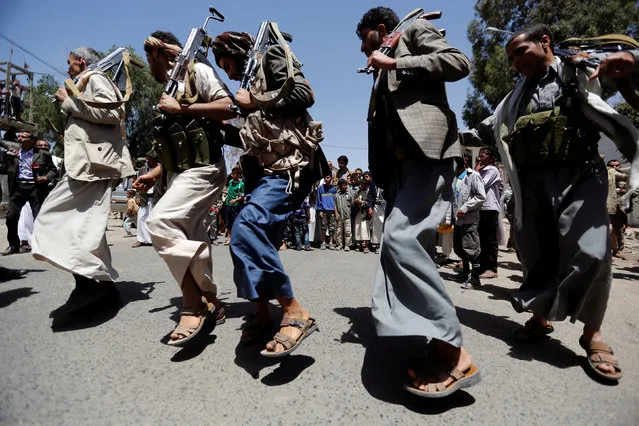
Tribesmen loyal to the Houthi movement perform the Baraa dance during a gathering to show support to the movement in Sanaa, Yemen, May 19, 2016. Bara or Baraa dance is one of the several traditional outdoor dances performed by men in the country of Yemen. Bara dance literally means a dagger dance, where each dancer holds a dagger. The style of the Bara dance differs from tribe to tribe. It is performed on special occasions. (Photo by Khaled Abdullah/Reuters)

Tribesmen loyal to the Houthi movement perform the Baraa dance during a gathering to show support to the movement in Sanaa, Yemen, May 19, 2016. Bara or Baraa dance is one of the several traditional outdoor dances performed by men in the country of Yemen. Bara dance literally means a dagger dance, where each dancer holds a dagger. The style of the Bara dance differs from tribe to tribe. It is performed on special occasions. (Photo by Khaled Abdullah/Reuters)
Details
20 May 2016 12:44:00