Loading...
Done


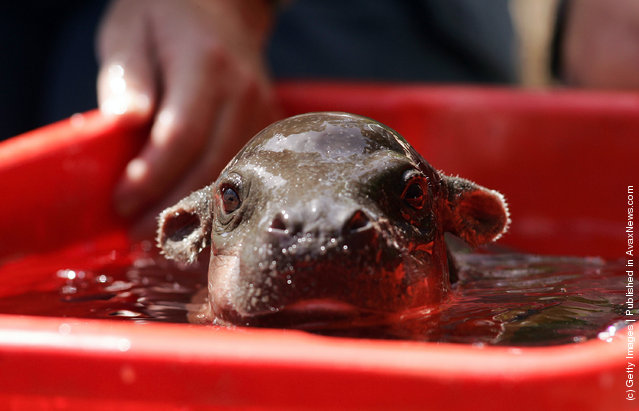
“The pygmy hippopotamus (Choeropsis liberiensis or Hexaprotodon liberiensis) is a large mammal native to the forests and swamps of western Africa (the specific name liberiensis means “of Liberia”, as this is where the vast majority live). The pygmy hippo is reclusive and nocturnal. It is one of only two extant species in the Hippopotamidae family, the other being its much larger cousin the common hippopotamus”. – Wikipedia

Photo: Monifa, a one month old baby Pygmy Hippopotamus takes a morning bath at Taronga Zoo on November 7, 2008 in Sydney, Australia. Monifa is the first Pygmy Hippopotamus to be born at Taronga Zoo in the past twenty three years. (Photo by Sergio Dionisio/Getty Images)
Details
11 Apr 2011 08:11:00


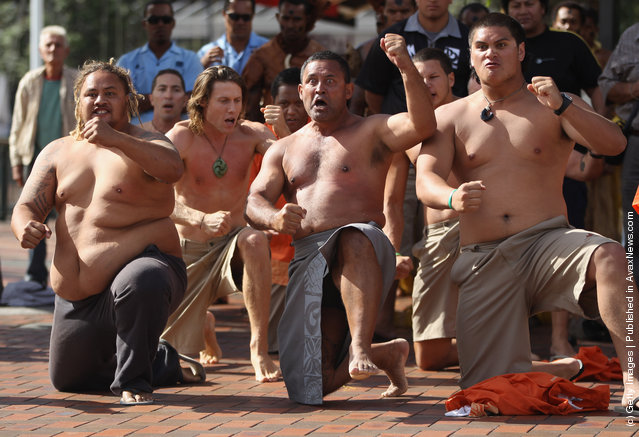
A Haka is performed before the ceremonial departure of the 'vaka' or traditional canoes ahead of their cross-Pacific voyage from Viaduct Harbour on April 13, 2011 in Auckland, New Zealand. Powered by sun and wind only, the 15,000 nautical mile journey to Hawaii via French Polynesia will set off on April 15, aiming to raise awareness of environmental issues such as ocean noise pollution, acidification and anoxic waters, whilst recapturing traditional Pacific voyaging. The votyage is named “Te Mana o Te Moana” meaning “The Spirit of the Sea”. (Photo by Phil Walter/Getty Images)
Details
13 Apr 2011 07:45:00
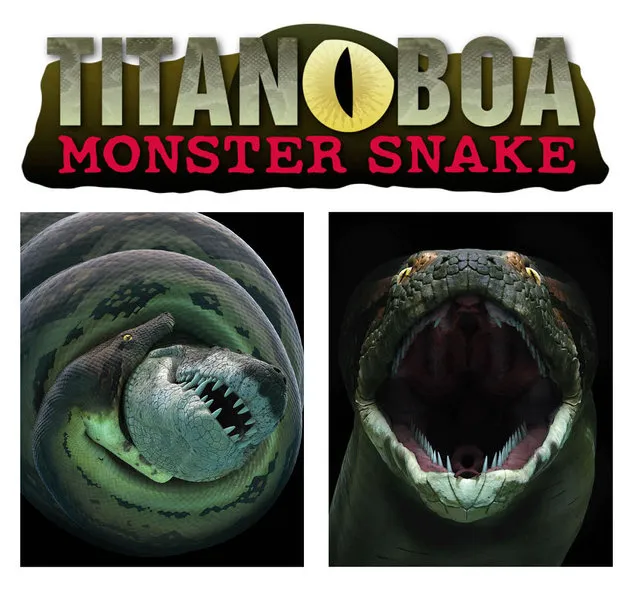
Titanoboa: Monster Snake

Titanoboa, meaning "titanic boa," is an extinct genus of snake that lived approximately 60–58 million years ago, during the Paleocene epoch, a 10-million-year period immediately following the dinosaur extinction event. The only known species is Titanoboa cerrejonensis, the largest, longest, and heaviest snake ever discovered, which supplanted the previous record holder, Gigantophis.

A full-scale model of the snake was unveiled at New York City's Grand Central station before the exhibit opens at the Smithsonian in Washington DC.
Details
06 Feb 2014 12:38:00
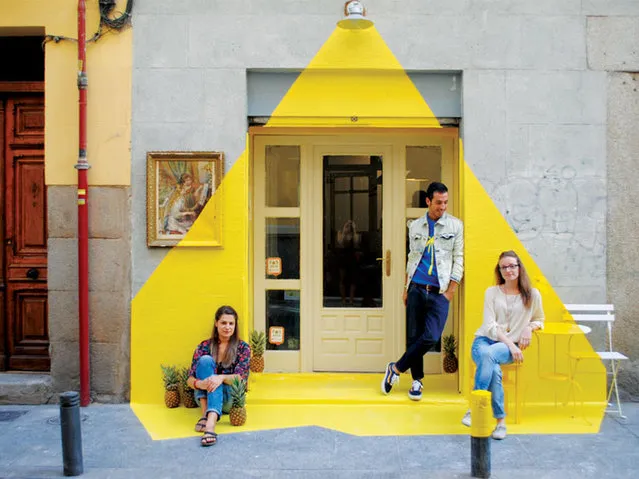
Ephemeral Lighting Installation By (Fos)

(fos) is the name of the first ephemeral installation by the multidisciplinary team (fos). It means light in Greek and melted in Catalan. In this project has been represented by a skin that covers both vertical and horizontal surfaces. The protected façade of the vegan restaurant Rayen at Lope de Vega street in Madrid has been illuminated for 4 days and nights by more than 250lm of yellow duct tape, painted décor items, pineapples and... a lamp. A visual game between perspective and colored volumes that gained the looks.
Details
10 Apr 2014 12:16:00
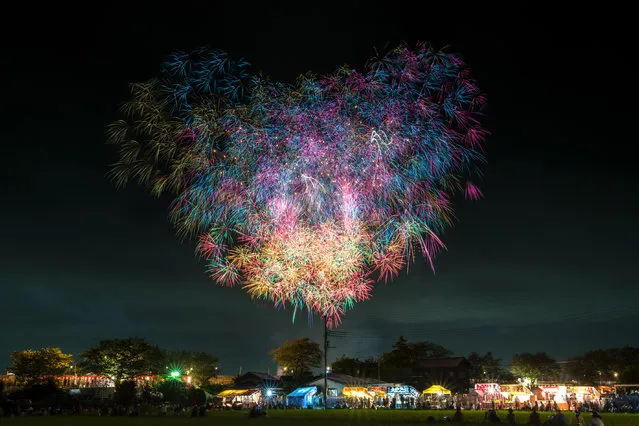
Tsuchiura National Fireworks Competition, Tsuchiura City, Ibaraki Prefecture. (Photo by Makoto Igari/Caters News Agency)

These kaleidoscopic images showcase the sheer beauty of the mammoth firework displays held across Japan every summer. The Japanese word for fireworks, hanabi, means fire flower, and each year, local governments in Japan throw around 7,000 festivals, or hanabi taikai. Here: Tsuchiura National Fireworks Competition, Tsuchiura City, Ibaraki Prefecture. (Photo by Makoto Igari/Caters News Agency)
Details
25 Sep 2018 00:01:00


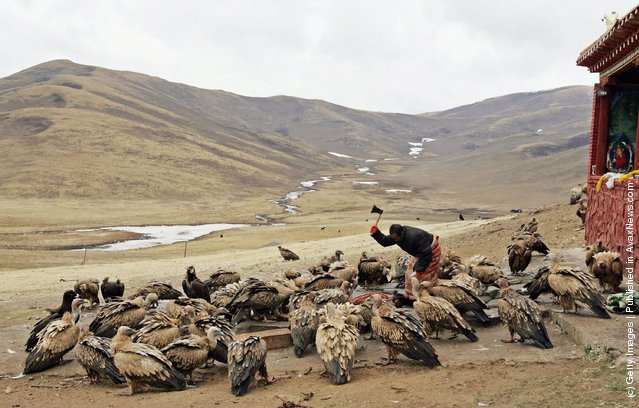
“Sky burial or ritual dissection was once a common funerary practice in Tibet wherein a human corpse is cut in specific locations and placed on a mountaintop, exposing it to the elements or the mahabhuta and animals – especially to birds of prey. The location of the sky burial preparation and place of execution are understood in the Vajrayana traditions as charnel grounds. In Tibet the practice is known as jhator, which literally means, «giving alms to the birds»”. – Wikipedia

Photo: A burial master chops bones of a body to feed vultures during a celestial burial ceremony on April 19, 2006 in Dari County of Guoluo Prefecture, Qinghai Province, northwest China. Celestial burial is a traditional funeral of Tibetan people, which began in the 7th century. (Photo by China Photos/Getty Images)
Details
18 Jun 2011 12:12:00
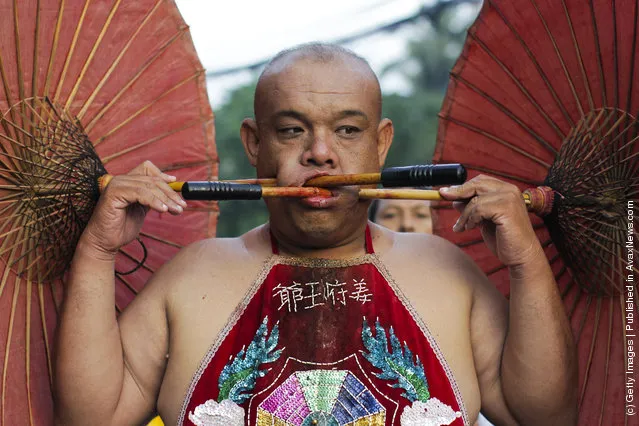
Devotees Practice Self Mutilation At Phuket Vegetarian Festival

A devotee of the Chinese shrine of Kathu Shrine, pierces his cheeks with umbrellas during a procession of Vegetarian Festival on October 4, 2011 in Phuket, Thailand. Ritual Vegetarianism in Phuket Island traces it roots back to the early 1800's. The festival begins on the first evening of the ninth lunar month and lasts for nine days. Participants in the festival perform acts of body piercing as a means of shifting evil spirits from individuals onto themselves and bring the community good luck. (Photo by Athit Perawongmetha/Getty Images)
Details
04 Oct 2011 10:49:00
Two holy men with a decorative faces and headdresses, taken in Kathmandu, Nepal. (Photo by Jan Moeller Hansen/Barcroft Images)

Two holy men with a decorative faces and headdresses, taken in Kathmandu, Nepal. Wandering through the cities and forests of Nepal are the holy men, or Sadhus, who have left all materialistic pleasures behind to live a life devoted to God. Their appearances vary from brightly coloured face paints, and decorations, to minimalistic practical clothing, but they all represent the fundamental values and meanings of Hinduism. Danish photographer Jan Moeller Hansen visited the ancient capital city of Kathmandu between 2013 and 2016 and documented the mysterious holy wanderers. (Photo by Jan Moeller Hansen/Barcroft Images)
Details
02 Feb 2017 05:02:00