Loading...
Done
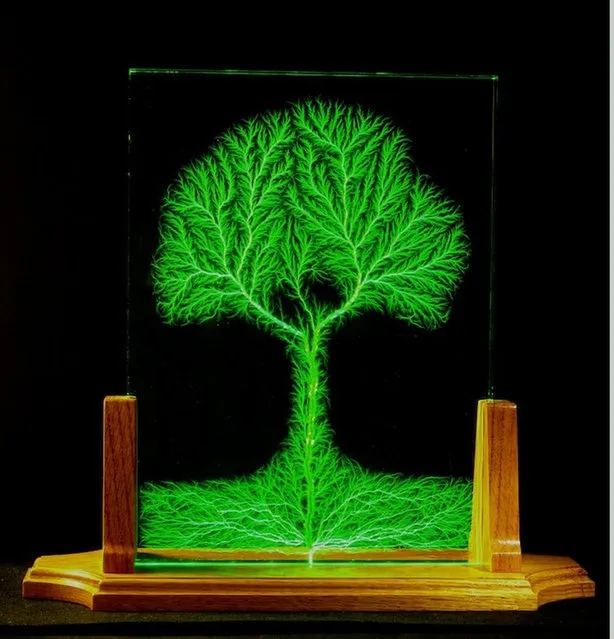
A Flash of Lightning by Bert Hickman

Hickman's experimental art, which reflects the vein-like extensions that electrical charges burn into surfaces they come in contact with, are referred to as Lichtenberg figures. The diverging patterns present in each of the artist's "paintings" are natural occurrences from subjecting the panels to tiny lightning storms through a handy device known as a particle accelerator. Hickman is like a modern-day Zeus, painting with lightning bolts.
Details
26 Nov 2012 14:15:00


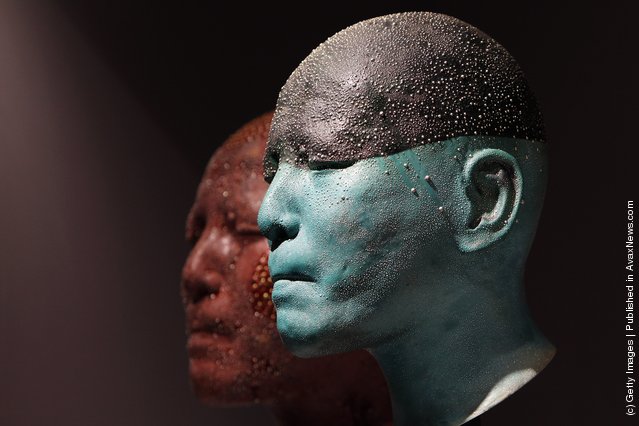
Two rare ceramic heads from a series by Japanese ceramicist Takahiro Kondo are displayed at the “Masterpiece London” Auction on June 29, 2011 in London, England. The second “Masterpieces London” sale is currently underway at The Royal Hospital Chelsea, showcasing fine and decorative arts, jewellery, classic cars, fine wines and sculpture from over 30 dealers. The event takes place from June 30 – July 5, 2011. (Photo by Dan Kitwood/Getty Images)
Details
30 Jun 2011 09:58:00
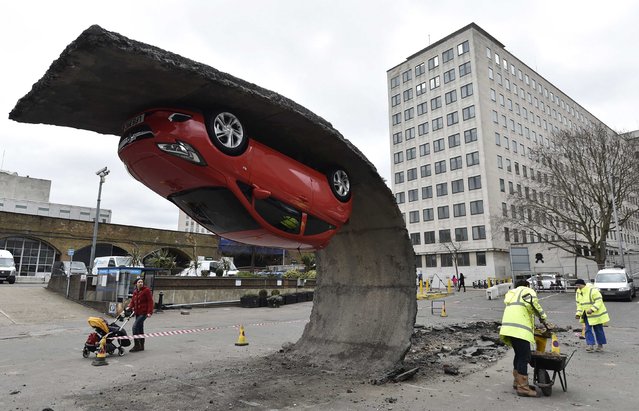
Pedestrians and workers pass an upside down car art installation in a car park on the South Bank in London, February 19, 2015. British artist Alex Chinneck's illusory piece, entitled “Pick yourself up and pull yourself together”, and on display in the working car park for a week, sees a Vauxhall car suspended upside down, appearing to be gripping onto a peeled back length of tarmac. (Photo by Toby Melville/Reuters)

Pedestrians and workers pass an upside down car art installation in a car park on the South Bank in London, February 19, 2015. British artist Alex Chinneck's illusory piece, entitled “Pick yourself up and pull yourself together”, and on display in the working car park for a week, sees a Vauxhall car suspended upside down, appearing to be gripping onto a peeled back length of tarmac. (Photo by Toby Melville/Reuters)
Details
20 Feb 2015 12:39:00
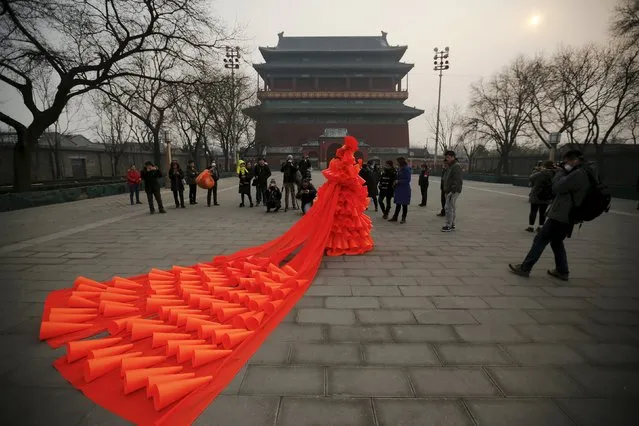
Chinese artist Kong Ning walks in her costume made of hundreds of orange plastic blowing horns during her art performance raising awareness of the hazardous smog in front of the Drum tower in a historical part of Beijing on a very polluted day December 7, 2015. (Photo by Damir Sagolj/Reuters)

Chinese artist Kong Ning walks in her costume made of hundreds of orange plastic blowing horns during her art performance raising awareness of the hazardous smog in front of the Drum tower in a historical part of Beijing on a very polluted day December 7, 2015. Kong, whose works include themes related to China's air pollution problem, named her new performance “The Orange Horns Bride Marries the Blue Sky” and presented it dressed in orange, the colour of the second highest pollution alert level issued again in Beijing as hazardous smog blankets the capital. (Photo by Damir Sagolj/Reuters)
Details
09 Dec 2015 08:05:00
New Illustrations In The Sky Between Buildings By Thomas Lamadieu

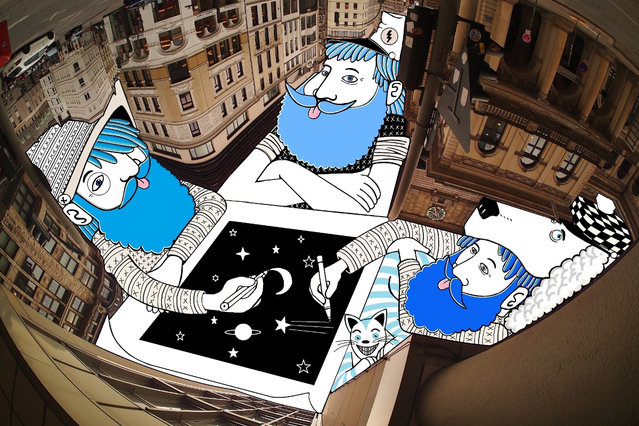
French artist Thomas Lamadieu, also know as Roots Art, must really love looking at the sky. Every time he looks up, Thomas sees a potential canvas where the building rooftops frame the sky. He photographs it and uses the odd sky shapes to create whimsical line drawings. “My artistic aim is to show a different perception of urban architecture and the everyday environment around us, what we can construct with a boundless imagination,” says Thomas. (Photo by Thomas Lamadieu)


See Also:Whimsical Sky Art by Thomas Lamadieu
Details
26 Apr 2014 11:43:00
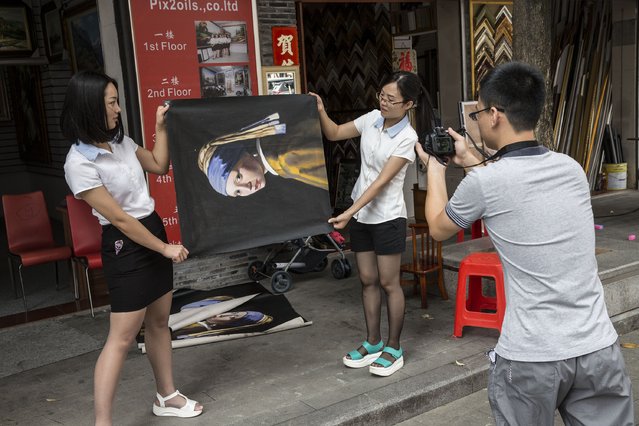
Salespeople roll out a reproduction of the famous work “Girl with a Pearl Earring” at the artist village on June 11, 2014 in Shenzhen, China. The Dafen Artist Village in Guangdong province, China, is home to thousands of artists who reproduce some of the world's most iconic paintings as well as create their own works. The village, on the outskirts of Shenzhen, is becoming a major center for original Chinese art. (Photo by Palani Mohan/Getty images)

Salespeople roll out a reproduction of the famous work “Girl with a Pearl Earring” at the artist village on June 11, 2014 in Shenzhen, China. The Dafen Artist Village in Guangdong province, China, is home to thousands of artists who reproduce some of the world's most iconic paintings as well as create their own works. The village, on the outskirts of Shenzhen, is becoming a major center for original Chinese art. (Photo by Palani Mohan/Getty images)
Details
22 Jun 2014 10:25:00
Cormorant masters and boatmen prepare sea cormorants for the nights “Ukai” on July 2, 2014 in Gifu, Japan. In this traditional fishing art “ukai”, a cormorant master called “usho” manages cormorants to capture ayu or sweetfish. The ushos of River Nagara have been the official staff of the Imperial Household Agency of Japan since 1890. Currently six imperial fishermen of Nagara River conduct special fishing to contribute to the Imperial family eight times a year, on top of daily fishing from mid-May to mid-October. (Photo by Chris McGrath/Getty Images)

Cormorant masters and boatmen prepare sea cormorants for the nights “Ukai” on July 2, 2014 in Gifu, Japan. In this traditional fishing art “ukai”, a cormorant master called “usho” manages cormorants to capture ayu or sweetfish. The ushos of River Nagara have been the official staff of the Imperial Household Agency of Japan since 1890. Currently six imperial fishermen of Nagara River conduct special fishing to contribute to the Imperial family eight times a year, on top of daily fishing from mid-May to mid-October. (Photo by Chris McGrath/Getty Images)
Details
04 Jul 2014 09:41:00
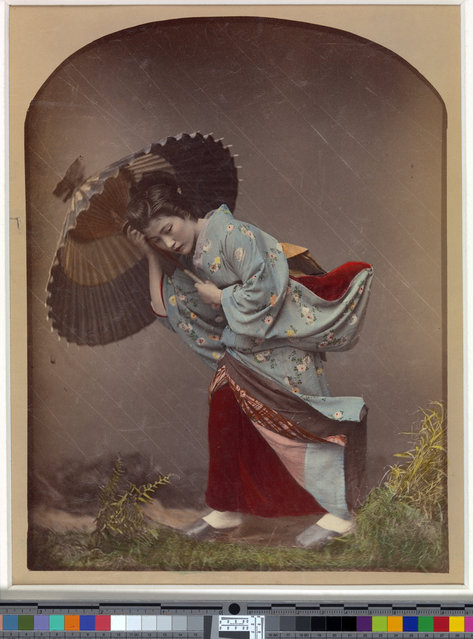
“Woman with Umbrella in Rain” by Raimund von Stillfried. Artist: Kusakabe Kimbei (Japanese, 1841–1934), 1870s. (Photo courtesy of The Metropolitan Museum of Art)

“Woman with Umbrella in Rain” by Raimund von Stillfried. Artist: Kusakabe Kimbei (Japanese, 1841–1934), 1870s. Commercial photography studios in Meiji-era Japan were renowned for the subtlety and refinement of their coloring techniques. This hand-tinted image of a young woman caught in a heavy rainstorm achieved its naturalistic effect by knitting together multiple strands of artifice: the greenery in the foreground was a studio prop; the flaps of the kimono were suspended by thin wires to create the impression of a strong wind; and long, diagonal marks were made on the negative to suggest streaks of rain. (Photo courtesy of The Metropolitan Museum of Art)
Details
12 May 2013 10:13:00