Loading...
Done
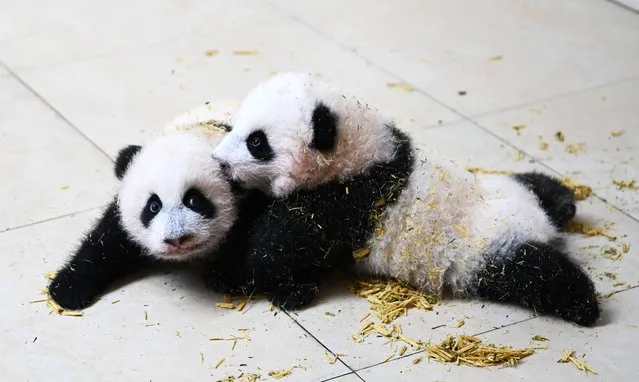
Giant panda Shuixiu's two babies are pictured at their room in Shenshuping base of China Conservation and Research Center for the Giant Panda on November 3, 2021 in Aba Tibetan and Qiang Autonomous Prefecture, Sichuan Province of China. (Photo by An Yuan/China News Service via Getty Images)

Giant panda Shuixiu's two babies are pictured at their room in Shenshuping base of China Conservation and Research Center for the Giant Panda on November 3, 2021 in Aba Tibetan and Qiang Autonomous Prefecture, Sichuan Province of China. (Photo by An Yuan/China News Service via Getty Images)
Details
07 Nov 2021 06:00:00
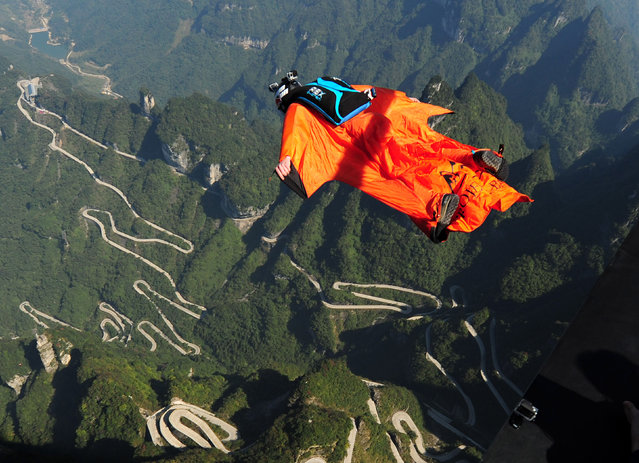
A participant in wingsuit flies above Tianmen Mountain at Zhangjiajie Scenic Spot during the 4th Red Bull WWL China Grand Prix on October 16, 2015 in Zhangjiajie, Hunan Province of China. The 4th Red Bull WWL China Grand Prix will last three days from October 16-18 in Zhangjiajie. (Photo by ChinaFotoPress/Getty Images)

A participant in wingsuit flies above Tianmen Mountain at Zhangjiajie Scenic Spot during the 4th Red Bull WWL China Grand Prix on October 16, 2015 in Zhangjiajie, Hunan Province of China. The 4th Red Bull WWL China Grand Prix will last three days from October 16-18 in Zhangjiajie. (Photo by ChinaFotoPress/Getty Images)
Details
18 Oct 2015 08:09:00
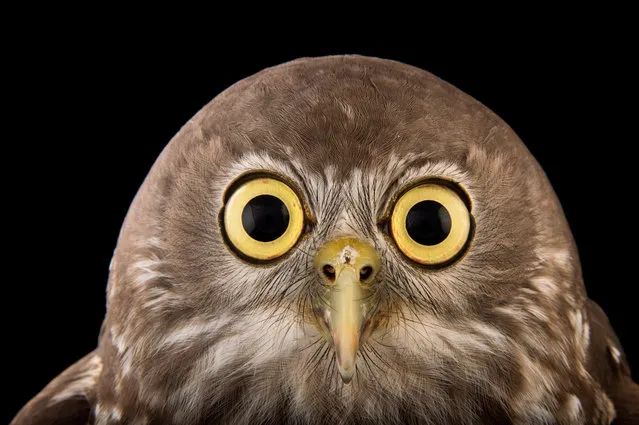
The National Geographic Photo Ark is a travelling exhibition of photographer Joel Sartore’s quest to create a photo archive of biodiversity around the world. So far, Sartore has captured studio portraits of more than 6,000 species – a number that he hopes to double. On 1 July, the ark will open at Melbourne zoo – the first time it has been exhibited in the southern hemisphere. More than 50 portraits will be on display, including many of Australian endangered animals being protected by programs at the zoo itself. These captions have been edited from text supplied by Melbourne zoo. Here: Barking owl. So-named because its call sounds like a barking dog, these birds are native to Australia, Indonesia and Papua New Guinea. In Victoria they are listed as an endangered species, and in 2003 there were estimated to be fewer than 50 breeding pairs. The main threat to the species in Victoria is loss of habitat, especially large trees with hollows in which they can nest and on which many of their prey depend. Apart from a bark, they may utter a chilling scream when they feel threatened. (Photo by Joel Sartore/National Geographic Photo Ark/The Guardian)

The National Geographic Photo Ark is a travelling exhibition of photographer Joel Sartore’s quest to create a photo archive of biodiversity around the world. So far, Sartore has captured studio portraits of more than 6,000 species – a number that he hopes to double. On 1 July, the ark will open at Melbourne zoo – the first time it has been exhibited in the southern hemisphere. More than 50 portraits will be on display, including many of Australian endangered animals being protected by programs at the zoo itself. These captions have been edited from text supplied by Melbourne zoo. Here: Barking owl. (Photo by Joel Sartore/National Geographic Photo Ark/The Guardian)
Details
01 Jul 2017 07:45:00
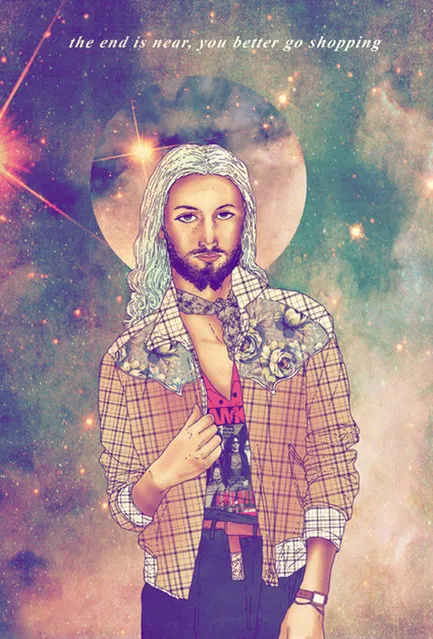
the end is near

The end is near

Fabian Ciraolo‘s Illustrations are so impressive that they could be described in many of the same ways, but we like them because they’re so f’ing cool. Where else are you going to find psychedelic space backgrounds decked out with Skeletor in a suit, Captain Planet playing guitar or Dorothy in an Empire of the Sun shirt in one place?
Details
10 Jun 2012 10:39:00
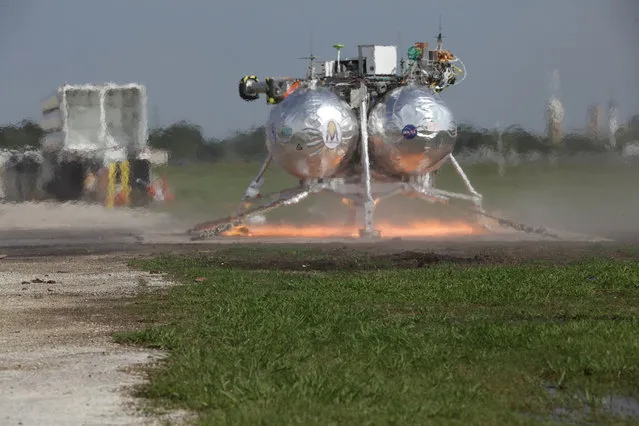
Morpheus Ground Level Hot Fire. Photo Date: April 2nd 2012. Location: VTB Flight Complex; Photographer: Joe Bibby

“A prototype lunar lander was destroyed on August 9, 2012, at Kennedy Space Center during its first free flight”. – James Dean via Florida Today

Photo: Morpheus Ground Level Hot Fire. Photo Date: April 2nd 2012. Location: VTB Flight Complex; Photographer: Joe Bibby
Details
10 Aug 2012 10:46:00
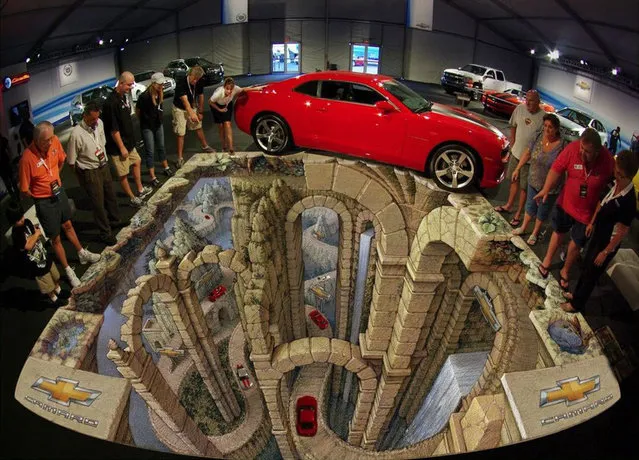
3d Street Art Kurt Wenner

American artist Kurt Wenner creates unparalleled three-dimensional drawings on asphalt streets and of floor. Kurt – A former employee of NASA, which is the love of the art of the Renaissance left the space agency and left to raise the artistic skills in Rome. Has a variety of awards in the arts. Here is a selection of his works made in different cities around the world.
Details
05 Jun 2014 22:01:00
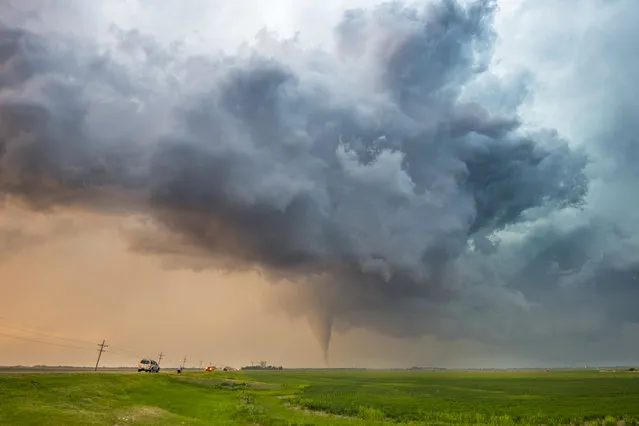
“The Sunsetter”. An EF-4 tornado rips through the open space of farmland near Rozel, Kansas. This tornado moves slowly but powerful towards the setting sun an gets its beautiful color right before sunset. Storm Chasers are spotting on the left side. Photo location: Rozel, Kansas. (Photo and caption by Dennis Oswald/National Geographic Photo Contest)

“The Sunsetter”. An EF-4 tornado rips through the open space of farmland near Rozel, Kansas. This tornado moves slowly but powerful towards the setting sun an gets its beautiful color right before sunset. Storm Chasers are spotting on the left side. Photo location: Rozel, Kansas. (Photo and caption by Dennis Oswald/National Geographic Photo Contest)

ATTENTION! All pictures are presented in high resolution. To see Hi-Res images – just TWICE click on any picture. In other words, click small picture – opens the BIG picture. Click BIG picture – opens VERY BIG picture.
Details
01 Dec 2013 11:03:00
On August 31, 2012, a long filament of solar material that had been hovering in the sun's atmosphere, the corona, erupted out into space at 4:36 p.m. EDT. The coronal mass ejection, or CME, traveled at over 900 miles per second. The CME did not travel directly toward Earth, but did connect with Earth's magnetic environment, or magnetosphere, causing aurora to appear on the night of Monday, September 3. (Photo by NASA/GSFC/SDO)

On August 31, 2012, a long filament of solar material that had been hovering in the sun's atmosphere, the corona, erupted out into space at 4:36 p.m. EDT. The coronal mass ejection, or CME, traveled at over 900 miles per second. The CME did not travel directly toward Earth, but did connect with Earth's magnetic environment, or magnetosphere, causing aurora to appear on the night of Monday, September 3. (Photo by NASA/GSFC/SDO via The Atlantic)
Details
14 Sep 2012 09:01:00