Loading...
Done
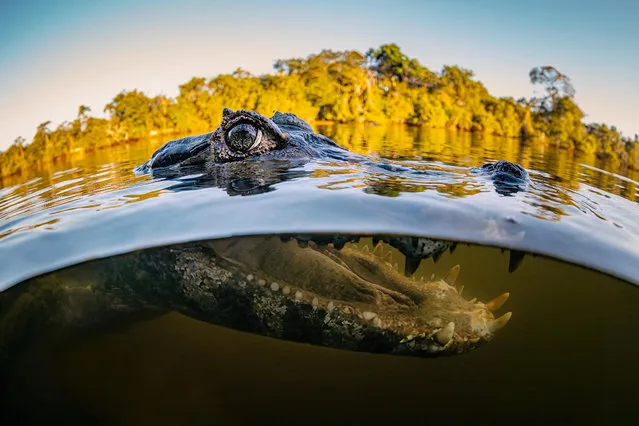
A caiman in the Pantanal region of Brazil in 2021. They are used to seeing humans, allowing the photographer, Leighton Lum, a close-up shot. (Photo by Leighton Lum/Caters News Agency)

A caiman in the Pantanal region of Brazil in 2021. They are used to seeing humans, allowing the photographer, Leighton Lum, a close-up shot. (Photo by Leighton Lum/Caters News Agency)
Details
02 Sep 2021 02:14:00
A performer wearing a face shield looks on during a ceremony held by the Bangkok National Museum to celebrate the return of two ancient relics, believed to have been stolen from Thailand about 60 years ago, from the United States, in Bangkok, Thailand on May 31, 2021. (Photo by Soe Zeya Tun/Reuters)

A performer wearing a face shield looks on during a ceremony held by the Bangkok National Museum to celebrate the return of two ancient relics, believed to have been stolen from Thailand about 60 years ago, from the United States, in Bangkok, Thailand on May 31, 2021. (Photo by Soe Zeya Tun/Reuters)
Details
05 Sep 2021 05:52:00
A young festivalgoer jumps to burst a bubble at Latitude Festival at Henham Park, Britain, July 22, 2021. (Photo by Peter Cziborra/Reuters)

A young festivalgoer jumps to burst a bubble at Latitude Festival at Henham Park, Britain, July 22, 2021. (Photo by Peter Cziborra/Reuters)
Details
23 Sep 2021 08:16:00
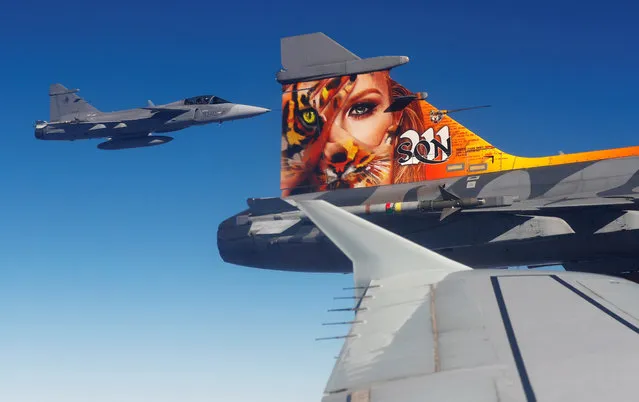
Two Czech Gripen fighter planes demonstrate a flight interception of a Belgian air force transport plane over the Czech Republic, as part of NATO drills on September 12, 2018. (Photo by Francois Lenoir/Reuters)

Two Czech Gripen fighter planes demonstrate a flight interception of a Belgian air force transport plane over the Czech Republic, as part of NATO drills on September 12, 2018. (Photo by Francois Lenoir/Reuters)
Details
28 Sep 2018 00:01:00
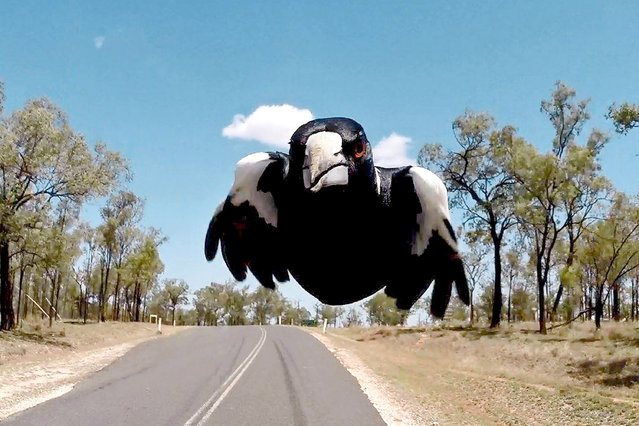
This perfectly-timed GoPro snap captures the moment an angrymagpiecame within inches of a biker, as swooping season takes hold in Australia. The notoriously aggressive bird can be seen flying with its wings tucked in so it looks exactly like a torpedo in the magnificent photograph from Middlemount, Queensland. Retail businesswoman Monique Newton, 53 was riding pillion with a friend when she spied the divebombing bird – but rather than speed off, they slowed down to capture it up close. (Photo by Monique Newton/Caters News Agency)

This perfectly-timed GoPro snap captures the moment an angrymagpiecame within inches of a biker, as swooping season takes hold in Australia. The notoriously aggressive bird can be seen flying with its wings tucked in so it looks exactly like a torpedo in the magnificent photograph from Middlemount, Queensland. Retail businesswoman Monique Newton, 53 was riding pillion with a friend when she spied the divebombing bird – but rather than speed off, they slowed down to capture it up close. (Photo by Monique Newton/Caters News Agency)
Details
30 Sep 2018 06:21:00
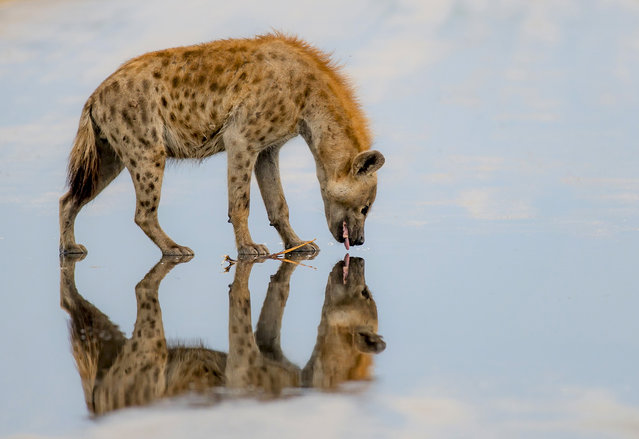
A hyena kisses his own reflection while appearing to walk on water. (Photo by Jake De Wet/Caters News Agency)

A hyena kisses his own reflection while appearing to walk on water. (Photo by Jake De Wet/Caters News Agency)
Details
07 Oct 2018 00:03:00
Women are reflected in a puddle as they walk across Red Square in Moscow, Russia on April 26, 2018. (Photo by Yuri Kadobnov/AFP Photo)

Women are reflected in a puddle as they walk across Red Square in Moscow, Russia on April 26, 2018. (Photo by Yuri Kadobnov/AFP Photo)
Details
25 Oct 2018 00:03:00
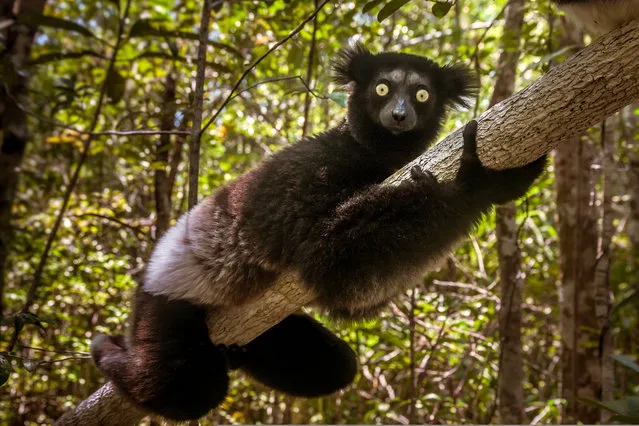
The secretive indri (Indri indri) of Madagascar, the largest living lemur. It is also critically endangered and highly evolutionarily distinct with no close relatives, which makes its branch one of most precarious on the mammal evolutionary tree. In the likely event that the indri goes extinct, we will lose 19m years of unique evolutionary history from the mammal tree of life. (Photo by Pierre-Yves Babelon/Aarhus University)

The secretive indri (Indri indri) of Madagascar, the largest living lemur. It is also critically endangered and highly evolutionarily distinct with no close relatives, which makes its branch one of most precarious on the mammal evolutionary tree. In the likely event that the indri goes extinct, we will lose 19m years of unique evolutionary history from the mammal tree of life. (Photo by Pierre-Yves Babelon/Aarhus University)

Details
18 Nov 2018 00:02:00