Loading...
Done
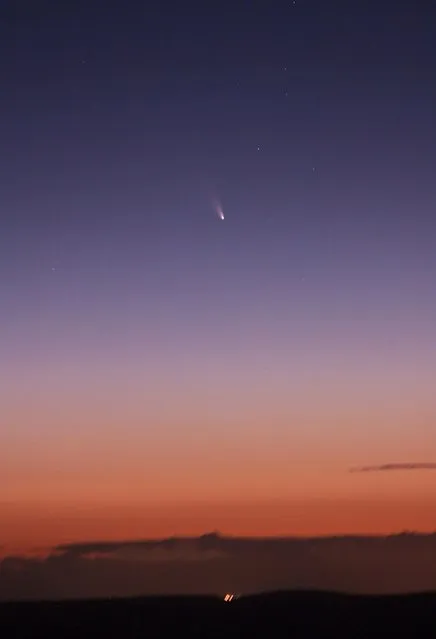
This image provided by NASA shoaws the comet PANSTARRS as seen from Mount Dale, Western Australia on March 5, 2013. According to NASA on March 10, it will make its closest approach to the sun about 28 million miles (45 million kilometers) away. As it continues its nightly trek across the sky, the comet may get lost in the sun's glare but should return and be visible to the naked eye by March 12. (Photo by AP Photo/NASA)

It’s time to start watching for Comet PANSTARRS, one of two comets to get excited about in 2013. Photo: This image provided by NASA shoaws the comet PANSTARRS as seen from Mount Dale, Western Australia on March 5, 2013. According to NASA on March 10, it will make its closest approach to the sun about 28 million miles (45 million kilometers) away. As it continues its nightly trek across the sky, the comet may get lost in the sun's glare but should return and be visible to the naked eye by March 12. (Photo by AP Photo/NASA)
Details
13 Mar 2013 08:03:00
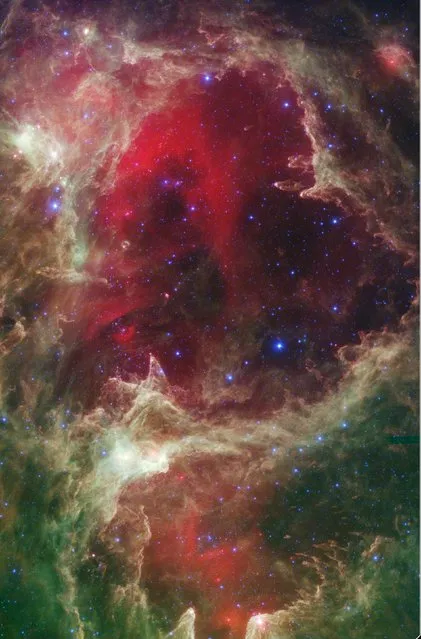
An infrared portrait from NASA's Spitzer Space Telescope which shows generations of stars is seen in this undated NASA handout image released February 14, 2013. In this wispy star-forming region, called W5, the oldest stars can be seen as blue dots in the centers of the two hollow cavities (other blue dots are background and foreground stars not associated with the region). Red shows heated dust that pervades the region's cavities, while green highlights dense clouds. (Photo by NASA/Reuters/JPL-Caltech/Harvard-Smithsonian/Handout)

An infrared portrait from NASA's Spitzer Space Telescope which shows generations of stars is seen in this undated NASA handout image released February 14, 2013. In this wispy star-forming region, called W5, the oldest stars can be seen as blue dots in the centers of the two hollow cavities (other blue dots are background and foreground stars not associated with the region). Red shows heated dust that pervades the region's cavities, while green highlights dense clouds. (Photo by NASA/Reuters/JPL-Caltech/Harvard-Smithsonian/Handout)
Details
03 Mar 2013 08:44:00
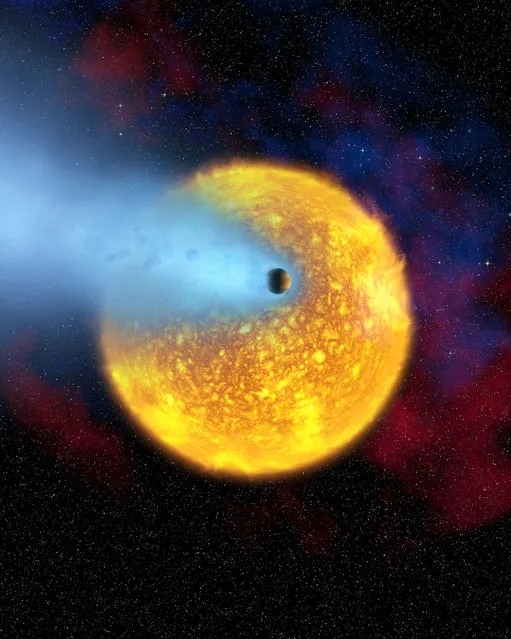
Dramatic changes spotted in HD 189733b exoplanet atmosphere

This artist's rendering illustrates the evaporation of HD 189733b's atmosphere in response to a powerful eruption from its host star. NASA's Hubble Space Telescope detected the escaping gases and NASA's Swift satellite caught the stellar flare. (Credit: NASA's Goddard Space Flight Center)
Details
29 Jun 2012 09:45:00
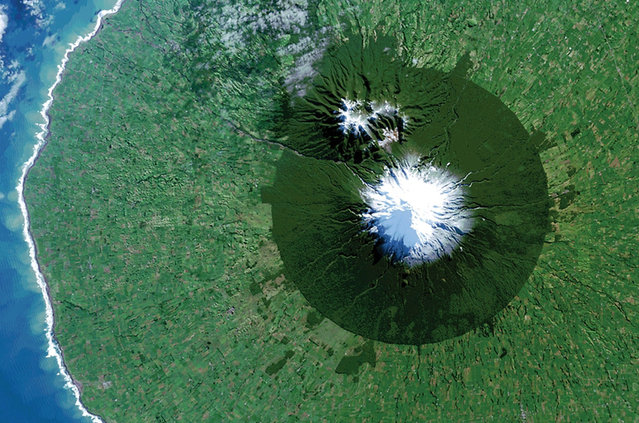
Egmont National Park in New Zealand with Mt. Taranaki at its center is seen in a Landsat 8 satellite image. (Photo by Reuters/NASA/USGS)

Egmont National Park in New Zealand with Mt. Taranaki at its center is seen in a Landsat 8 satellite image taken July 3, 2014 and released by NASA November 14, 2014. The image is from the book “Sanctuary: Exploring the World's Protected Areas from Space”, published by the Institute for Global Environmental Strategies with support from NASA, which was released this week. (Photo by Reuters/NASA/USGS)
Details
16 Nov 2014 12:15:00
Advanced Space Suit Engineer at NASA Kristine Davis wears the xEMU prototype space suit for the next astronaut to the moon by 2024, during its presentation at NASA headquarters in Washington, U.S., October 15, 2019. (Photo by Carlos Jasso/Reuters)

Advanced Space Suit Engineer at NASA Kristine Davis wears the xEMU prototype space suit for the next astronaut to the moon by 2024, during its presentation at NASA headquarters in Washington, U.S., October 15, 2019. (Photo by Carlos Jasso/Reuters)
Details
22 Oct 2019 00:03:00
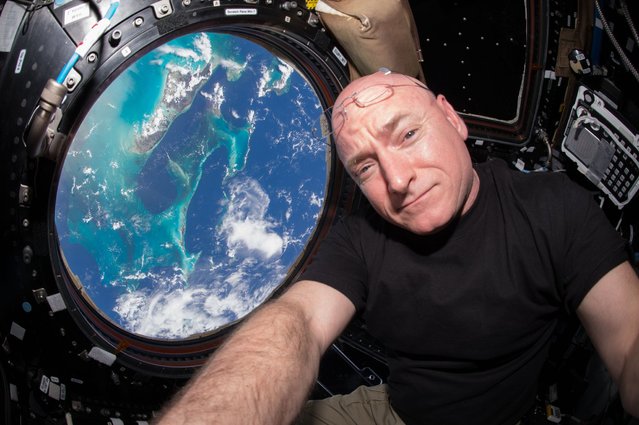
Expedition 44 flight engineer and NASA astronaut Scott Kelly seen inside the Cupola, a special module which provides a 360-degree viewing of the Earth and the International Space Station. Kelly is one of two crew members spending an entire year in space. (Photo by Scott Kelly/NASA)

Expedition 44 flight engineer and NASA astronaut Scott Kelly seen inside the Cupola, a special module which provides a 360-degree viewing of the Earth and the International Space Station. Kelly is one of two crew members spending an entire year in space. (Photo by Scott Kelly/NASA)
Details
25 Feb 2016 12:05:00
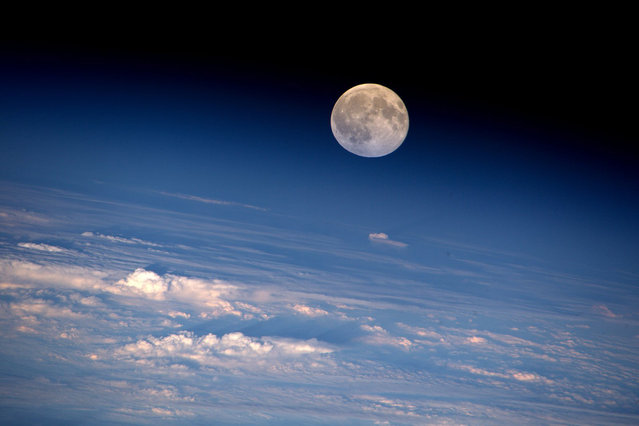
This week's full Moon as photographed from on board the International Space Station by NASA astronaut Jeff Williams on August 19, 2016. Jeff is currently Commander of the Space Station for the Expedition 48 crew. (Photo by Jeff Williams/NASA)

This week's full Moon as photographed from on board the International Space Station by NASA astronaut Jeff Williams on August 19, 2016. Jeff is currently Commander of the Space Station for the Expedition 48 crew. (Photo by Jeff Williams/NASA)
Details
13 Oct 2016 11:48:00
NASA astronauts Stan Love and Loral O’Hara test Axiom Space’s lunar spacesuits underwater on October 1, 2025. The AxEMU suit is designed for the Artemis III mission to the moon’s south pole, due to lift off no earlier than mid-2027. (Photo by NBL/NASA via South West News Service)

NASA astronauts Stan Love and Loral O’Hara test Axiom Space’s lunar spacesuits underwater on October 1, 2025. The AxEMU suit is designed for the Artemis III mission to the moon’s south pole, due to lift off no earlier than mid-2027. (Photo by NBL/NASA via South West News Service)
Details
08 Oct 2025 03:56:00