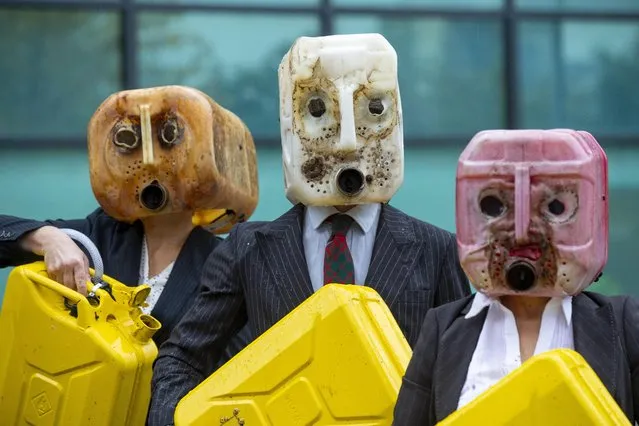
Ocean Rebellion put on a display of puking oil heads ahead of climate change conference COP26 in Glasgow, Britain, 29 October 2021. (Photo by Robert Perry/EPA/EFE)
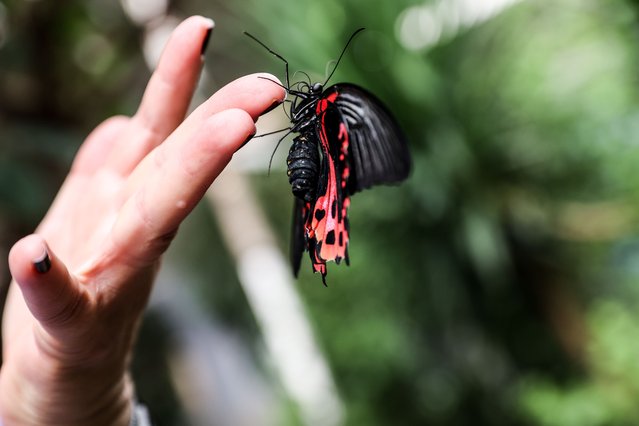
A butterfly is seen at a farm in Beykoz disrtict of Istanbul, Turkey on October 26, 2021. Cigdem Unlu runs a farm where 800 butterflies live and being presented to the visitors as the environment exclusively weathered for butterflies. (Photo by Elif Ozturk Ozgoncu/Anadolu Agency via Getty Images)
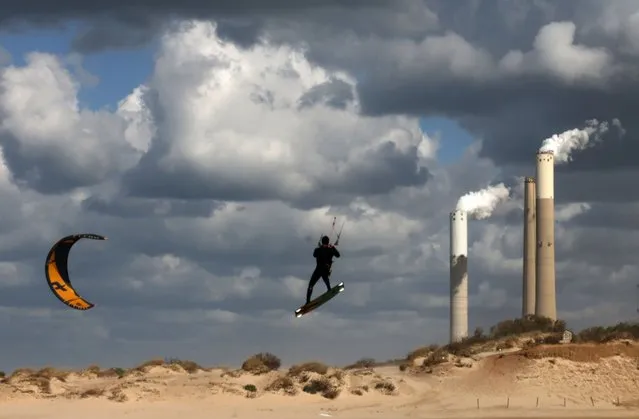
Kite-surfers practice in a water reservoir at the shores of the Mediterranean sea close to the southern Israeli kibbutz of Ziqim during stormy weather, on December 20, 2021. (Photo by Menahem Kahana/AFP Photo)
Students of the Krasnoyarsk choreographic college Anastasia Shevtsova (R) and Yulia Lyakhovykh do leg-splits as they study for an exam and a performance by the graduates at the State Theatre of Opera and Ballet, at the college's campus in the Siberian city of Krasnoyarsk, Russia, May 4, 2017. (Photo by Ilya Naymushin/Reuters)
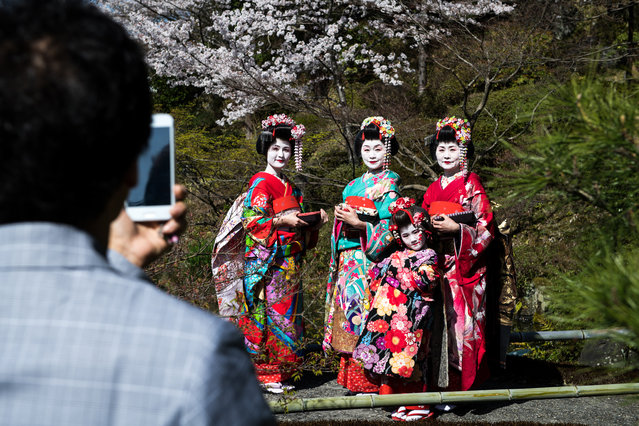
A family wearing traditional Japanese clothing posed for a photograph during spring season in one of the garden in Kiyomizu dera, Kyoto prefecture, Japan on March 30, 2018. (Photo by Richard Atrero de Guzman/NurPhoto via Getty Images)
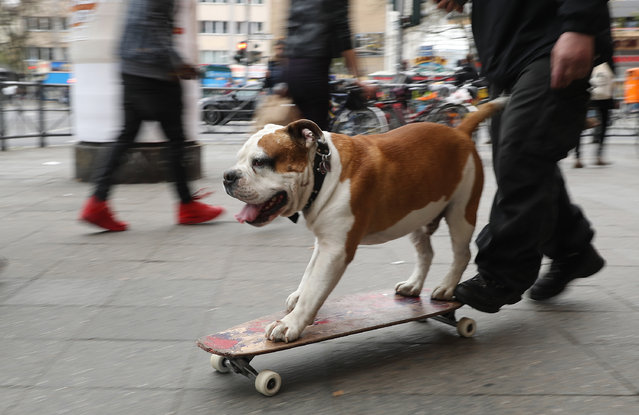
A dog, at the behest of his owner, rides a skatebaord on April 3, 2017 in Berlin, Germany. The dog's owner, who looked like he might be homeless, coaxed the dog to ride the skatebaord and asked passersby who stopped to watch for money. (Photo by Sean Gallup/Getty Images)
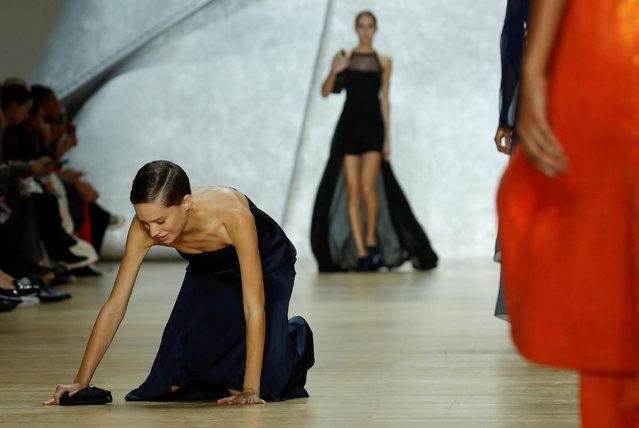
A model stumbles as she presents a creation by Swiss designer Albert Kriemler as part of his Spring/Summer 2020 women's ready-to-wear collection show for fashion house Akris during the Paris Fashion Week in Paris, France, September 29, 2019. (Photo by Gonzalo Fuentes/Reuters)
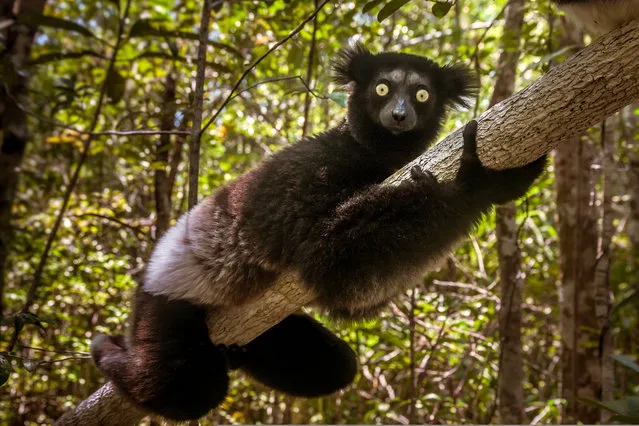
The secretive indri (Indri indri) of Madagascar, the largest living lemur. It is also critically endangered and highly evolutionarily distinct with no close relatives, which makes its branch one of most precarious on the mammal evolutionary tree. In the likely event that the indri goes extinct, we will lose 19m years of unique evolutionary history from the mammal tree of life. (Photo by Pierre-Yves Babelon/Aarhus University)