Loading...
Done
Fire ravages vegetation during the Cerro de los Pinos wildfire on August 04, 2025 in Cáceres, Spain. Firefighters from Cáceres and INFOEX forest firefighters are battling fires, as high temperatures continue to put the Extremadura region at extreme risk of further wildfires. (Photo by Carlos Gil Andreu/Getty Images)

Fire ravages vegetation during the Cerro de los Pinos wildfire on August 04, 2025 in Cáceres, Spain. Firefighters from Cáceres and INFOEX forest firefighters are battling fires, as high temperatures continue to put the Extremadura region at extreme risk of further wildfires. (Photo by Carlos Gil Andreu/Getty Images)
Details
21 Aug 2025 03:30:00
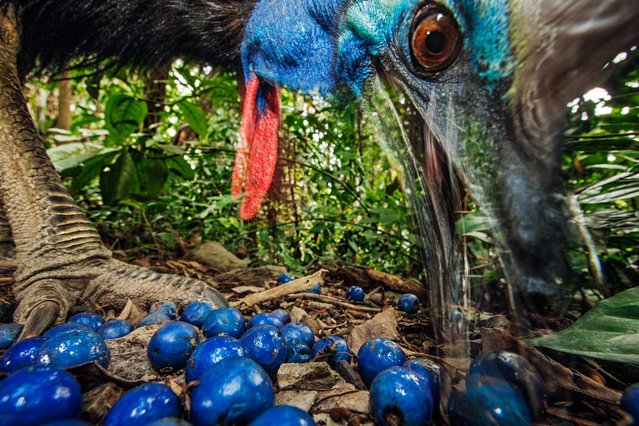
“Cassowaries are large, flightless birds related to emus and (more distantly) to ostriches, rheas, and kiwis”, writes Olivia Judson in the September issue of National Geographic magazine. (Photo by Christian Ziegler/National Geographic)

“Cassowaries are large, flightless birds related to emus and (more distantly) to ostriches, rheas, and kiwis”, writes Olivia Judson in the September issue of National Geographic magazine. How large? People-size: Adult males stand well over five foot five and top 110 pounds. Females are even taller, and can weigh more than 160 pounds. Dangerous when roused, they’re shy and peaceable when left alone. But even birds this big and tough are prey to habitat loss. The dense New Guinea and Australia rain forests where they live have dwindled. Today cassowaries might number 1,500 to 2,000. And because they help shape those same forests – by moving seeds from one place to another – “if they vanish”, Judson writes, “the structure of the forest would gradually change” too. (Photo by Christian Ziegler/National Geographic)
Details
06 Jan 2014 12:21:00


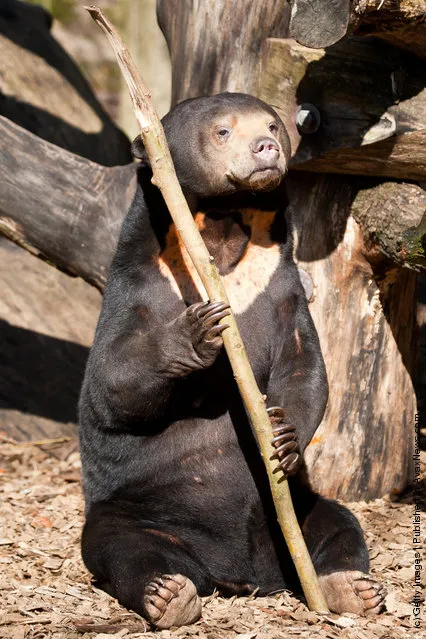
The sun bear (Ursus malayanus), also known as the honey bear, is a bear found primarily in the tropical rainforest (the dense lowland forests) in Southeast Asia; North-East India, Bangladesh, Myanmar, Thailand, Laos, Cambodia, Vietnam, Southern China, Peninsular Malaysia, and the islands of Sumatra and Borneo.
Details
03 May 2012 23:37:00


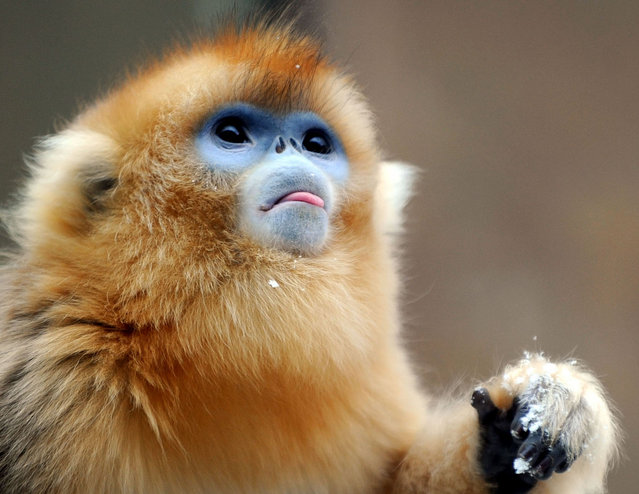
The golden monkey (Cercopithecus kandti) is a species of Old World monkey found in the Virunga volcanic mountains of Central Africa, including four national parks: Mgahinga, in south-west Uganda; Volcanoes, in north-west Rwanda; and Virunga and Kahuzi-Biéga, in the eastern Democratic Republic of Congo. It is restricted to highland forest, especially near bamboo.
Details
07 May 2012 04:39:00
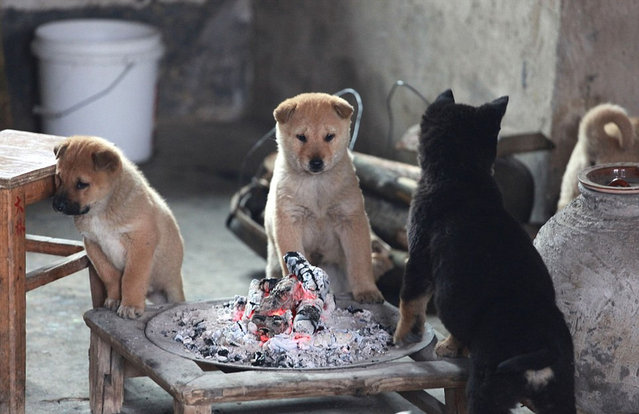
Puppies Around Fire Pit For Warmth

Despite their thick fur, this group of dogs and puppies in China feel the cold. Luckily, in the winter, they're allowed to huddle round a staff canteen stove in their home in Jiulongjiang Forest Park, Rucheng County.
Details
06 Mar 2014 13:39:00
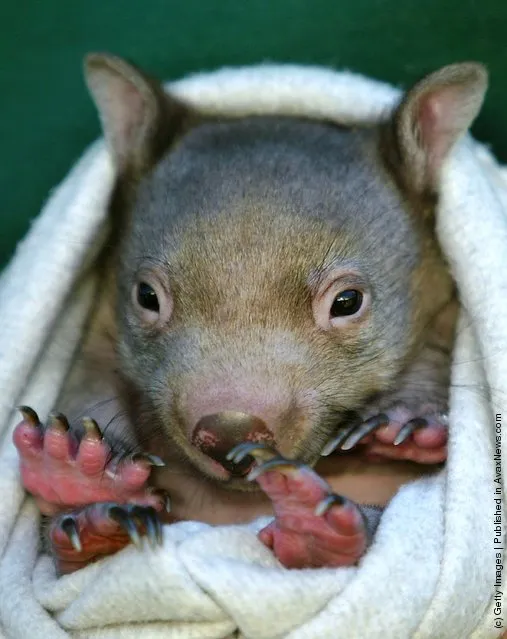
A baby Common Wombat

“Wombats are Australian marsupials; they are short-legged, muscular quadrupeds, approximately 1 metre (39 in) in length with a short, stubby tail. They are adaptable in their habitat tolerances, and are found in forested, mountainous, and heathland areas of south-eastern Australia, including Tasmania, as well as an isolated patch of about 300 ha in Epping Forest National Park in central Queensland”. – Wikipedia

Photo: “Abdul”, a baby Common Wombat, is one of the marsupials on show during the spring baby boom at Taronga Zoo September 1, 2005 in Sydney, Australia. “Abdul” was orphaned when his mother was killed by a car. (Photo by Mark Nolan/Getty Images)
Details
20 Aug 2011 11:23:00
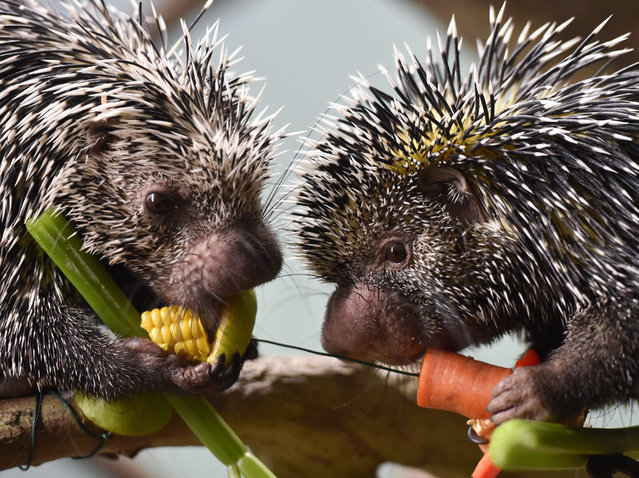
The coendou porcupine couple 'Joppi' (L) and 'Fletcher' nibble at a vegetables in their enclosure at the zoo in Frankfurt am Main, Germany, 03 December 2015. Coendou porcupines are nocturnal rodents related to porcupines and guinea pigs and native to the rain forests of Central and South America as well as Trinidad. (Photo by Arne Dedert/EPA)

The coendou porcupine couple 'Joppi' (L) and 'Fletcher' nibble at a vegetables in their enclosure at the zoo in Frankfurt am Main, Germany, 03 December 2015. Coendou porcupines are nocturnal rodents related to porcupines and guinea pigs and native to the rain forests of Central and South America as well as Trinidad. (Photo by Arne Dedert/EPA)
Details
05 Dec 2015 08:03:00
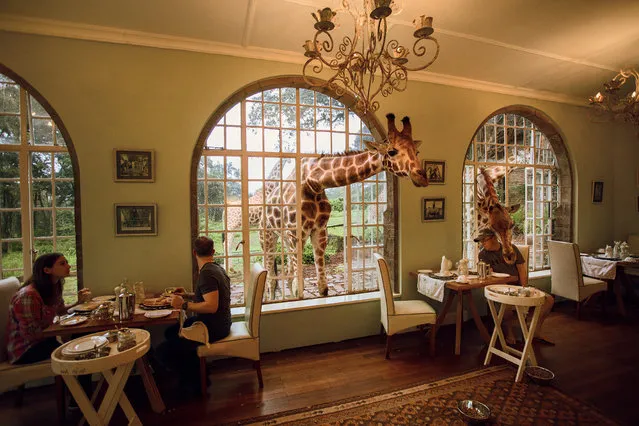
The giraffes visit twice a day searching for food, before returning to the forest. Although still wild animals, they have become accustomed to receiving treats from residents and guests. (Photo by Klaus Thymann)

Situated 10km outside Nairobi city centre, this private giraffe sanctuary is centred around a colonial manor house named Giraffe Manor. Living within the grounds is a herd of rare Rothschild giraffe. The giraffes visit twice a day searching for food, before returning to the forest. Although still wild animals, they have become accustomed to receiving treats from residents and guests. (Photo by Klaus Thymann)
Details
28 Jan 2016 12:36:00