Loading...
Done
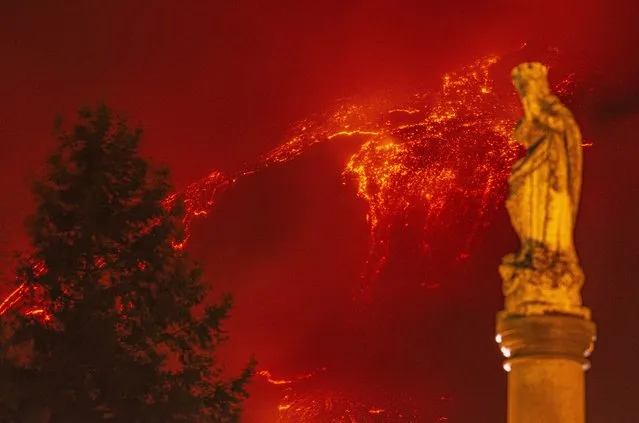
Mount Etna erupts near Sicily, Italy on March 15, 2021. This is the thirteenth time in twenty-eight days. During the early evening of 14 March and the night between 14 and 15 March a strombolian activity at the Southeast Crater gradually increased, leading to a paroxysmal event which had its peak around 01:00 am, ash blown by the wind touched the south-southeast slope of the volcano reaching also Catania, the event ceased completely around 3:45, photo taken from Milo near Catania on March 15, 2021. (Photo by Salvatore Allegra/Anadolu Agency via Getty Images)

Mount Etna erupts near Sicily, Italy on March 15, 2021. This is the thirteenth time in twenty-eight days. During the early evening of 14 March and the night between 14 and 15 March a strombolian activity at the Southeast Crater gradually increased, leading to a paroxysmal event which had its peak around 01:00 am, ash blown by the wind touched the south-southeast slope of the volcano reaching also Catania, the event ceased completely around 3:45, photo taken from Milo near Catania on March 15, 2021. (Photo by Salvatore Allegra/Anadolu Agency via Getty Images)
Details
24 Mar 2021 10:25:00
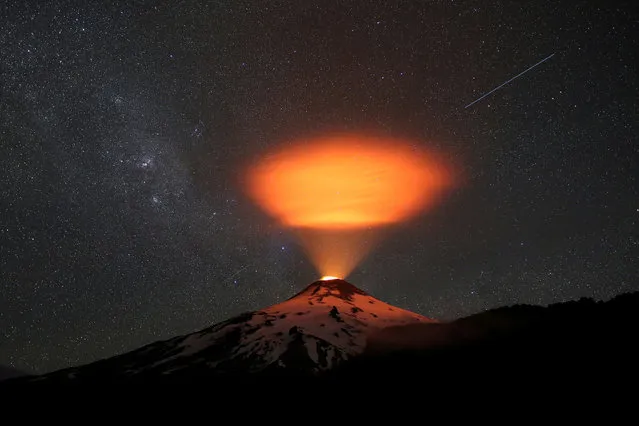
The Villarrica volcano lights up the sky at night seen from Pucon town, Chile on December 14, 2023. (Photo by Cristobal Saavedra Escobar/Reuters)

The Villarrica volcano lights up the sky at night seen from Pucon town, Chile on December 14, 2023. (Photo by Cristobal Saavedra Escobar/Reuters)
Details
22 Dec 2023 00:17:00
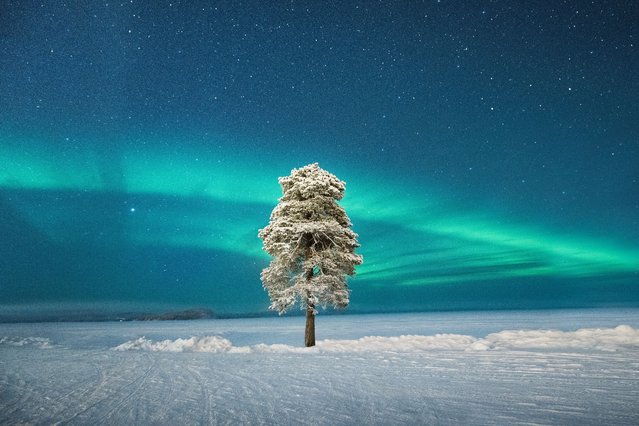
Aurorae category runner-up: Lone Tree under a Scandinavian Aurora by Tom Archer (UK). The photographer decided to explore the area around the hotel on a very crisp -35C evening in Finnish Lapland. When he found this tree, he decided to wait for the misty conditions to change and could not believe his luck when the sky cleared and the aurora came out in the perfect spot. Archer spent about an hour photographing it before his camera started to lock up because of the harsh conditions, but by then he was happy to call it a night. (Photo by Tom Archer/2020 Astronomy Photographer of the Year)

Aurorae category runner-up: Lone Tree under a Scandinavian Aurora by Tom Archer (UK). The photographer decided to explore the area around the hotel on a very crisp -35C evening in Finnish Lapland. When he found this tree, he decided to wait for the misty conditions to change and could not believe his luck when the sky cleared and the aurora came out in the perfect spot. Archer spent about an hour photographing it before his camera started to lock up because of the harsh conditions, but by then he was happy to call it a night. (Photo by Tom Archer/2020 Astronomy Photographer of the Year)
Details
17 Sep 2020 00:03:00
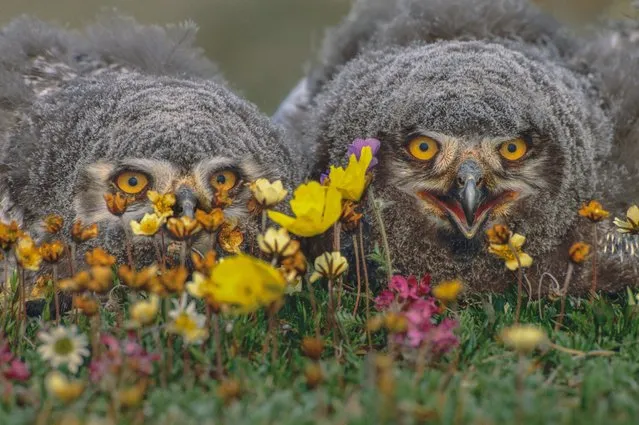
Snowy owlets (Bubo scandiacus), Arctic National Wildlife Refuge, Alaska, USA. “A pair of gray-feathered snowy owlets hunker down in the abundant flowers that flourish in the dropping-enriched soil of their nest mound”. (Photo by Art Wolfe/Art Wolfe Stock)

The photography of Art Wolfe covers the globe, capturing landscapes, wildlife, and cultures from every continent; here he talks through a selection of his favourite images. Art Wolfe is an American photographer and conservationist. His photographs have been noted by environmental advocacy groups for their “stunning” visual impact. Here: Snowy owlets (Bubo scandiacus), Arctic National Wildlife Refuge, Alaska, USA. (Photo by Art Wolfe/Art Wolfe Stock)
Details
19 Mar 2018 00:05:00
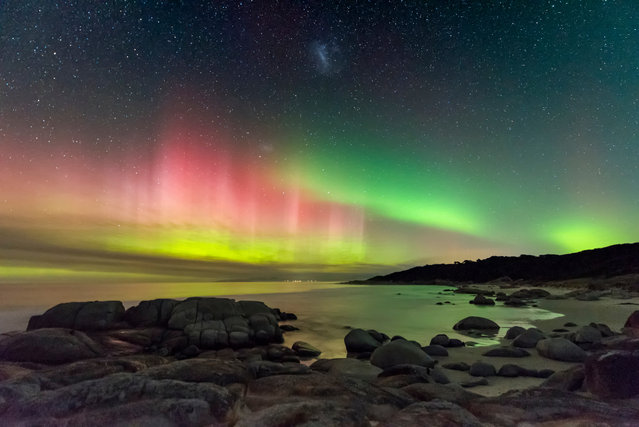
Aurora Australis from Beerbarrel Beach, by James Stone. Runner Up: Aurorae. (Photo by James Stone/Astronomy Photographer of the Year)

Aurora Australis from Beerbarrel Beach, by James Stone. Runner Up: Aurorae. (Photo by James Stone/Astronomy Photographer of the Year)
Details
14 Sep 2019 00:05:00
The Cygnus Wall is in the southern  area of NGC7000 also known as the North America Nebula. It is approximately 1800 light years from Earth, and is in the constellation Cygnus. The Wall is an energized shock front and contains the most concentrated star formations in the nebula. The size of the North America Nebula is about 4 full moons. (Bill Snyder)

Amateur astronomer Bill Snyder has been involved with astrophotography since 2007. Photo: The Cygnus Wall is in the southern area of NGC7000 also known as the North America Nebula. It is approximately 1800 light years from Earth, and is in the constellation Cygnus. The Wall is an energized shock front and contains the most concentrated star formations in the nebula. The size of the North America Nebula is about 4 full moons. (Photo and caption by Bill Snyder)
Details
30 Oct 2013 09:15:00
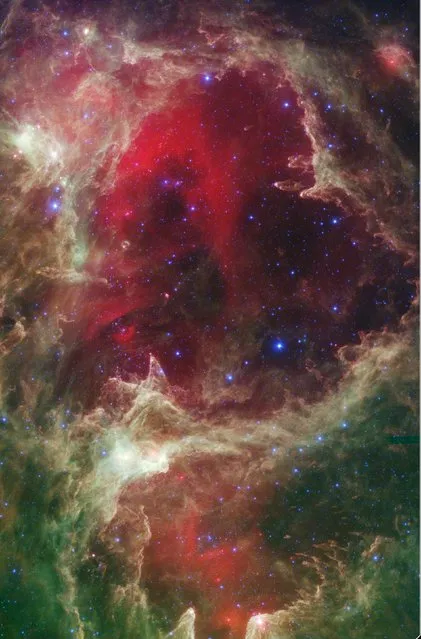
An infrared portrait from NASA's Spitzer Space Telescope which shows generations of stars is seen in this undated NASA handout image released February 14, 2013. In this wispy star-forming region, called W5, the oldest stars can be seen as blue dots in the centers of the two hollow cavities (other blue dots are background and foreground stars not associated with the region). Red shows heated dust that pervades the region's cavities, while green highlights dense clouds. (Photo by NASA/Reuters/JPL-Caltech/Harvard-Smithsonian/Handout)

An infrared portrait from NASA's Spitzer Space Telescope which shows generations of stars is seen in this undated NASA handout image released February 14, 2013. In this wispy star-forming region, called W5, the oldest stars can be seen as blue dots in the centers of the two hollow cavities (other blue dots are background and foreground stars not associated with the region). Red shows heated dust that pervades the region's cavities, while green highlights dense clouds. (Photo by NASA/Reuters/JPL-Caltech/Harvard-Smithsonian/Handout)
Details
03 Mar 2013 08:44:00
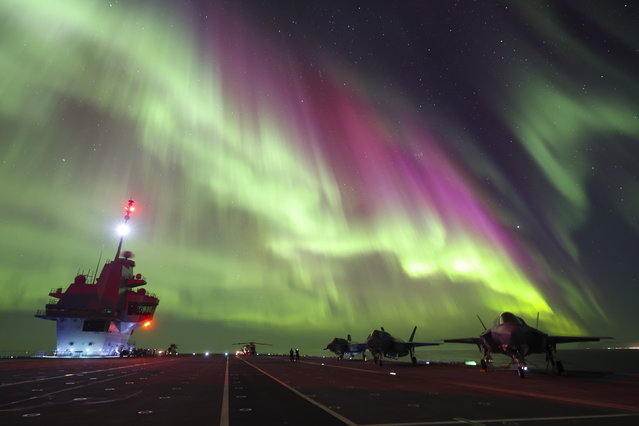
In this photo provided by Britain's Ministry of Defense, on Monday, March 4, 2024, F-35B Lightning jets are parked at a flight deck of HMS Prince of Wales aircraft carrier of the Royal Navy, under the northern lights (Aurora Borealis) near the coast of Norway, Sunday, March 3, 2024. (Photo by UK Ministry of Defence via AP Photo)

In this photo provided by Britain's Ministry of Defense, on Monday, March 4, 2024, F-35B Lightning jets are parked at a flight deck of HMS Prince of Wales aircraft carrier of the Royal Navy, under the northern lights (Aurora Borealis) near the coast of Norway, Sunday, March 3, 2024. (Photo by UK Ministry of Defence via AP Photo)
Details
14 May 2024 04:45:00