Loading...
Done
Behind A Little House By Manuel Cosentino

For his Behind a Little House Project Italian photographer Manuel Cosentino found an unsuspecting muse: a tiny nondescript house on an unexceptional hill. He returned to photograph the small building from the exact same location for nearly two years in order to capture the dramatic changes in weather and light that utterly changed the scenery just beyond the horizon
Details
31 Jul 2013 10:26:00
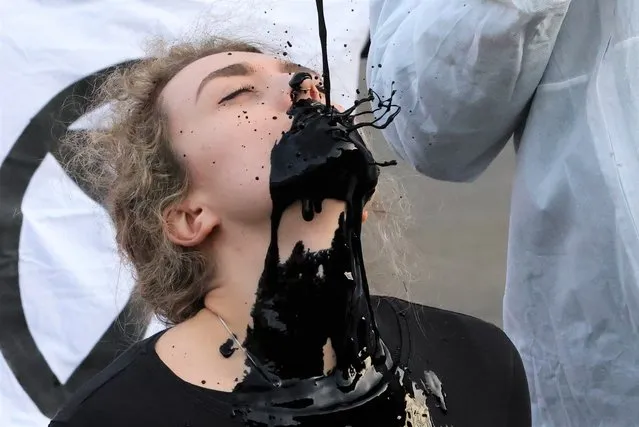
A man pours fake fuel on the face of a protester as they perform at a demonstration against the fossil fuel industry during the UN Climate Change Conference (COP26), in Glasgow, Scotland, Britain, November 7, 2021. (Photo by Yves Herman/Reuters)

A man pours fake fuel on the face of a protester as they perform at a demonstration against the fossil fuel industry during the UN Climate Change Conference (COP26), in Glasgow, Scotland, Britain, November 7, 2021. (Photo by Yves Herman/Reuters)
Details
08 Nov 2021 08:28:00
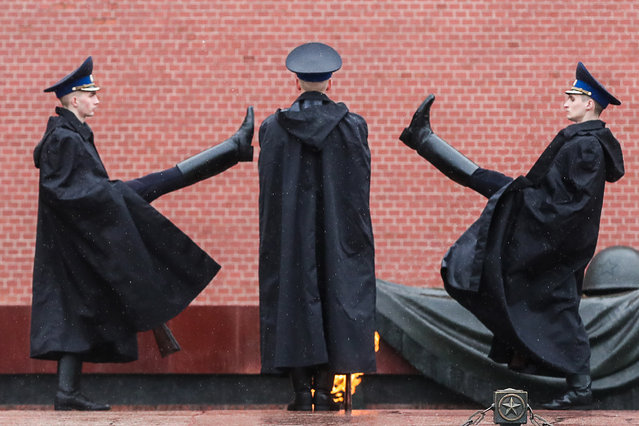
A changing of the honor guard ceremony by the Tomb of the Unknown Soldier in Alexander Garden by the Kremlin Wall in Moscow, Russia on May 29, 2020. (Photo by Vladimir Gerdo/TASS)

A changing of the honor guard ceremony by the Tomb of the Unknown Soldier in Alexander Garden by the Kremlin Wall in Moscow, Russia on May 29, 2020. (Photo by Vladimir Gerdo/TASS)
Details
02 Jun 2020 00:01:00
Participants take part in the world's first “Pokemon Go” competition in Hong Kong, China, August 6, 2016. (Photo by Tyrone Siu/Reuters)

Participants take part in the world's first “Pokemon Go” competition in Hong Kong, China, August 6, 2016. The competition began around 2 in the afternoon local time when organizers began announcing the rules on their Facebook page. Contestants had to take screenshots of 12 specific Pokémon in three different districts. Apart from the 12 key Pokémon, participants could also catch designated rare Pokemons which would take off some minutes from their total time. The winner was 21 year old Frankie Chu. The champ took home roughly three hundred and eighty six dollars that he says he will use to pay his school fees. (Photo by Tyrone Siu/Reuters)
Details
07 Aug 2016 09:05:00
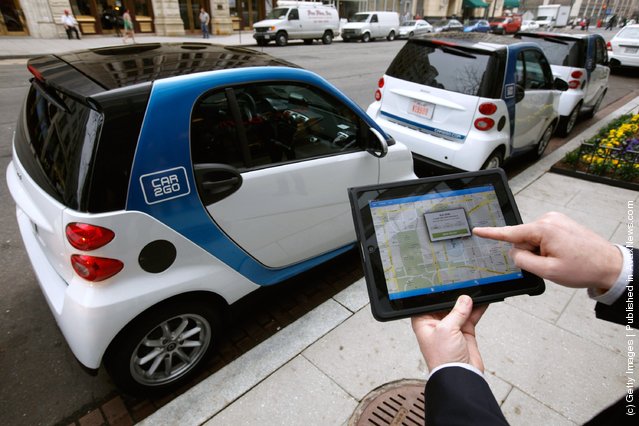
A car2go employee shows how members can use a smartphone or iPad app to locate and reservec car2go vehicles March 22, 2012 in Washington, DC

“Car2go fleet is located throughout the greater downtown area and can be accessed on-demand or booked 24 hours in advance. The members may use the vehicle for as long as they like, without committing to a specific return time or return location”. – Wikipedia

Photo: A car2go employee shows how members can use a smartphone or iPad app to locate and reservec car2go vehicles March 22, 2012 in Washington, DC. Beginning March 24, car2go will offer the first free-floating car-sharing service in Washington and Portland, Oregon, where customers can use the smartphone app within the 34-square-mile “Home Area”. After paying a one-time $35 membership fee, drivers can then rent the Smart Fortwo vehicles by the minute, paying only for the time they use the vehicle, with discounted rates for hourly and daily use. (Photo by Chip Somodevilla/Getty Images)

Details
23 Mar 2012 10:58:00


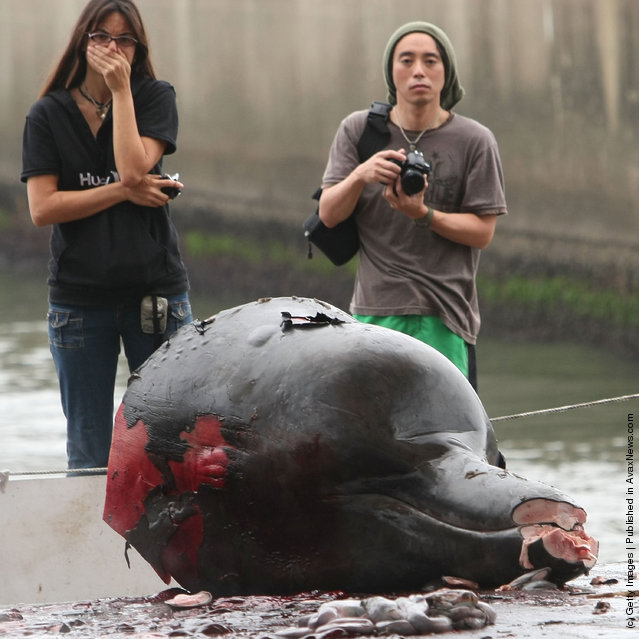
Fishermen slaughter a 9.61m Baird's Beaked whale at Wada Port on June 28, 2008 in Minami Boso, Chiba, Japan. Only five ports are allowed whaling under the coastal whaling program which tries to keep whaling tradition that dates back to the seventeenth century. Japan is only allowed to hunt a limited number of whales every year. (Photo by Koichi Kamoshida/Getty Images)
Details
26 Apr 2011 08:07:00
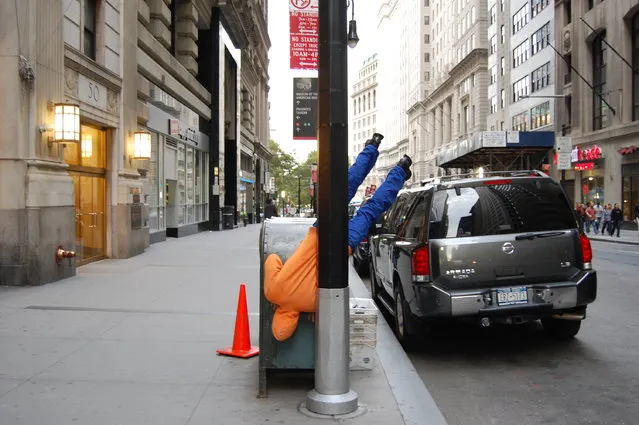
Willi Dorner, Bodies in Urban Spaces, September 26, 2010

“Bodies in urban spaces” is a temporarily intervention in diversified urban architectonical environment. The intention of “bodies in urban spaces” is to point out the urban functional structure and to uncover the restricted movement possibilities and behavior as well as rules and limitations. Photo: “Bodies in Urban Spaces”, September 26, 2010. (Photos by Andrew Russeth)
Details
16 Sep 2013 09:32:00
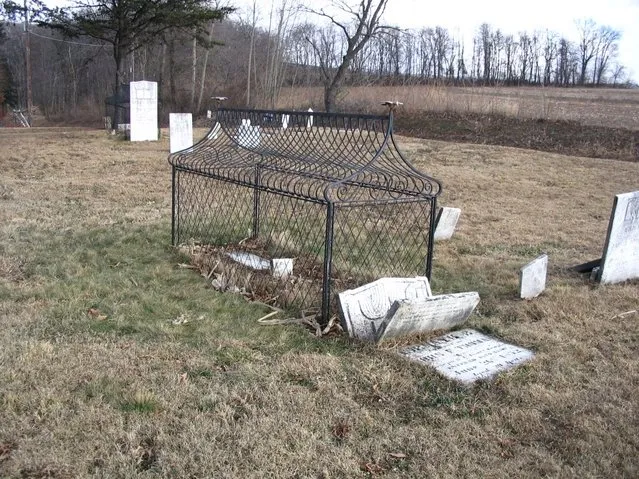
Mortsafe - Protection From The Dead

Mortsafes were contraptions designed to protect graves from disturbance. Resurrectionists had supplied the schools of anatomy in Scotland since the early 18th century. This was due to the necessity for medical students to learn anatomy by attending dissections of human subjects, which was frustrated by the very limited allowance of dead bodies – for example the corpses of executed criminals – granted by the government, which controlled the supply.
Details
29 Nov 2013 12:03:00