Loading...
Done
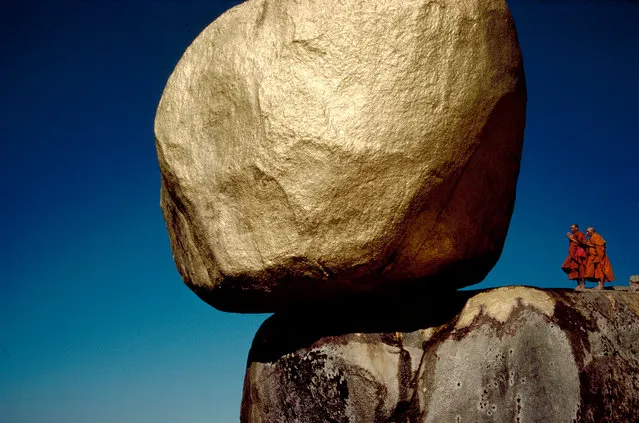
Kyaiktiyo, Burma, 1978. The Golden Rock at Shwe Pyi Daw (the Golden Country), the Buddhist holy place. Hiroji Kubota writes: “I was desperate to keep a distance from America for a while; luckily, I found Burma and its gentle and compassionate people. In the spring of 1978, on the top of the hill where I took this photo, I had two Leica bodies: the one with Tri-X and the other with Kodachrome 64. Soon after, I realised that the colour one looked very colourful and was more powerful. That was my decisive moment, to become a colour photographer”. (Photo by Hiroji Kubota/Magnum Photos)

Kyaiktiyo, Burma, 1978. The Golden Rock at Shwe Pyi Daw (the Golden Country), the Buddhist holy place. Hiroji Kubota writes: “I was desperate to keep a distance from America for a while; luckily, I found Burma and its gentle and compassionate people. In the spring of 1978, on the top of the hill where I took this photo, I had two Leica bodies: the one with Tri-X and the other with Kodachrome 64. Soon after, I realised that the colour one looked very colourful and was more powerful. That was my decisive moment, to become a colour photographer”. (Photo by Hiroji Kubota/Magnum Photos)
Details
10 Jun 2016 13:30:00
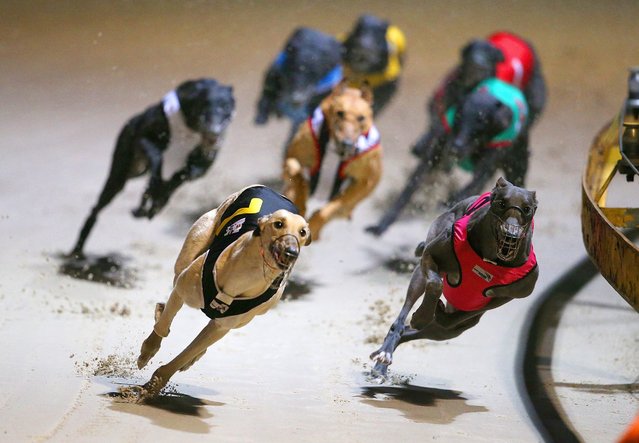
A picture made available on 14 July 2016 shows Greyhound dogs racing at the Wentworth Park Stadium in Sydney, New South Wales (NSW), Australia, 13 July 2016. Greyhound racing has returned to Sydney's Wentworth Park and other NSW tracks for the first time since the state government announced plans to ban it. NSW Premier Mike Baird announced last week plans to shut down the sport in NSW following a Special Commission of Inquiry report that found “chilling” evidence of systemic animal cruelty within the industry. (Photo by David Moir/EPA)

A picture made available on 14 July 2016 shows Greyhound dogs racing at the Wentworth Park Stadium in Sydney, New South Wales (NSW), Australia, 13 July 2016. Greyhound racing has returned to Sydney's Wentworth Park and other NSW tracks for the first time since the state government announced plans to ban it. NSW Premier Mike Baird announced last week plans to shut down the sport in NSW following a Special Commission of Inquiry report that found “chilling” evidence of systemic animal cruelty within the industry. (Photo by David Moir/EPA)
Details
15 Jul 2016 12:59:00
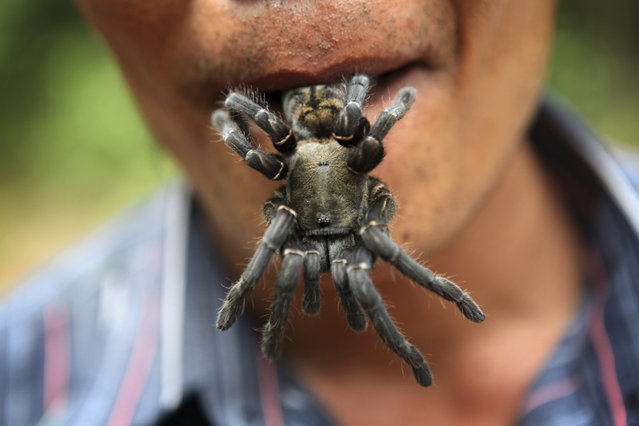
A Cambodian tuk tuk driver and guide with a tarantula in his mouth shortly after is was dug from the ground on June 7, 2010 in Skuon, Kampong Cham Province, Cambodia. The trade for spiders and other insects as food and for medicinal purposes has been in effect since the 1970's in Cambodia but only very recently have tourists been finding a way to see where the spiders are hunted in the nearby countryside. One guide, who can be found in Kampong Cham Town has started offering tours to tourists who can find him. (Photo by Tim Whitby/Getty Images)

A Cambodian tuk tuk driver and guide with a tarantula in his mouth shortly after is was dug from the ground on June 7, 2010 in Skuon, Kampong Cham Province, Cambodia. The trade for spiders and other insects as food and for medicinal purposes has been in effect since the 1970's in Cambodia but only very recently have tourists been finding a way to see where the spiders are hunted in the nearby countryside. One guide, who can be found in Kampong Cham Town has started offering tours to tourists who can find him. (Photo by Tim Whitby/Getty Images)
Details
04 Sep 2016 09:27:00
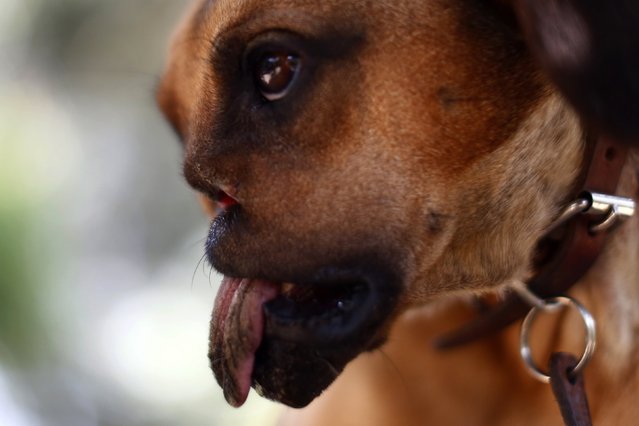
Fresa, 5, stands inside the dog shelter “Santuario Milagros Caninos” on the outskirts of Mexico City August 29 2014. (Photo by Edgard Garrido/Reuters)

Fresa, 5, stands inside the dog shelter “Santuario Milagros Caninos” on the outskirts of Mexico City August 29 2014. Fresa underwent reconstructive surgery after her previous owners hacked off half of her snout with a sharp object, possibly a machete, according to surgeon Jesus Paredes. After neighbours found Fresa wandering on the streets, they handed her over to a shelter where Paredes performed a three-hours intervention to enable her to breathe again through her nostrils, to remove her protruding jaw and reconstruct the lips with flaps of skin and mucous. (Photo by Edgard Garrido/Reuters)
Details
04 Sep 2014 08:04:00
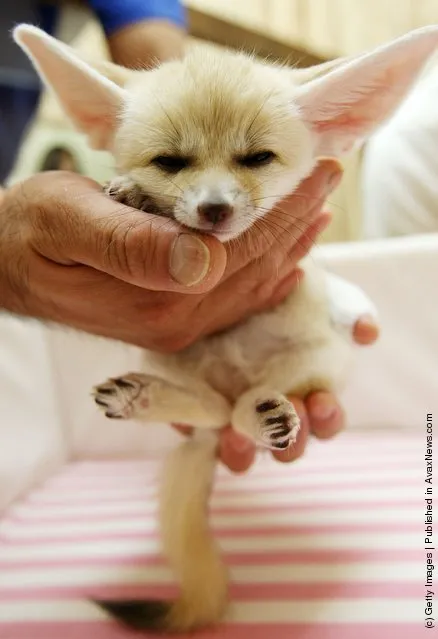
Baby Fennec Fox

“The fennec fox is a small nocturnal fox found in the Sahara of North Africa. Its most distinctive feature is unusually large ears. The name “fennec” comes from the Arabic word for fox, and the species name zerda has a Greek origin that refers to its habitat. The fennec is the smallest species of canid in the world; coat, ears and kidney functions have adapted to a high-temperature, low-water, desert environment. In addition, its hearing is sensitive enough to hear prey moving underground”. – Wikipedia

Photo: A Baby Fennec is seen at Sunshine International Aquarium on June 24, 2009 in Tokyo, Japan. The small nocturnal fox babies were born on May 17 2009. (Photo by Junko Kimura/Getty Images)
Details
16 Sep 2011 12:02:00


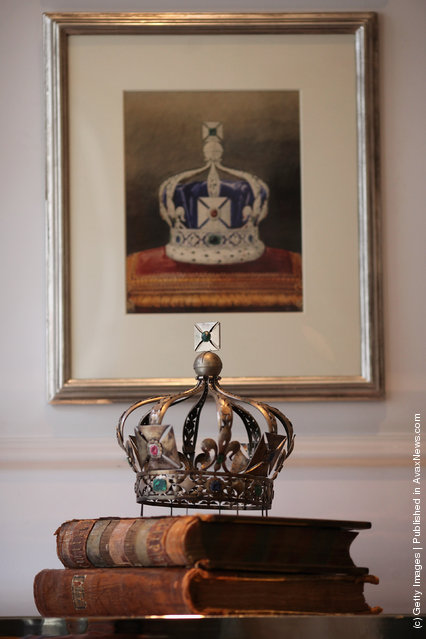
A preparatory model of the Imperial State Crown of India worn in 1911 by King George V stands next to original ledgers dating from 1735 in Garrard's flagship store in Mayfair on April 6, 2011 in London, England. Garrard is the world's oldest jewellers having been founded by George Wickes in 1735 and soon after appointed as goldsmith to the Prince of Wales. For over 160 years Garrard held the title of Crown Jeweller, bestowed by Queen Victoria in 1843, Garrard have served six successive monarchs. They have produced several royal crowns as well as the engagement ring presented to Kate Middleton by Prince William and formerly Princess Diana's engagement ring. (Photo by Oli Scarff/Getty Images)
Details
17 Apr 2011 10:22:00


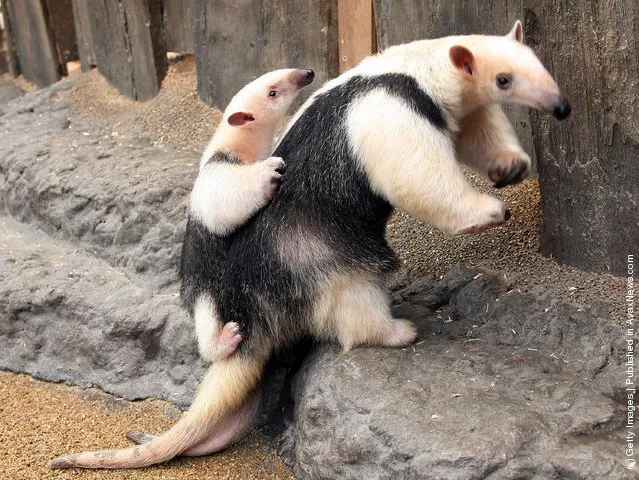
“The Southern Tamandua, Collared Anteater or Lesser Anteater (Tamandua tetradactyla) is a species of anteater from South America. It is a solitary animal, found in many habitats from mature to highly disturbed secondary forests and arid savannas. It feeds on ants, termites and bees. It has very strong foreclaws that can be used to break insect nests or to defend itself”. – Wikipedia

Photo: A three-month-old baby Southern Tamandua “Konbu” lies on its mother Tae's back at Sunshine International Aquarium on July 7, 2009 in Tokyo, Japan. Baby Southern Tamandua feels safe and comfortable holding onto something and normally stays on the mother's back until around 3 months old. (Photo by Junko Kimura/Getty Images)
Details
19 May 2011 10:31:00


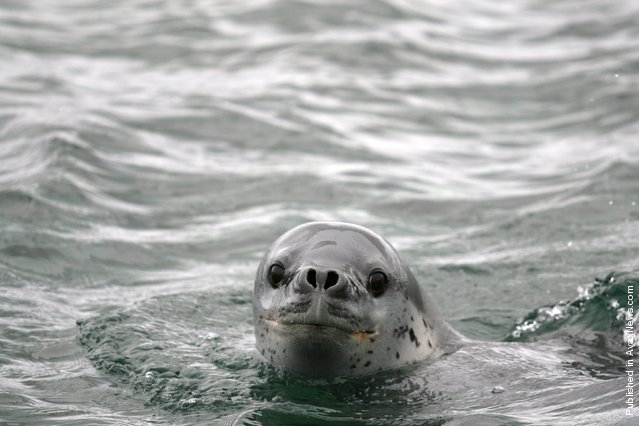
“The leopard seal (Hydrurga leptonyx), also referred to as the sea leopard, is the second largest species of seal in the Antarctic (after the southern elephant seal). It is most common in the southern hemisphere along the coast of Antarctica and on most sub-Antarctic islands, but can also be found on the coasts of southern Australia, Tasmania, South Africa, New Zealand, Lord Howe Island, Tierra del Fuego, the Cook Islands, and the Atlantic coast of South America. It can live twenty-six years, possibly more. Orcas and large sharks are the only natural predators of leopard seals”. – Wikipedia

Photo by: Gilad Rom; Source: Flickr
Details
13 Nov 2011 11:24:00