Loading...
Done
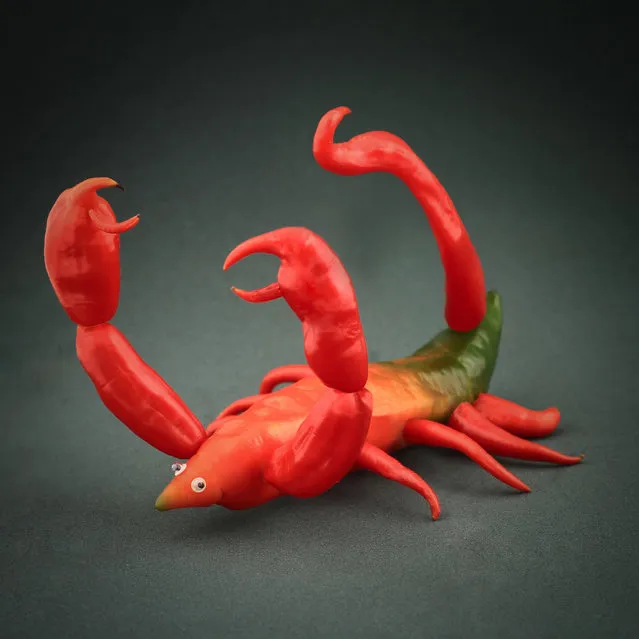
“Red Pepperpion. (Photo by Vanessa Dualib)

“Red Pepperpion. Red Pepperpions are secretive, nocturnal arachilli which can be spotted in kitchens of arid climates all around the world.

Red Pepperpions are equipped with a delicious (and depending on the quantity...deadly!) stinger at the end of its tail. If you happen to get bitten (or if you bite him!) it will produce a burning sensation on your taste nerves.

However, there is no need to worry, since the fact is that his potent stinger is usually only used when hunting or whenever the Pepperpion feels like he might become part of someones meal...

At daylight or when encountering a larger foe, such as a Saucier Chef, they retreat into burrows inside the fridge or hide beneath the oven”. (Photo and comment by Vanessa Dualib)


Details
08 Feb 2013 09:24:00
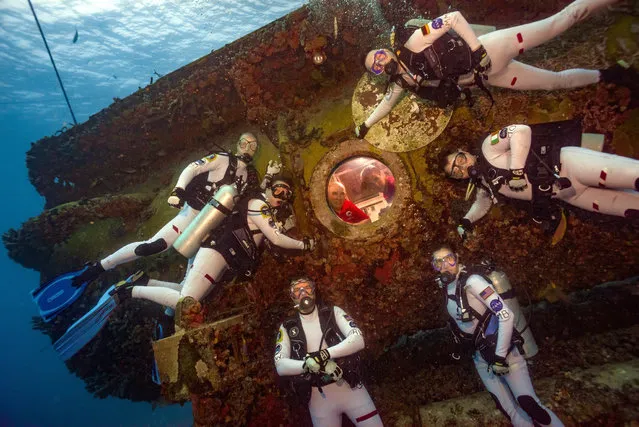
The NASA Extreme Environment Mission Operations (NEEMO) 21 mission began on July 21 as an international crew of aquanauts splashed down to the undersea Aquarius Reef Base, located 62 feet below the surface of the Atlantic Ocean in the Florida Keys National Marine Sanctuary. The NEEMO 21 crew will perform research both inside and outside the habitat during a 16-day simulated space mission. During simulated spacewalks carried out underwater, they will evaluate tools and mission operation techniques that could be used in future space missions, including journeys to Mars. (Photo by Karl Shreeves/NASA)

The NASA Extreme Environment Mission Operations (NEEMO) 21 mission began on July 21 as an international crew of aquanauts splashed down to the undersea Aquarius Reef Base, located 62 feet below the surface of the Atlantic Ocean in the Florida Keys National Marine Sanctuary. The NEEMO 21 crew will perform research both inside and outside the habitat during a 16-day simulated space mission. During simulated spacewalks carried out underwater, they will evaluate tools and mission operation techniques that could be used in future space missions, including journeys to Mars. (Photo by Karl Shreeves/NASA)
Details
31 Jul 2016 11:29:00
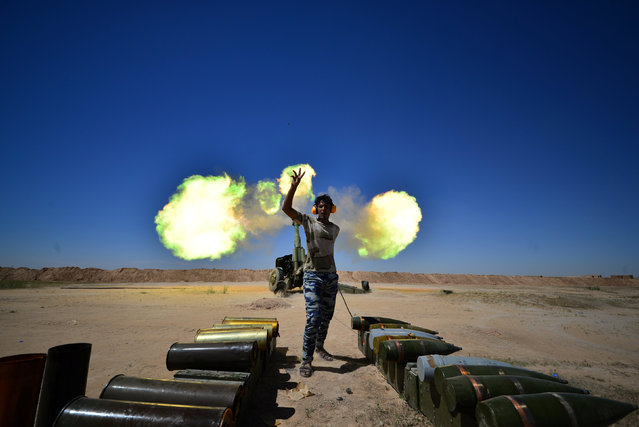
Iraqi paramilitary troops fire towards Islamic State militants during a battle with Islamic State militants on the outskirts of the ancient city of Hatra near Mosul,Iraq April 26, 2017. (Photo by Reuters/Stringer)

Iraqi paramilitary troops fire towards Islamic State militants during a battle with Islamic State militants on the outskirts of the ancient city of Hatra near Mosul,Iraq April 26, 2017. (Photo by Reuters/Stringer)
Details
20 May 2017 09:50:00
A spring breaker takes a shot of tequila during a pool party at a hotel in Cancun March 8, 2015. (Photo by Victor Ruiz Garcia/Reuters)

A spring breaker takes a shot of tequila during a pool party at a hotel in Cancun March 8, 2015. Like previous Florida spring break hot spots Fort Lauderdale and Daytona Beach, Panama City Beach is facing a crisis of conscience over the trade-offs involved in hosting a binge for some 300,000 students who arrive through mid-April with coolers, beer funnels and credit cards. (Photo by Michael Spooneybarger/Reuters)
Details
20 Mar 2015 12:15:00
Fish weighing over 80 kilogram is cooked in a hotpot during a food festival in Zhengzhou, Henan province, China, October 17, 2015. (Photo by Reuters/Stringer)

Fish weighing over 80 kilogram is cooked in a hotpot during a food festival in Zhengzhou, Henan province, China, October 17, 2015. (Photo by Reuters/Stringer)
Details
20 Oct 2015 08:07:00
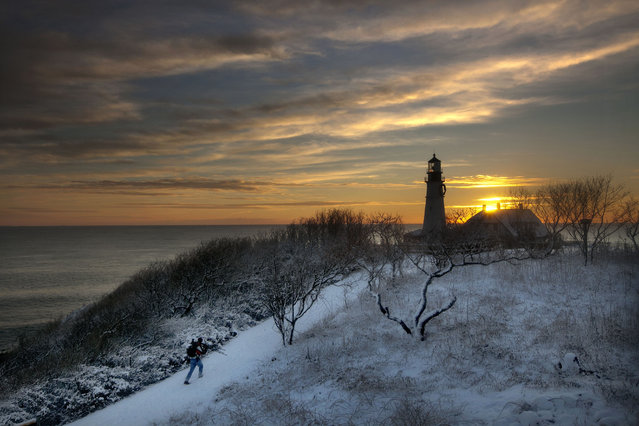
Clearing skies await a tripod-toting photographer looking for a spot to capture the early-morning light at Portland Head Light, Thursday, January 17, 2013, in Cape Elizabeth, Maine. (Photo by Robert F. Bukaty/AP Photo)

Clearing skies await a tripod-toting photographer looking for a spot to capture the early-morning light at Portland Head Light, Thursday, January 17, 2013, in Cape Elizabeth, Maine. (Photo by Robert F. Bukaty/AP Photo)
Details
03 Sep 2015 12:26:00
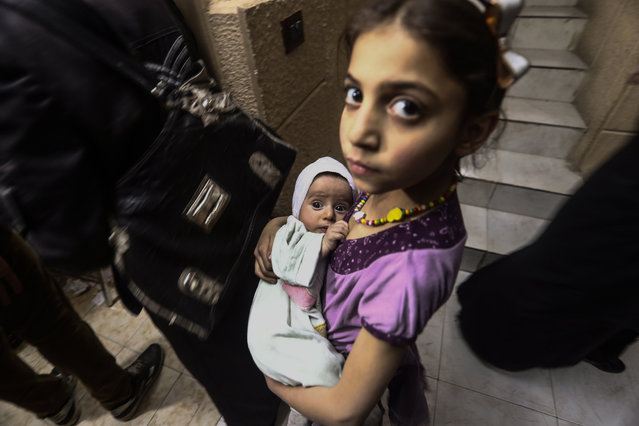
A little girl holding her newborn sister waits for their turn in a queue during a vaccination campaign under the supervision of the Syrian Arab Red Crescent (SARC) humanitarian nonprofit organization, in the besieged Syrian town of Douma, Syria, 23 May 2017. According to a statement from SARC, in the city of Douma some 12,809 children under the age of five were immunized in a vaccination campaign to prevent measles and poliomyelitis. The campaign was the first of its kind with the participation of 100 volunteers. SARC has been delivering vaccines to 17 health centers approved for vaccination campaigns in towns and villages in the Eastern Ghouta area. (Photo by Mohammed Badra/EPA)

A little girl holding her newborn sister waits for their turn in a queue during a vaccination campaign under the supervision of the Syrian Arab Red Crescent (SARC) humanitarian nonprofit organization, in the besieged Syrian town of Douma, Syria, 23 May 2017. According to a statement from SARC, in the city of Douma some 12,809 children under the age of five were immunized in a vaccination campaign to prevent measles and poliomyelitis. The campaign was the first of its kind with the participation of 100 volunteers. SARC has been delivering vaccines to 17 health centers approved for vaccination campaigns in towns and villages in the Eastern Ghouta area. (Photo by Mohammed Badra/EPA)
Details
13 Jun 2017 07:55:00
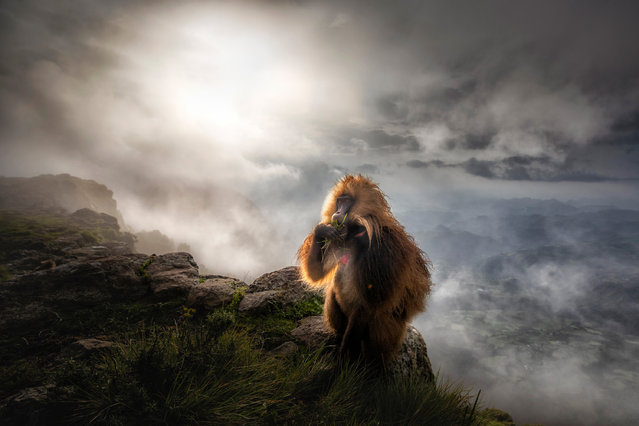
Highly commended, mammals: Gelada after the storm – Marco Gaiotti (Italy). “Gelada baboons are the only monkey species in the world that feed on grasses. They are native to the tableland of Ethiopia. Every morning large family groups wander from their sleeping places in the steep rock face, up to 1,000 metres high, to the feeding grounds at the tablelands. This image clearly depicts their feeding strategy: they pull out bunches of grass, sort the stalks and then lift them to their mouth. This shot was taken towards the end of the rainy season after a heavy storm”. (Photo by Marco Gaiotti/2019 GDT European Wildlife Photographer of the Year)

Highly commended, mammals: Gelada after the storm – Marco Gaiotti (Italy). “Gelada baboons are the only monkey species in the world that feed on grasses. They are native to the tableland of Ethiopia. Every morning large family groups wander from their sleeping places in the steep rock face, up to 1,000 metres high, to the feeding grounds at the tablelands. This image clearly depicts their feeding strategy: they pull out bunches of grass, sort the stalks and then lift them to their mouth. This shot was taken towards the end of the rainy season after a heavy storm”. (Photo by Marco Gaiotti/2019 GDT European Wildlife Photographer of the Year)
Details
31 Oct 2019 00:03:00