Loading...
Done
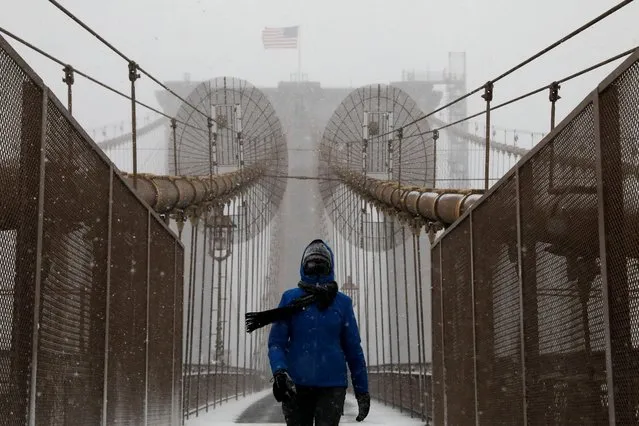
A person walks through the Brooklyn Bridge during a snow storm, amid the coronavirus disease (COVID-19) pandemic, in New York City, New York, U.S., February 1, 2021. (Photo by Brendan McDermid/Reuters)

A person walks through the Brooklyn Bridge during a snow storm, amid the coronavirus disease (COVID-19) pandemic, in New York City, New York, U.S., February 1, 2021. (Photo by Brendan McDermid/Reuters)
Details
20 Feb 2021 09:25:00
Dallas Cowboys cheerleaders perform before the game against the New England Patriots in Arlington, Texas on October 1, 2023. (Photo by Kevin Jairaj/USA Today Sports)

Dallas Cowboys cheerleaders perform before the game against the New England Patriots in Arlington, Texas on October 1, 2023. (Photo by Kevin Jairaj/USA Today Sports)
Details
09 Oct 2023 05:33:00
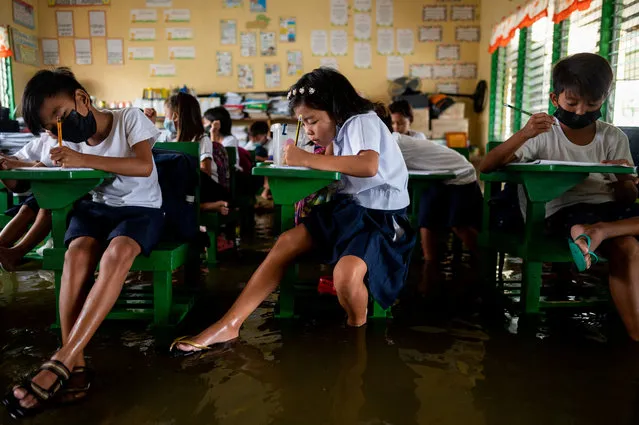
Students attend the first day of in-person classes, at a flooded school due to high tide, in Macabebe, Pampanga province, Philippines on August 22, 2022. (Photo by Lisa Marie David/Reuters)

Students attend the first day of in-person classes, at a flooded school due to high tide, in Macabebe, Pampanga province, Philippines on August 22, 2022. (Photo by Lisa Marie David/Reuters)
Details
03 Sep 2022 05:35:00


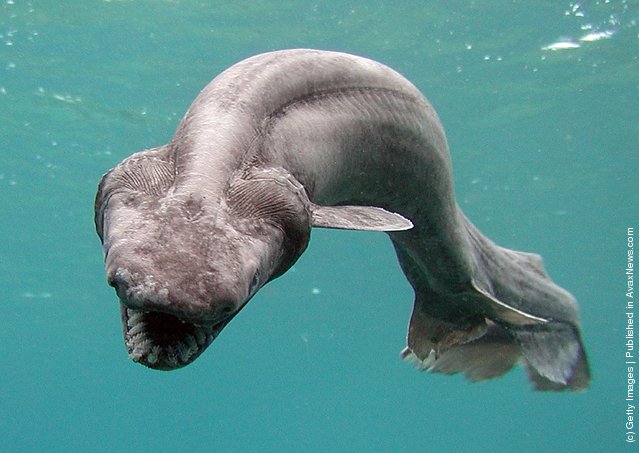
“The frilled shark (Chlamydoselachus anguineus) is one of two extant species of shark in the family Chlamydoselachidae, with a wide but patchy distribution in the Atlantic and Pacific Oceans. This uncommon species is found over the outer continental shelf and upper continental slope, generally near the bottom though there is evidence of substantial upward movements. It has been caught as deep as 1,570 m (5,150 ft), whereas in Suruga Bay, Japan it is most common at depths of 50–200 m (160–660 ft). Exhibiting several “primitive” features, the frilled shark has often been termed a «living fossil»”. – Wikipedia

Photo: A 1.6 meter long Frill shark swims in a tank after being found by a fisherman at a bay in Numazu, on January 21, 2007 in Numazu, Japan. The frill shark, also known as a Frilled shark usually lives in waters of a depth of 600 meters and so it is very rare that this shark is found alive at sea-level. It's body shape and the number of gill are similar to fossils of sharks which lived 350,000,000 years ago. (Photo by Awashima Marine Park/Getty Images)
Details
05 May 2011 10:01:00


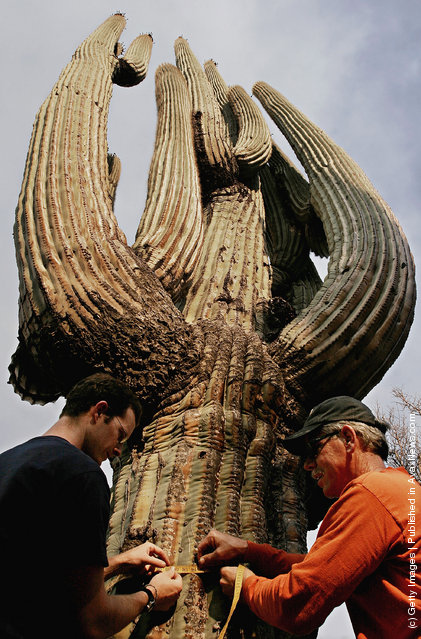
“The saguaro (scientific name Carnegiea gigantea) is a large, tree-sized cactus species in the monotypic genus Carnegiea. It is native to the Sonoran Desert in the U.S. state of Arizona, the Mexican state of Sonora, a small part of Baja California in the San Felipe Desert and an extremely small area of California, U.S. The saguaro blossom is the State Wildflower of Arizona”. – Wikipedia

Photo: Daniel Appel (L), a firefighter with Engine 84 from the Lassen National Forest in California and Mike Hallen, (R), Arizona representative of the National Register of Big Trees, measure the circumference of this Saguaro cactus called the "Grand One," in the Tonto National Forest on July 1, 2005 35 miles north of Phoenix, near Carefree, Arizona. The cactus, estimated to be more than 200 years old, measures a circumference of 7 feet, 10 inches (2.4 meters) and stands 46 feet high (14 meters). The cactus was burned in the Cave Creek Complex fire and may not survive. It was once the largest Saguaro in the world, two others have been found recently that have tied it's measurements. The fire has burned more than 214,000 acres of the Sonoran desert. (Photo by Jeff Topping/Getty Images)
Details
26 Jul 2011 12:27:00
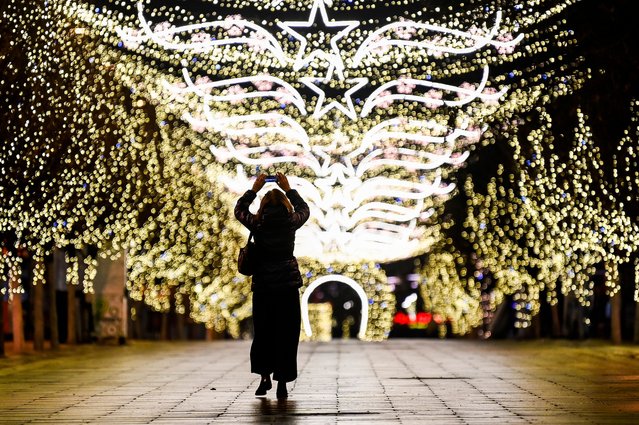
A woman takes pictures using her mobile phone on a deserted square decorated ahead of Christmas, in Pristina on December 7, 2020, during a government-imposed curfew from 7pm to 5am, as part of preventive measures against the spread of the Covid-19. (Photo by Armend Nimani/AFP Photo)

A woman takes pictures using her mobile phone on a deserted square decorated ahead of Christmas, in Pristina on December 7, 2020, during a government-imposed curfew from 7pm to 5am, as part of preventive measures against the spread of the Covid-19. (Photo by Armend Nimani/AFP Photo)
Details
19 Dec 2020 00:03:00
A staff member removes a coffin from a room of the “Corpse Hotel” in Kawasaki, Japan, April 20, 2016. (Photo by Thomas Peter/Reuters)

A staff member removes a coffin from a room of the “Corpse Hotel” in Kawasaki, Japan, April 20, 2016. Many so-called corpse hotels have emerged as a flourishing business in the city following a crunch in crematoriums. Families can rent a room in Sousou on a daily charge of 9,000 Japanese yen (£58, €74, $84) to keep the body of the deceased relative for up to four days until they find a crematorium. (Photo by Thomas Peter/Reuters)
Details
30 Apr 2016 09:46:00
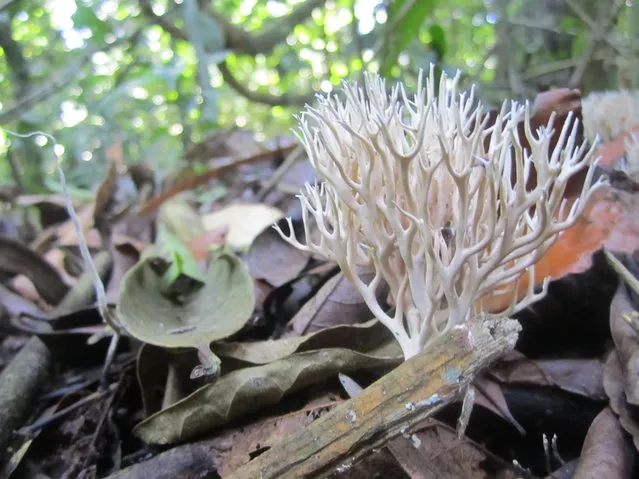
This strange coral-looking specimen is actually a mushroom. The photo, “Beautiful Destroyer”, was taken in the Panamanian tropical rainforest where the mushroom produces nitrogen, an element vital to soil health. (Photo by Sarah A. Batterman)

This strange coral-looking specimen is actually a mushroom. The photo, “Beautiful Destroyer”, was taken in the Panamanian tropical rainforest where the mushroom produces nitrogen, an element vital to soil health. (Photo by Sarah A. Batterman)
Details
13 Aug 2014 09:49:00