Loading...
Done
In this April 7, 2015 photo, a tourist peers through the door of a jail cell inside the now empty Garcia Moreno prison during a guided tour for the public in Quito, Ecuador. According to tour guides, this cell was nicknamed “Los Polillas”, or “The Moths”. Here, in a room designed to hold two prisoners, about 15 inmates with drug addictions were locked in overnight by the prison gangs that controlled daily life. The locked-in prisoners were also known to prostitute themselves to get access to drugs. (Photo by Dolores Ochoa/AP Photo)

In this April 7, 2015 photo, a tourist peers through the door of a jail cell inside the now empty Garcia Moreno prison during a guided tour for the public in Quito, Ecuador. According to tour guides, this cell was nicknamed “Los Polillas”, or “The Moths”. Here, in a room designed to hold two prisoners, about 15 inmates with drug addictions were locked in overnight by the prison gangs that controlled daily life. The locked-in prisoners were also known to prostitute themselves to get access to drugs. (Photo by Dolores Ochoa/AP Photo)
Details
03 May 2015 10:34:00
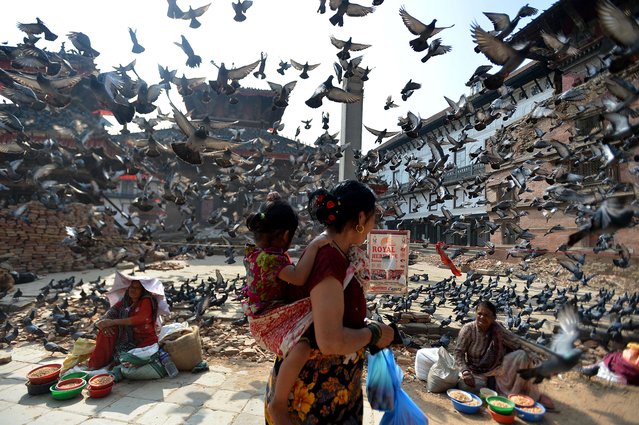
Flying pigeons pass over Nepalese street vendors near the earthquake damaged UNESCO World Heritage Site, Durbar Square in Kathmandu on May 20, 2015. Nearly 8,500 people have now been confirmed dead in the disaster, which destroyed more than half a million homes and left huge numbers of people without shelter with just weeks to go until the monsoon rains. (Photo by Ishara S. Kodikara/AFP Photo)

Flying pigeons pass over Nepalese street vendors near the earthquake damaged UNESCO World Heritage Site, Durbar Square in Kathmandu on May 20, 2015. Nearly 8,500 people have now been confirmed dead in the disaster, which destroyed more than half a million homes and left huge numbers of people without shelter with just weeks to go until the monsoon rains. (Photo by Ishara S. Kodikara/AFP Photo)
Details
23 May 2015 10:25:00
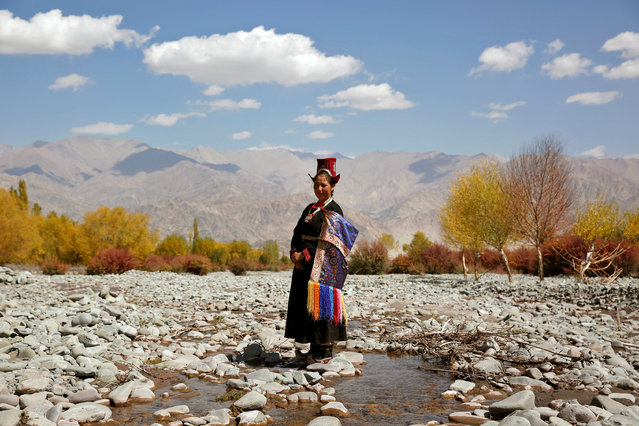
Tsewang Dolma, 33, a farmer and housewife poses for a photograph in Matho, a village nestled high in the Indian Himalayas, India September 29, 2016. When asked how living in the world's fastest growing major economy had affected life, Dolma replied: “Our culture is spoiled now. We don't wear our traditional dress”. (Photo by Cathal McNaughton/Reuters)

Tsewang Dolma, 33, a farmer and housewife poses for a photograph in Matho, a village nestled high in the Indian Himalayas, India September 29, 2016. When asked how living in the world's fastest growing major economy had affected life, Dolma replied: “Our culture is spoiled now. We don't wear our traditional dress”. (Photo by Cathal McNaughton/Reuters)
Details
13 Oct 2016 11:32:00
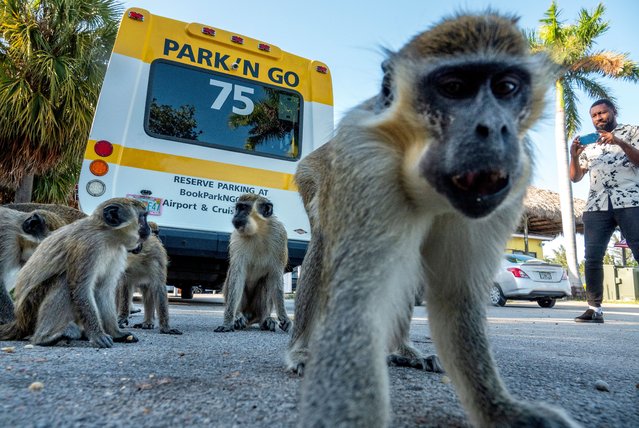
A person takes photos of Vervet monkeys that are eating in a parking lot near the Fort Lauderdale-Hollywood International Airport in Dania Beach, Florida, USA, 10 May 2022. Over 40 descendants of smallish vervets, escaped from now closed breeding facility, are living within 1,500 acres around the Fort Lauderdale-Hollywood International airport. The Dania Beach Vervet Project is an organization established in 2016 with the purpose of promote the conservation, and education about the local free ranging vervet monkeys in Dania Beach, Florida. (Photo by Cristóbal Herrera/EPA/EFE)

A person takes photos of Vervet monkeys that are eating in a parking lot near the Fort Lauderdale-Hollywood International Airport in Dania Beach, Florida, USA, 10 May 2022. Over 40 descendants of smallish vervets, escaped from now closed breeding facility, are living within 1,500 acres around the Fort Lauderdale-Hollywood International airport. The Dania Beach Vervet Project is an organization established in 2016 with the purpose of promote the conservation, and education about the local free ranging vervet monkeys in Dania Beach, Florida. (Photo by Cristóbal Herrera/EPA/EFE)
Details
17 May 2022 05:54:00
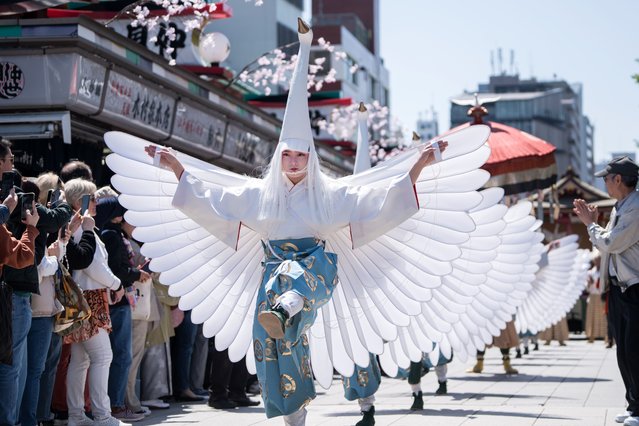
Dancers perform during the Shirasagi-no Mai, or White Heron Dance, at the Sensoji Temple on April 09, 2023 in Tokyo, Japan. The parade, which originated in the 8th-12th century in Kyoto, was revived in 1968 to celebrate Tokyo's 100th Anniversary and to wish for peace. The dance is now held twice a year, in April and November, at the Sensoji Temple in Asakusa, one of Tokyo's most popular tourist destinations for foreign visitors. (Photo by Tomohiro Ohsumi/Getty Images)

Dancers perform during the Shirasagi-no Mai, or White Heron Dance, at the Sensoji Temple on April 09, 2023 in Tokyo, Japan. The parade, which originated in the 8th-12th century in Kyoto, was revived in 1968 to celebrate Tokyo's 100th Anniversary and to wish for peace. The dance is now held twice a year, in April and November, at the Sensoji Temple in Asakusa, one of Tokyo's most popular tourist destinations for foreign visitors. (Photo by Tomohiro Ohsumi/Getty Images)
Details
25 Apr 2023 03:32:00
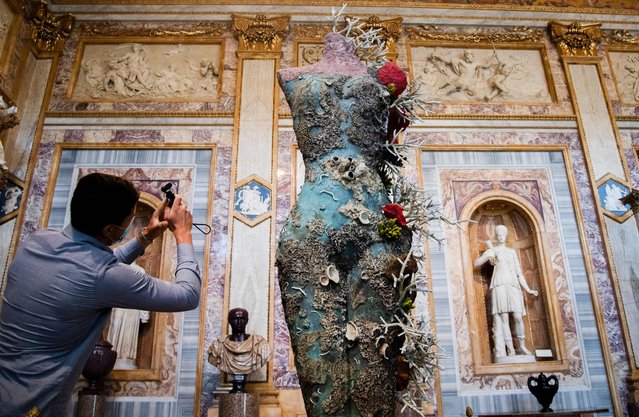
A visitor takes photos of “Grecian Nude” by British artist Damien Hirst, as part of the exhibition “Archaeology Now” at Galleria Borghese in Rome on June 07, 2021. The exhibition, running through June 08 – November 07, 2021, features over 80 works from Hirst’s Treasures from the Wreck of the Unbelievable series, displayed throughout the museum alongside ancient masterpieces. (Photo by Tiziana Fabi/AFP Photo)

A visitor takes photos of “Grecian Nude” by British artist Damien Hirst, as part of the exhibition “Archaeology Now” at Galleria Borghese in Rome on June 07, 2021. The exhibition, running through June 08 – November 07, 2021, features over 80 works from Hirst’s Treasures from the Wreck of the Unbelievable series, displayed throughout the museum alongside ancient masterpieces. (Photo by Tiziana Fabi/AFP Photo)
Details
13 Jun 2021 07:32:00
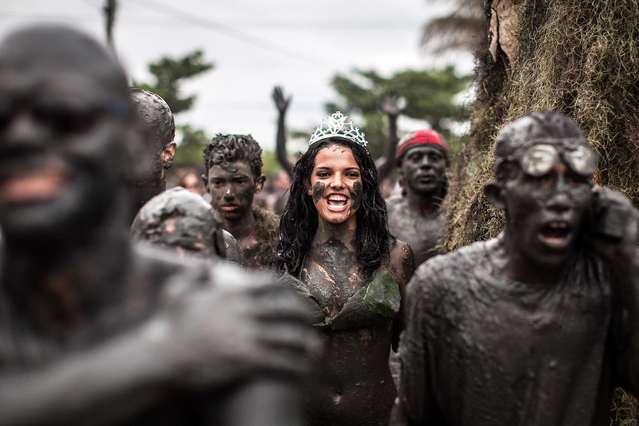
Revelers participate in the traditional Bloco da Lama (Mud block) carnival in Parati, Rio de Janeiro State, Brazil, on February 9, 2013. The event, which was begun by two men in a playful manner in 1986, has now become a traditional carnival in which participants disguised as primitives with rags, lianas or skulls and bones, dive in the mud. (Photo by Victor Moriyama/AFP Photo)

Revelers participate in the traditional Bloco da Lama (Mud block) carnival in Parati, Rio de Janeiro State, Brazil, on February 9, 2013. The event, which was begun by two men in a playful manner in 1986, has now become a traditional carnival in which participants disguised as primitives with rags, lianas or skulls and bones, dive in the mud. (Photo by Victor Moriyama/AFP Photo)
Details
12 Feb 2013 14:10:00
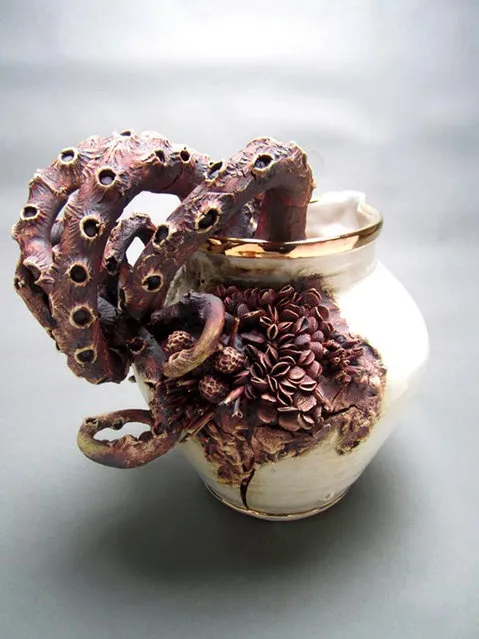
Bottom Feeders by Mary O’Malley

Created by ceramic artist Mary O’Malley, who studied in Philadelphia and now resides in Long Island, New York, the Bottom Feeders series is particularly inspired by childhood memories and her newly familiar surroundings next to the sea. By combining the imagery of sea creatures with the elegance of tea time, O'Malley envisions a whimsical occasion worthy of such fictional characters a Davy Jones and Alice.
Details
22 Sep 2013 13:54:00