Loading...
Done
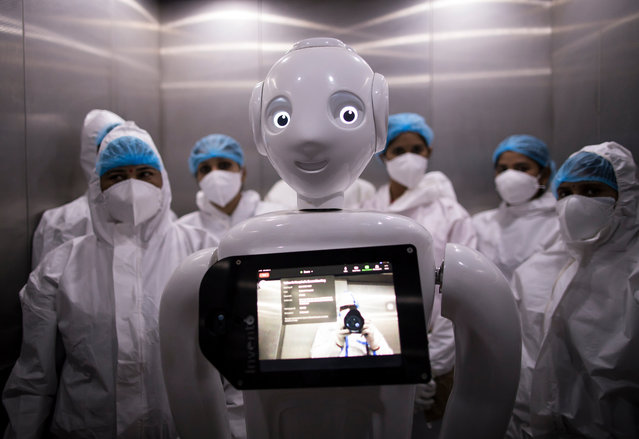
A robot used to assist Covid-19 patients is seen in an elevator on December 5, 2020 in New Delhi, India. The “Mitra” robot can connect patients with their loved ones, and can assist healthcare workers on the frontlines of the pandemic by minimisng the risk of infections caused by close contact. The Yatharth Hospital, which is treating Covid-19 patients in Noida, on the outskirts of New Delhi, is one of a handful of hospitals in India that has started to use robots. (Photo by Anindito Mukherjee/Getty Images)

A robot used to assist Covid-19 patients is seen in an elevator on December 5, 2020 in New Delhi, India. The “Mitra” robot can connect patients with their loved ones, and can assist healthcare workers on the frontlines of the pandemic by minimisng the risk of infections caused by close contact. The Yatharth Hospital, which is treating Covid-19 patients in Noida, on the outskirts of New Delhi, is one of a handful of hospitals in India that has started to use robots. (Photo by Anindito Mukherjee/Getty Images)
Details
21 Dec 2020 00:05:00
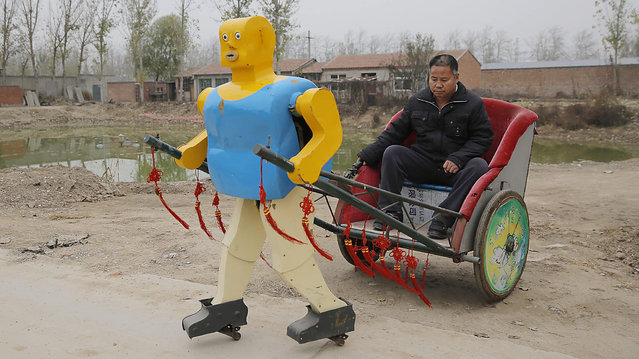
Robot inventor Wu Yulu sits on a rickshaw driven by a robot which he invented in his village in rural Beijing's Tongzhou district, China, 17 November 2016. The 54-year-old Chinese farmer living in rural Beijing's Tongzhou district invented 63 robots in the past 30 years. Wu, who only received primary school education, plans to give up the agricultural work for his robot products. He regularly participates in exhibitions, transfers patent rights and teaches at the university to earn money. (Photo by Wu Hong/EPA)

Robot inventor Wu Yulu sits on a rickshaw driven by a robot which he invented in his village in rural Beijing's Tongzhou district, China, 17 November 2016. The 54-year-old Chinese farmer living in rural Beijing's Tongzhou district invented 63 robots in the past 30 years. Wu, who only received primary school education, plans to give up the agricultural work for his robot products. He regularly participates in exhibitions, transfers patent rights and teaches at the university to earn money. (Photo by Wu Hong/EPA)
Details
21 Nov 2016 10:41:00
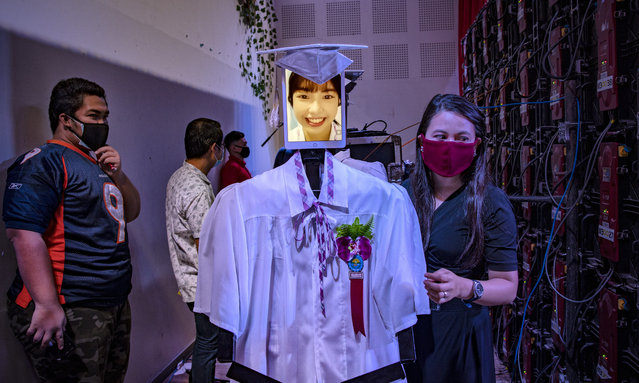
The face of a graduating student is displayed on a tablet attached to a robot during a “cyber graduation” ceremony at a school on May 22, 2020 in Taguig, Metro Manila, Philippines. Robots represented some 179 graduating students of the Senator Rene Cayetano Science and Technology High School during a graduation ceremony that was streamed online, as mass gatherings remain prohibited in the country under the Philippine government's lockdown to curb the spread of the coronavirus. The robots were developed by alumni of the school's robotics club, which used tablets to display the faces of the graduating students as they “marched” on stage to receive their diplomas. The Philippines' Department of Health has so far reported 13,434 cases of the coronavirus in the country, with at least 846 recorded fatalities. (Photo by Ezra Acayan/Getty Images)

The face of a graduating student is displayed on a tablet attached to a robot during a “cyber graduation” ceremony at a school on May 22, 2020 in Taguig, Metro Manila, Philippines. Robots represented some 179 graduating students of the Senator Rene Cayetano Science and Technology High School during a graduation ceremony that was streamed online, as mass gatherings remain prohibited in the country under the Philippine government's lockdown to curb the spread of the coronavirus. The robots were developed by alumni of the school's robotics club, which used tablets to display the faces of the graduating students as they “marched” on stage to receive their diplomas. The Philippines' Department of Health has so far reported 13,434 cases of the coronavirus in the country, with at least 846 recorded fatalities. (Photo by Ezra Acayan/Getty Images)
Details
24 May 2020 00:07:00
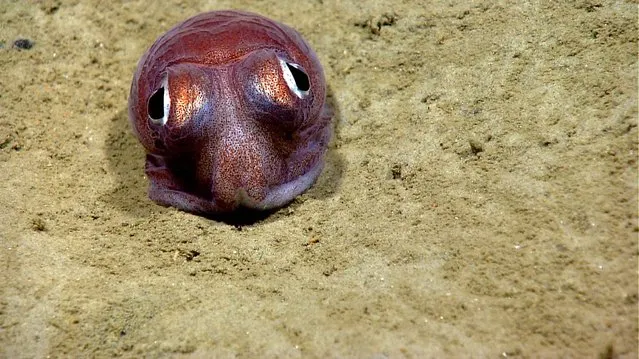
An octopus is filmed by the National Oceanic and Atmospheric Administration ship Okeanos Explorer and its robotic sub. (Photo by National Oceanic and Atmospheric Administration)

An octopus is filmed by the National Oceanic and Atmospheric Administration ship Okeanos Explorer and its robotic sub. (Photo by National Oceanic and Atmospheric Administration)
Details
13 Aug 2013 10:27:00
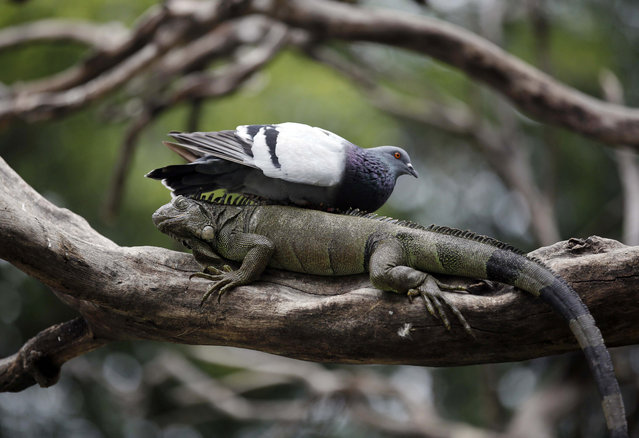
A pigeon rests on a wild iguana in a tree inside Seminario Park in Guayaquil, Ecuador, Thursday, April 3, 2014. Pigeons coexist with the wild iguanas at this park in the middle of the city surrounded by savannah. (Photo by Dolores Ochoa/AP Photo)

A pigeon rests on a wild iguana in a tree inside Seminario Park in Guayaquil, Ecuador, Thursday, April 3, 2014. Pigeons coexist with the wild iguanas at this park in the middle of the city surrounded by savannah. (Photo by Dolores Ochoa/AP Photo)
Details
05 Apr 2014 14:04:00
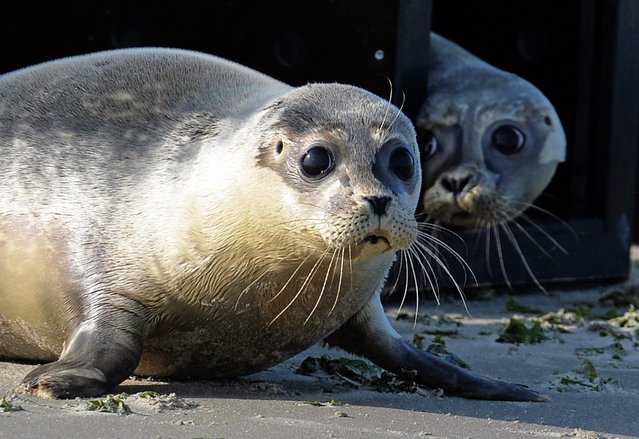
Common seals are reintroduced to the wild on the beach of the island Juist, Germany, 28 July 2014. It is the first reintroduction to the wild drive of the seal breading station Norddeich this year. (Photo by Carmen Jaspersen/EPA)

Common seals are reintroduced to the wild on the beach of the island Juist, Germany, 28 July 2014. It is the first reintroduction to the wild drive of the seal breading station Norddeich this year. (Photo by Carmen Jaspersen/EPA)
Details
02 Aug 2014 14:50:00
Workers clad in a dog and a wild boar costumes, to represent the outgoing year of the dog and incoming year of the wild boar, clean windows on the side of a hotel in Tokyo on December 13, 2018. (Photo by Kazuhiro Nogi/AFP Photo)

Workers clad in a dog and a wild boar costumes, to represent the outgoing year of the dog and incoming year of the wild boar, clean windows on the side of a hotel in Tokyo on December 13, 2018. (Photo by Kazuhiro Nogi/AFP Photo)
Details
21 Dec 2018 00:05:00
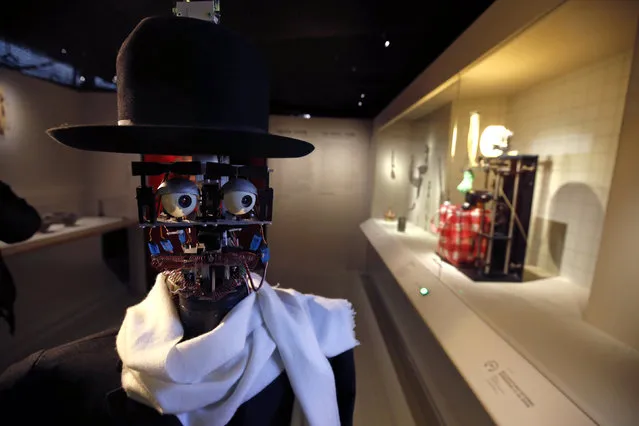
The Berenson robot strolls among visitors during the exhibition “Persona : Oddly Human” at the Quai Branly museum in Paris, France, February 23, 2016. The Berenson robot, developed in France in 2011, is the brainchild of anthropologist Denis Vidal and robotics engineer Philippe Gaussier. Its programming allows it to record reactions of museum visitors to certain pieces of art and then use the data to develop its own unique taste, which allows “Berenson” to judge whether or not it likes a certain work of art within an exhibition. (Photo by Philippe Wojazer/Reuters)

The Berenson robot strolls among visitors during the exhibition “Persona : Oddly Human” at the Quai Branly museum in Paris, France, February 23, 2016. The Berenson robot, developed in France in 2011, is the brainchild of anthropologist Denis Vidal and robotics engineer Philippe Gaussier. Its programming allows it to record reactions of museum visitors to certain pieces of art and then use the data to develop its own unique taste, which allows “Berenson” to judge whether or not it likes a certain work of art within an exhibition. (Photo by Philippe Wojazer/Reuters)
Details
25 Feb 2016 12:26:00