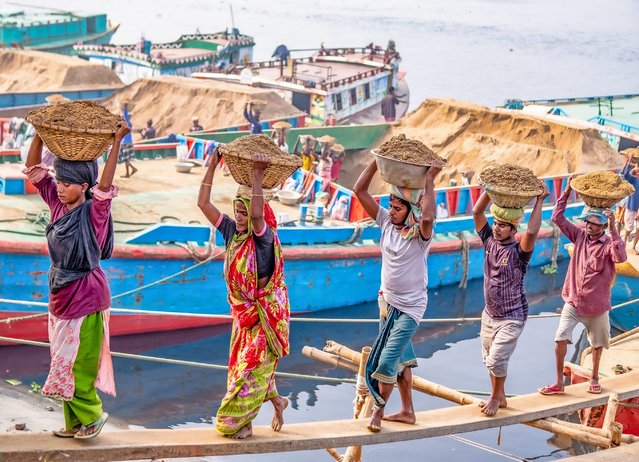
Workers unload baskets of sand from ships in Gabtoli Launch Ghat, Dhaka, Bangladesh in the first decade of February 2025. (Photo by Rakibul alam Khan/Solent News)
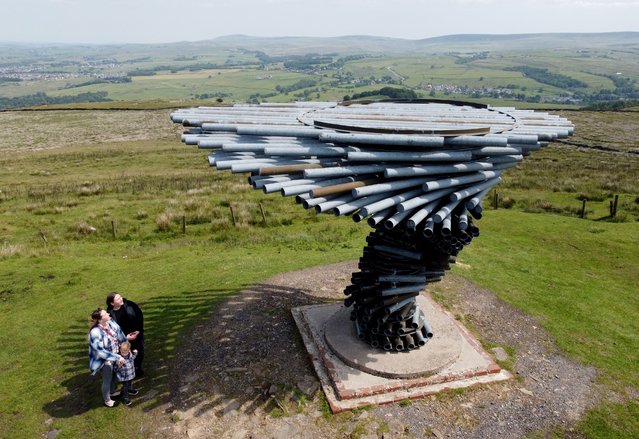
Migle Politike (left) with son Aaron and friend Goda Zubkaityte on Wednesday, June 11, 2025 stop to look at the Singing Ringing Tree, a musical sculpture designed to look like a windswept tree, at Crown Point overlooking Burnley, Lancashire, UK. The wind-powered musical sculpture emits a low, tuneful song when the wind blows. (Photo by Martin Rickett/PA Wire)
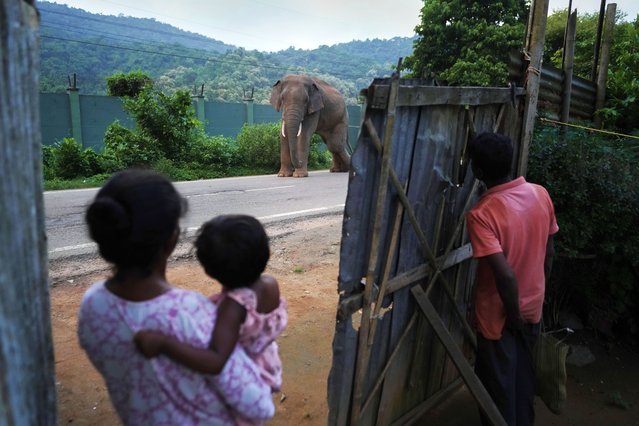
Residents look at an injured wild elephant walking outside their house in a village near Amchang wildlife sanctuary on the outskirts of Guwahati, Saturday, August 9, 2025. (Photo by Anupam Nath/AP Photo)
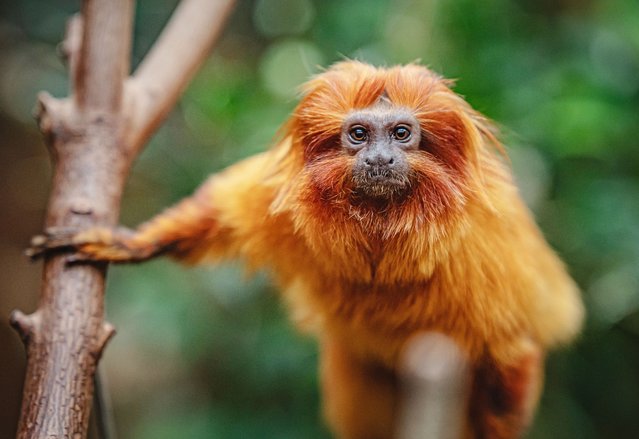
Chester Zoo in the second decade of August 2025 has welcomed a pair of tiny golden lion tamarins, named George, seven, and Leaf, 12. (Phoot by Chester Zoo)
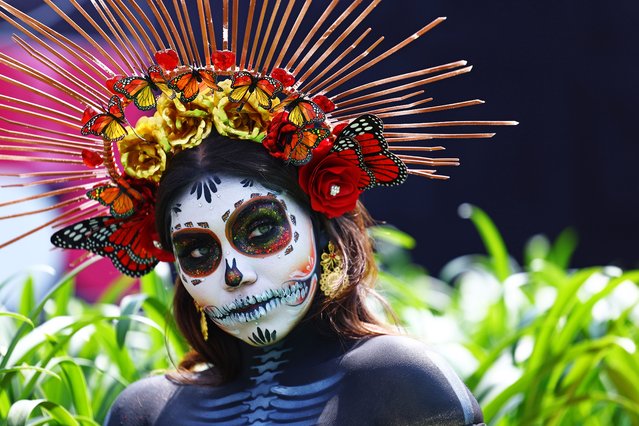
A Day of the Dead performer is seen in the Paddock during previews ahead of the F1 Grand Prix of Mexico at Autodromo Hermanos Rodriguez on October 24, 2024 in Mexico City, Mexico. (Photo by Mark Thompson/Getty Images)
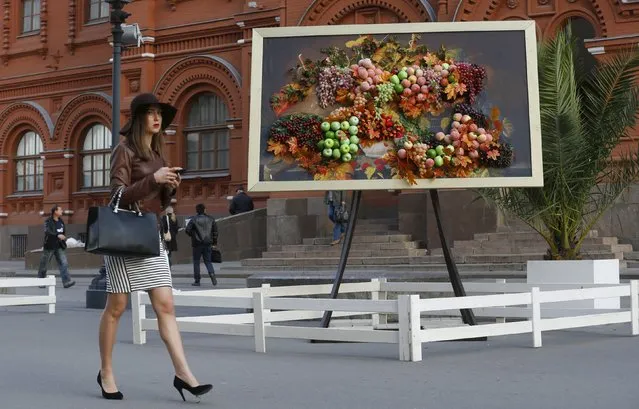
A woman walks in front of an art installation made of artificial fruits and vegetables during the “Moscow Autumn” festival in central Moscow, September 14, 2015. (Photo by Maxim Zmeyev/Reuters)
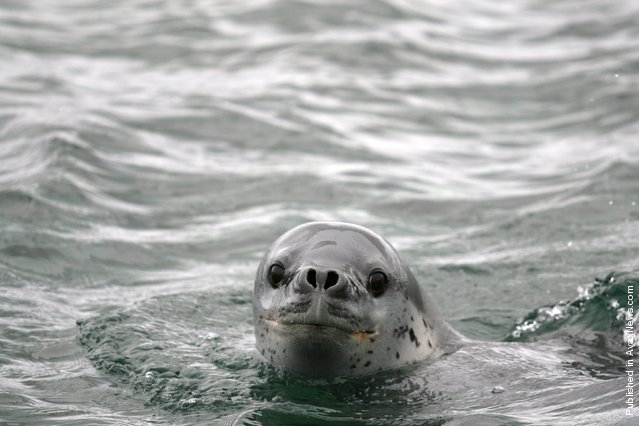
“The leopard seal (Hydrurga leptonyx), also referred to as the sea leopard, is the second largest species of seal in the Antarctic (after the southern elephant seal). It is most common in the southern hemisphere along the coast of Antarctica and on most sub-Antarctic islands, but can also be found on the coasts of southern Australia, Tasmania, South Africa, New Zealand, Lord Howe Island, Tierra del Fuego, the Cook Islands, and the Atlantic coast of South America. It can live twenty-six years, possibly more. Orcas and large sharks are the only natural predators of leopard seals”. – Wikipedia