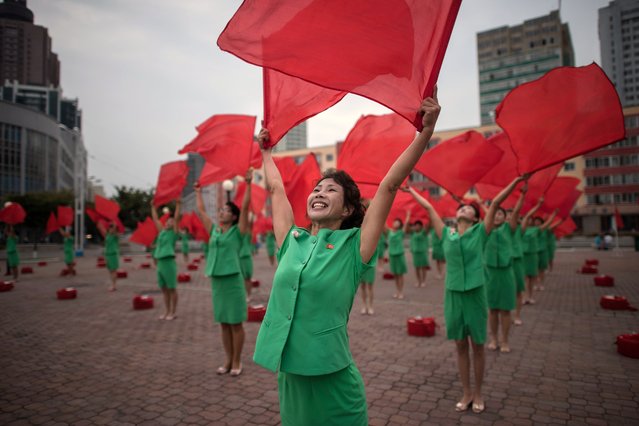
A propaganda troupe perform a flag- waving routine outside the central railway station in Pyongyang, North Korea on September 27, 2017. (Photo by Ed Jones/AFP Photo)
A Russian army conscript called up for service in the Kremlin regiment and a woman say farewell at Yekaterinburg-Passazhirsky railway station in Yekaterinburg, Russia on November 15, 2018. (Photo by Donat Sorokin/TASS Russian News Agency)
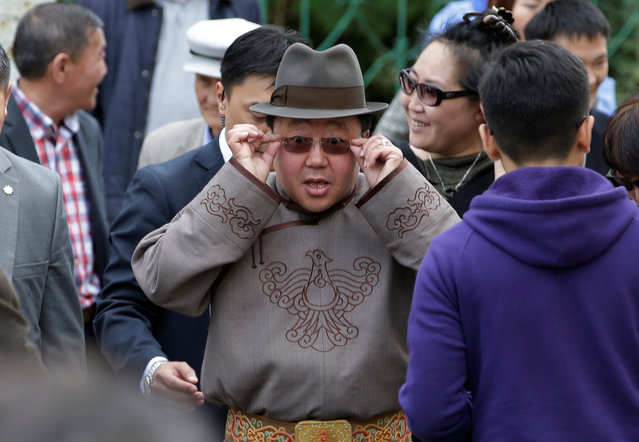
Mongolian President Tsakhiagiin Elbegdorj (C) walks towards the media after casting his vote for the parliamentary elections at a polling station in Ulaanbaatar, Mongolia, June 29, 2016. (Photo by Jason Lee/Reuters)
A relative of journalist Romelo Vilsaint grieves after learning that he was fatally shot outside a police station, in Port-au-Prince, Haiti, Sunday, October 30, 2022. (Photo by Ramon Espinosa/AP Photo)
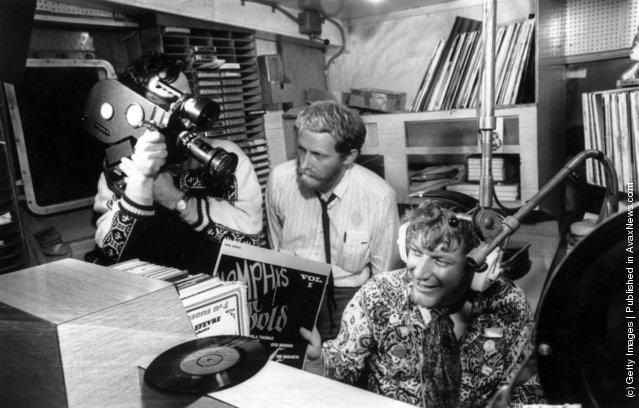
“«Pirate radio» in the UK first became widespread in the early 1960s when pop music stations such as Radio Caroline and Radio London started to broadcast on medium wave to the UK from offshore ships or disused sea forts. At the time these stations were not illegal because they were broadcasting from international waters. The stations were set up by entrepreneurs and music enthusiasts to meet the growing demand for pop and rock music, which was not catered for by the legal BBC Radio services”. – Wikipedia
Photo: The “World in Action” team making a program about the pirate radio ship Caroline, filmed by Paddy Searle, and produced by Mike Hodges. The DJ being filmed is Robbie Dale, and Hodges is standing behind him. (Photo by James Jackson/Evening Standard/Getty Images). 6th September 1967
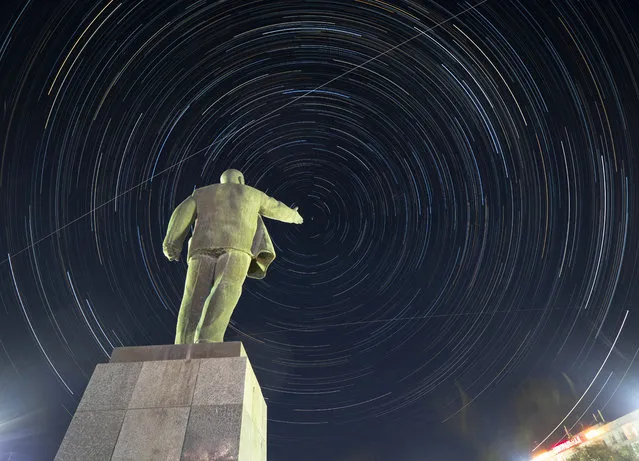
The International Space Station (ISS) moves along its orbit above at the Russian leased Baikonur cosmodrome, Kazakhstan, Thursday, July 18, 2019, with a statue of Soviet Union founder Vladimir Lenin in the foreground. Circular star tracks around the Polar Star and tracks of the ISS is the result of the camera multiple exposure with a total duration of two hours. (Photo by Dmitri Lovetsky/AP Photo)
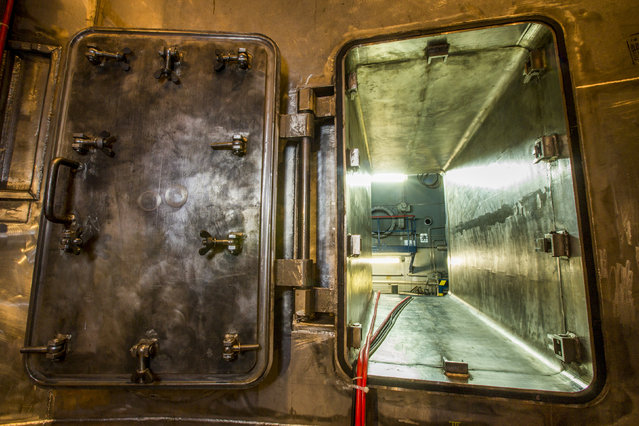
A view of an entrance to the concrete case surrounding the pressure vessel of the reactor is seen inside the decommissioned Unit Six of the Greifswald nuclear power station outside Lubmin August 5, 2014. Unit Six was a part of East Germany's largest nuclear power plant that was nearly completed in 1990, when the country's re-unification halted construction. (Photo by Thomas Peter/Reuters)