Loading...
Done
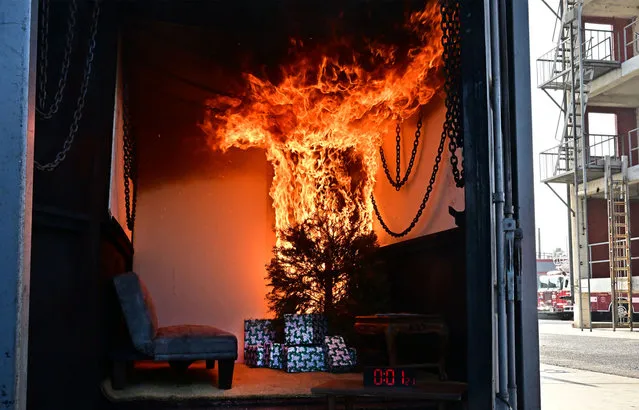
A Christmas Tree goes up in flames in a controlled-setting demonstration by the Glendale Fire Department on December 13, 2023, in Glendale, California. Firefighters showed how quickly a dried-out tree can ignite. According to the National Fire Protection Administration, Christmas trees account for hundreds of fires each year, often ignited by shorts in electrical lights or open flames from candles, lighters or matches. (Photo by Frederic J. Brown/AFP Photo)

A Christmas Tree goes up in flames in a controlled-setting demonstration by the Glendale Fire Department on December 13, 2023, in Glendale, California. Firefighters showed how quickly a dried-out tree can ignite. According to the National Fire Protection Administration, Christmas trees account for hundreds of fires each year, often ignited by shorts in electrical lights or open flames from candles, lighters or matches. (Photo by Frederic J. Brown/AFP Photo)
Details
18 Jan 2024 10:53:00
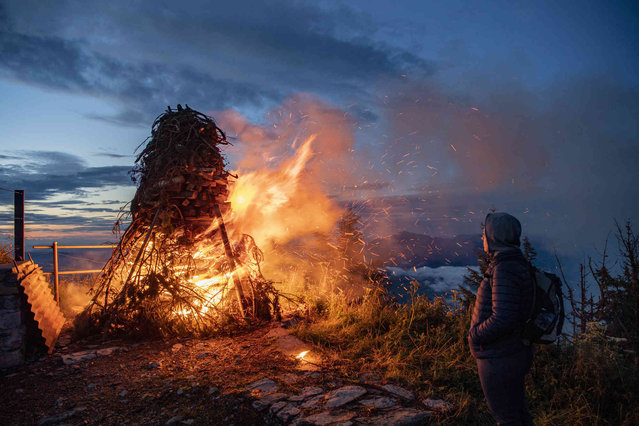
A traditional high altitude bonfire burns on the occasion of the Swiss National Day on the “Stanserhorn” mountain near Stans, Switzerland, Sunday, August 1, 2021. (Photo by Urs Flueeler/Keystone via AP Photo)

A traditional high altitude bonfire burns on the occasion of the Swiss National Day on the “Stanserhorn” mountain near Stans, Switzerland, Sunday, August 1, 2021. (Photo by Urs Flueeler/Keystone via AP Photo)
Details
15 Oct 2021 10:11:00
Soap Bubble Structures by Kym Cox. Bubbles optimise space and minimise their surface area for a given volume of air. This phenomenon makes them a useful tool in many areas of research, in particular, materials science and ‘packing’ – how things fit together. Bubble walls drain under gravity, thin at the top, thick at the bottom, which interferes with travelling lightwaves to create bands of colour. Black spots show the wall is too thin for interference colours, indicating the bubble is about to burst. (Photo by Kym Cox/2019 Science Photographer of the Year/RPS)

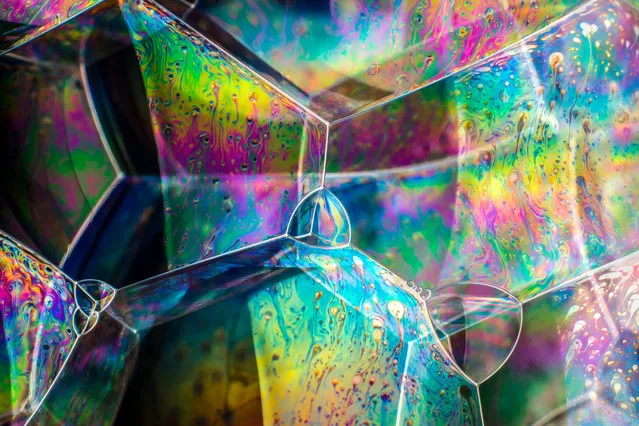
Soap Bubble Structures by Kym Cox. Bubbles optimise space and minimise their surface area for a given volume of air. This phenomenon makes them a useful tool in many areas of research, in particular, materials science and “packing” – how things fit together. Bubble walls drain under gravity, thin at the top, thick at the bottom, which interferes with travelling lightwaves to create bands of colour. Black spots show the wall is too thin for interference colours, indicating the bubble is about to burst. (Photo by Kym Cox/2019 Science Photographer of the Year/RPS)
Details
15 Aug 2019 00:03:00
Horses eat hay and rest on straw at a stud farm in Wehrheim near Frankfurt, Germany, Tuesday, December 5, 2023. (Photo by Michael Probst/AP Photo)

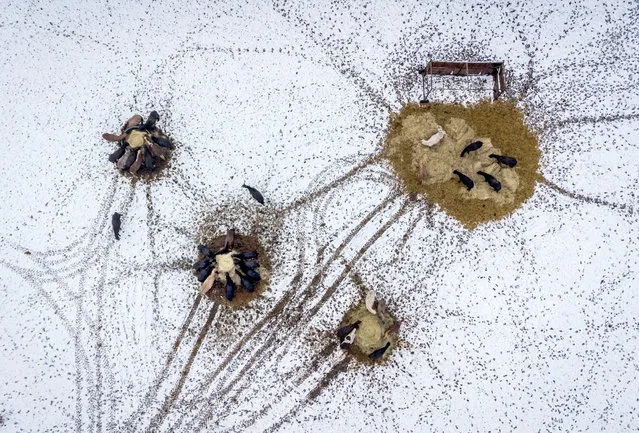
Horses eat hay and rest on straw at a stud farm in Wehrheim near Frankfurt, Germany, Tuesday, December 5, 2023. (Photo by Michael Probst/AP Photo)
Details
08 Jan 2024 19:43:00
An Army Sikorsky VH-34s Choctaw helicopter once used to transport President Dwight D. Eisenhower sits in a field at the 309th Aerospace Maintenance and Regeneration Group boneyard Thursday, May 14, 2015 at Davis-Monthan Air Force Base in Tucson, Ariz. President Eisenhower became the first chief executive to be transported by helicopter. (Photo by Matt York/AP Photo)

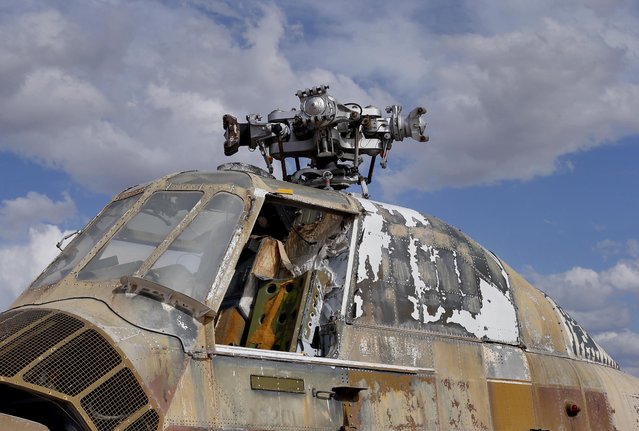
An Army Sikorsky VH-34s Choctaw helicopter once used to transport President Dwight D. Eisenhower sits in a field at the 309th Aerospace Maintenance and Regeneration Group boneyard Thursday, May 14, 2015 at Davis-Monthan Air Force Base in Tucson, Ariz. President Eisenhower became the first chief executive to be transported by helicopter. Presidents Eisenhower and John F. Kennedy were transported in VH-34 helicopters and VH-34's served as “Army One” from 1958 through 1963. (Photo by Matt York/AP Photo)
Details
23 May 2015 11:48:00
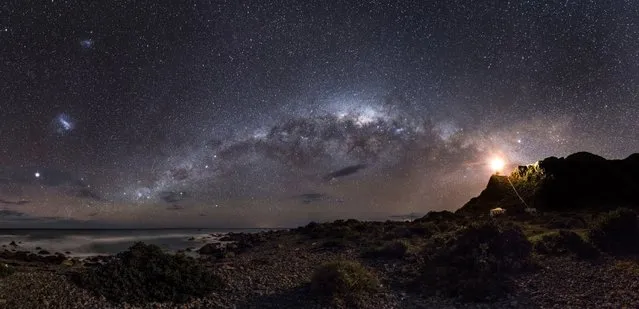
Astronomy Photographer Of The Year 2013 Part2

The Royal Observatory just announced its Astronomy Photographer Of The Year 2013 winners. Australian photographer Mark Gee was chosen among a thousand amateur and professional photographers around the globe to win the top title. His work is part of an exhibition of the winning photographers, which opened on Sept. 19 at the Royal Observatory Greenwich. The Royal Observatory shared with us the winners and notable mentions of the competition. Their descriptions of the prizewinners can be found below the images.
Details
05 Oct 2013 12:23:00
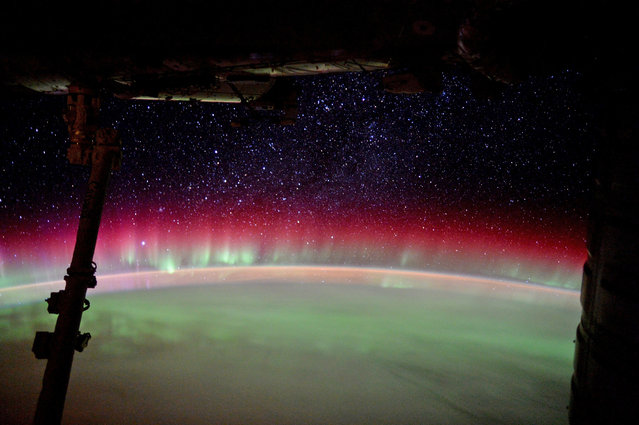
ESA astronaut Tim Peake posted this stunning image on his social media channels, commenting: “Station passed through magnificent aurora Australis last night”. Tim is set to return to Earth on 18 June 2016, bringing his six-month Principia mission to the ISS to an end. During his stay he performed more than 30 scientific experiments for ESA and taking part in numerous others from ESA's international partners. ESA and the UK Space Agency have partnered to develop many exciting educational activities around the Principia mission, aimed at sparking the interest of young children in science and space. (Photo by Tim Peake/ESA/NASA)

ESA astronaut Tim Peake posted this stunning image on his social media channels, commenting: “Station passed through magnificent aurora Australis last night”. Tim is set to return to Earth on 18 June 2016, bringing his six-month Principia mission to the ISS to an end. During his stay he performed more than 30 scientific experiments for ESA and taking part in numerous others from ESA's international partners. ESA and the UK Space Agency have partnered to develop many exciting educational activities around the Principia mission, aimed at sparking the interest of young children in science and space. (Photo by Tim Peake/ESA/NASA)
Details
31 Dec 2016 10:21:00
The antennas of the European Southern Observatory's Atacama Large Millimeter/Submillimeter Array, also known as ALMA, are set against the splendor of the Milky Way in this picture by Babak Tafreshi

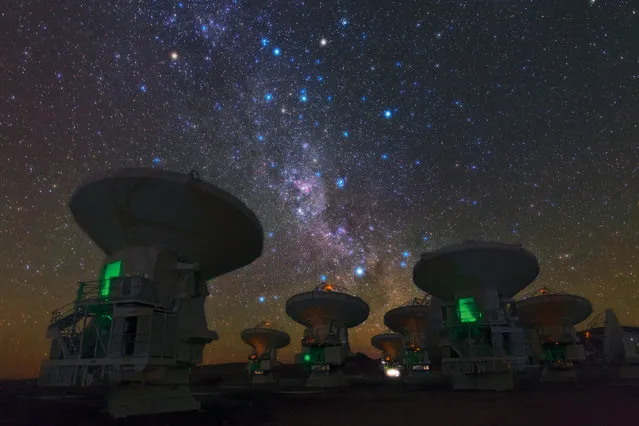
The antennas of the European Southern Observatory's Atacama Large Millimeter/Submillimeter Array, also known as ALMA, are set against the splendor of the Milky Way in this picture by Babak Tafreshi. Construction of the full ALMA array is due to be completed in Chile's Atacama Desert in 2013, but the facility is already making scientific observations with a partial array of antennas. (Photo by ESO/B. Tafreshi/TWAN)
Details
03 Jun 2012 11:57:00