Loading...
Done
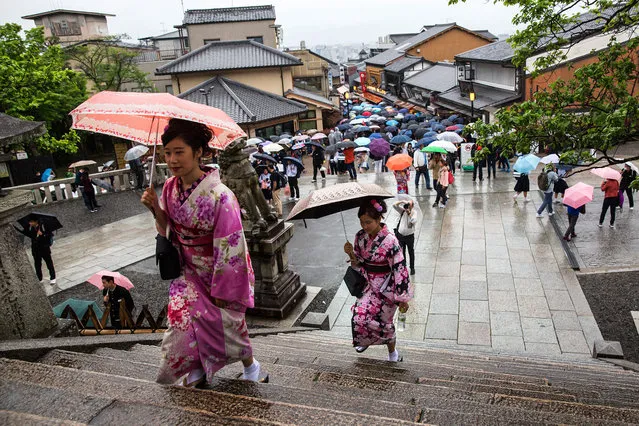
Tourists dressed in yukatas, a light, unlined, summer kimono made of cotton instead of the traditional silk, climb steps to visit a temple on April 27, 2016 in Kyoto, Japan. Now the seventh largest city in Japan, Kyoto was once the Imperial capital for more than one thousand years, it is now the capital city of Kyoto Prefecture and a major part of the Kyoto-Osaka-Kobe metropolitan area. (Photo by Carl Court/Getty Images)

Tourists dressed in yukatas, a light, unlined, summer kimono made of cotton instead of the traditional silk, climb steps to visit a temple on April 27, 2016 in Kyoto, Japan. Now the seventh largest city in Japan, Kyoto was once the Imperial capital for more than one thousand years, it is now the capital city of Kyoto Prefecture and a major part of the Kyoto-Osaka-Kobe metropolitan area. (Photo by Carl Court/Getty Images)
Details
21 May 2016 10:48:00
A combination photo shows various popular street foods under $6 from various hawker food stalls and eateries in Singapore, taken between July 28 to 31, 2016. Top row (L to R) bak chor mee, soya sauce chicken; Middle row (L to R) laksa, hokkien mee, nasi lemak, ice kachang; Bottom row (L to R) rojak, roti prata and satay. (Photo by Edgar Su/Reuters)

A combination photo shows various popular street foods under $6 from various hawker food stalls and eateries in Singapore, taken between July 28 to 31, 2016. Top row (L to R) bak chor mee, soya sauce chicken; Middle row (L to R) laksa, hokkien mee, nasi lemak, ice kachang; Bottom row (L to R) rojak, roti prata and satay. (Photo by Edgar Su/Reuters)
Details
27 Aug 2016 10:55:00
Three girls weep after they view a memorial for the rapper XXXTentacion, Wednesday, June 27, 2018, in Sunrise, Fla. The rapper was gunned down in a luxury sports car last week. (Photo by Brynn Anderson/AP Photo)

Three girls weep after they view a memorial for the rapper XXXTentacion, Wednesday, June 27, 2018, in Sunrise, Fla. The rapper was gunned down in a luxury sports car last week. (Photo by Brynn Anderson/AP Photo)
Details
29 Jun 2018 08:59:00
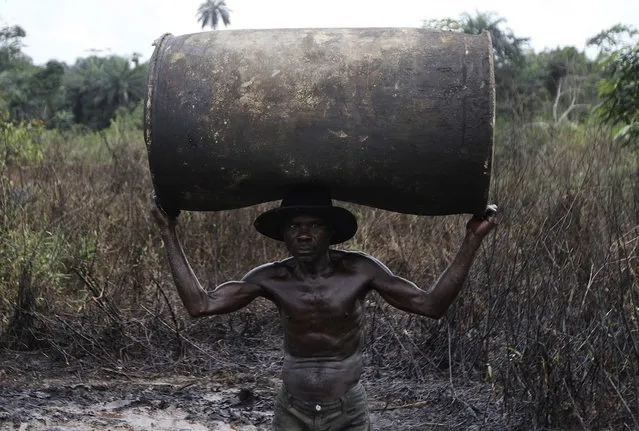
Ebiowei, 48, carries an empty oil container on his head to a place where it would be filled with refined fuel at an illegal refinery site near river Nun in Nigeria's oil state of Bayelsa November 27, 2012. (Photo by Akintunde Akinleye/Reuters)

Ebiowei, 48, carries an empty oil container on his head to a place where it would be filled with refined fuel at an illegal refinery site near river Nun in Nigeria's oil state of Bayelsa November 27, 2012. Locals in the industry say workers can earn $50 to $60 a day. Thousands of people in Nigeria engage in a practice known locally as “oil bunkering” – hacking into pipelines to steal crude then refining it or selling it abroad. The practice, which leaves oil spewing from pipelines for miles around, managed to lift around a fifth of Nigeria's two million barrel a day production last year according to the finance ministry. (Photo by Akintunde Akinleye/Reuters)
Details
18 Jan 2013 14:29:00
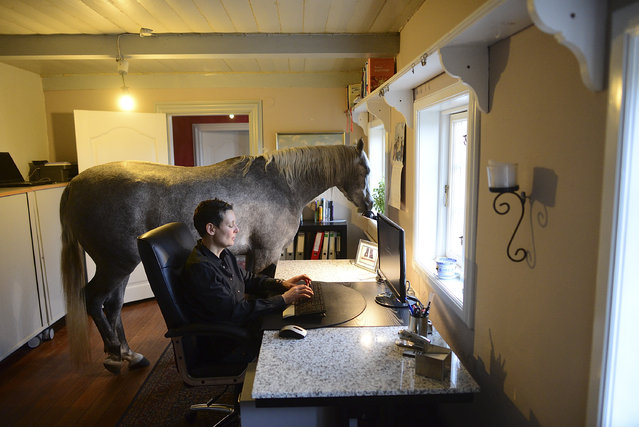
Nasar, an Arabian horse, stands in the office of doctor Stephanie Arndt at her home on February 19, 2014 in Holt, Germany. Fearing for the horse's safety, Mrs. Arndt brought the horse into her house during the Xaver heavy storm back in December, and the horse now wanders through the house daily, inspecting details and looking for snacks. Mrs. Arndt says she doesn't mind, and though the horse never spends the night, it does occasionally take a nap in the house. (Photo by Patrick Lux/Getty Images)

Nasar, an Arabian horse, stands in the office of doctor Stephanie Arndt at her home on February 19, 2014 in Holt, Germany. Fearing for the horse's safety, Mrs. Arndt brought the horse into her house during the Xaver heavy storm back in December, and the horse now wanders through the house daily, inspecting details and looking for snacks. Mrs. Arndt says she doesn't mind, and though the horse never spends the night, it does occasionally take a nap in the house. (Photo by Patrick Lux/Getty Images)
Details
23 Feb 2014 09:44:00
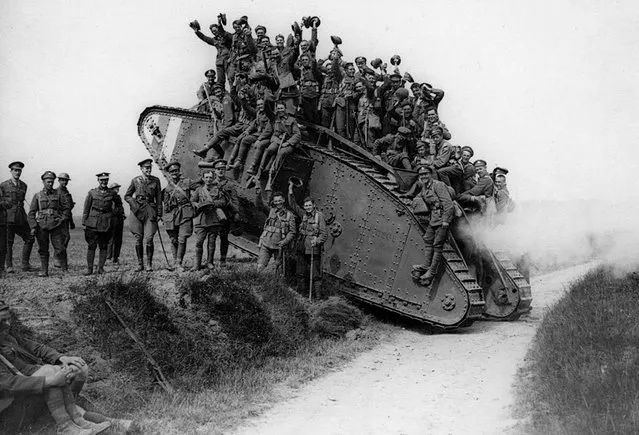
These black-and-white photos are taken from the new book “Armoured Warfare in the First World War 1916 – 1918” by Anthony Tucker-Jones and published by Pen & Sword Military. “Interestingly the British, French and Germans took completely different approaches with varying results”. The British military produced “Little Willie” in Autumn 1915 weighing 18 tonnes, which had a crew of two plus four gunners. “Inspired by a tracked artillery tractor “Little Willie” was referred to as a water tank – hence the name tank – to ensure secrecy”, said Anthony. “This led to the strange looking Mark I with its peculiar rhomboid shape, designed to cross trenches with guns in sponsons on either side. The Germans saw the tank as unchivalrous and were slow to grasp its utility. They favoured the Stormtrooper (specialist soldiers used to infiltrate enemy trenches) and artillery, not the tank”, said Anthony. “However, they didn’t hesitate to make use of captured British tanks. Although the tank helped secure victory and German soldiers dubbed it “Germany’s Downfall” the country was ultimately brought to its knees by the Allies blockade”. Here: British troops hitch a ride on a Mark IV after the massed tank fleet spearheading attack at Cambrai on November 20, 1917. (Photo by Anthony Tucker-Jones/Mediadrumworld.com)

These black-and-white photos are taken from the new book “Armoured Warfare in the First World War 1916 – 1918” by Anthony Tucker-Jones and published by Pen & Sword Military. Here: British troops hitch a ride on a Mark IV after the massed tank fleet spearheading attack at Cambrai on November 20, 1917. (Photo by Anthony Tucker-Jones/Mediadrumworld.com)
Details
23 Feb 2017 00:02:00
Fireplace for children, Trondheim, Norway, by Haugen/Zohar. The children of Trondheim come to sit around the fire and tell stories in this whimsical cone hut, made with materials recycled from a construction site. (Photo by Jason Havneraas/The Guardian)

Fireplace for children, Trondheim, Norway, by Haugen/Zohar. The children of Trondheim come to sit around the fire and tell stories in this whimsical cone hut, made with materials recycled from a construction site. (Photo by Jason Havneraas/The Guardian)
Details
17 Mar 2017 00:04:00
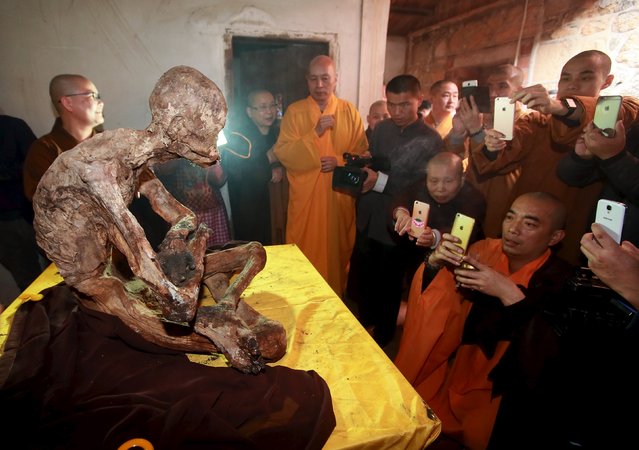
Monks take pictures with their mobile phones of the mummified body of a monk at Puzhao temple in Quanzhou, Fujian Province, China, January 10, 2016. (Photo by Reuters/Stringer)

Monks take pictures with their mobile phones of the mummified body of a monk at Puzhao temple in Quanzhou, Fujian Province, China, January 10, 2016. According to local media, the monk named Fuhou died three years ago at the age of 94 and his remains was placed in a vat and turned into a mummy as a sign of respect. (Photo by Reuters/Stringer)
Details
14 Jan 2016 08:01:00