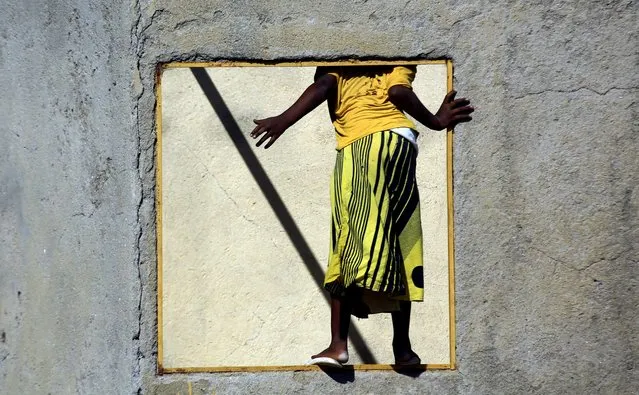
An Ethiopian refugee who fled Tigray region, stands within the Fashaga camp on the Sudan-Ethiopia border, in Kassala state, Sudan on December 13, 2020. (Photo by Mohamed Nureldin Abdallah/Reuters)
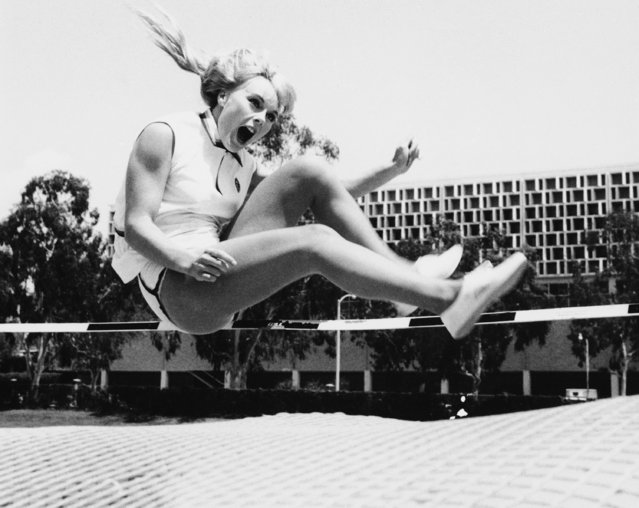
Giving out with a yell, Elke Sommer is tossed on the trampoline as she trains for her movie role as an athlete, on the playing field of the University of California at Los Angeles, June 8, 1967. (Photo by AP Photo)
“In honor of Friday’s World Press Freedom Day, the non-governmental organization Reporters sans frontières (Reporters Without Borders) launched a campaign depicting world-famous dictators giving everyone the finger, or the international equivalent thereof”. – Kay Steiger. (Photo by Vincent Bousserez/Reporters Without Borders)
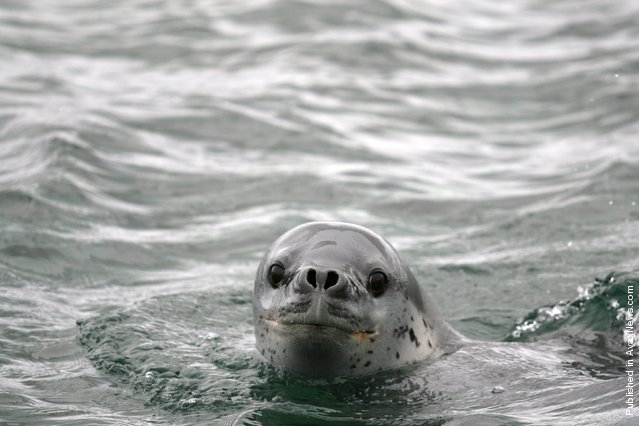
“The leopard seal (Hydrurga leptonyx), also referred to as the sea leopard, is the second largest species of seal in the Antarctic (after the southern elephant seal). It is most common in the southern hemisphere along the coast of Antarctica and on most sub-Antarctic islands, but can also be found on the coasts of southern Australia, Tasmania, South Africa, New Zealand, Lord Howe Island, Tierra del Fuego, the Cook Islands, and the Atlantic coast of South America. It can live twenty-six years, possibly more. Orcas and large sharks are the only natural predators of leopard seals”. – Wikipedia
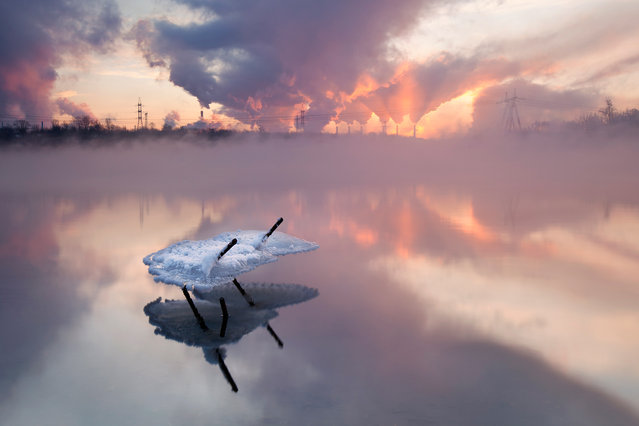
“Winter shapes, Moscow river”. Moscow river at this part is never covered by ice. When the temperature is very low it's possible to see a strong fog. Morning light and pipes of the oli factory creates a fantastic landscape. Photo location: Moscow, Russia. (Photo and caption by Sergey Rumyantsev/National Geographic Photo Contest)
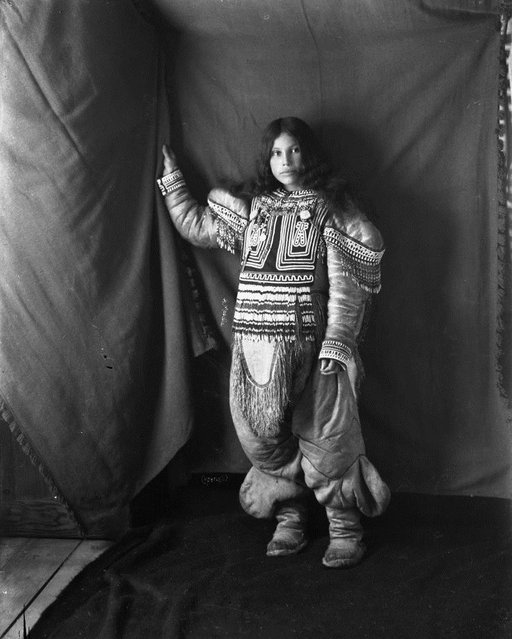
Geraldine Moodie overcame harsh conditions to become western Canada’s first professional female photographer, capturing beautiful images in the country’s most remote regions. An exhibition, “North of Ordinary: The Arctic Photographs of Geraldine and Douglas Moodie”, is at Glenbow, Calgary, 18 February – 10 September. Here: Inuit woman, Kootucktuck, in her beaded attigi. Fullerton Harbour, Nunavut, February 1905. (Photo by Geraldine Moodie/The Guardian)
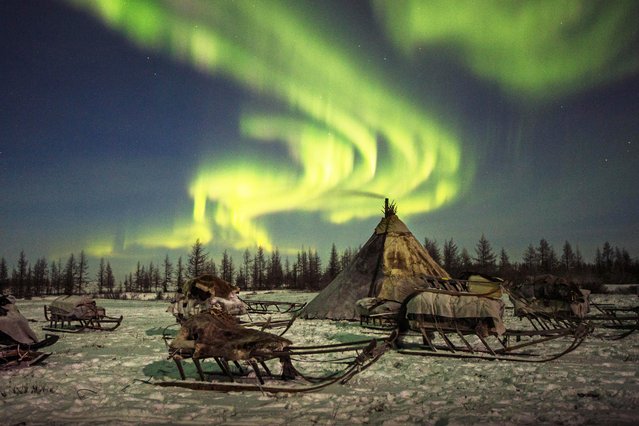
A British photographer has captured life at the “edge of the world”. Timothy Allen, best known for his work on BBC's Human Planet, trekked through the freezing Siberian wilderness for 16 days as he joined part of an 800km migration of reindeer in the Yamal-Nenets region – a name that roughly translates to “edge of the world”. The stunning pictures feature the nomadic Nenets tribe, who drink blood to survive in -45°C temperatures. Timothy's epic journey, which will be revealed in an eight-minute documentary on Animal Planet USA, saw him travel across the bleak terrain of the frozen Ob River with the Nenets people in December last year. Here: An empty camp is shown beneath a colourful sky in Siberia, December 2016. (Photo by Timothy Allen/Barcroft Productions)
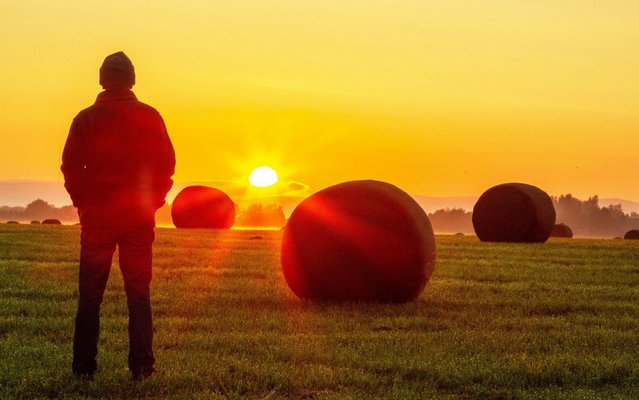
Sunrise over the fields of stemmy grassland in Burscough, Lancashire, UK on September 14, 2020 with wrapped bales of hay prepared for silage, haylage for animal winter feed. (Photo by MediaWorldImages/Alamy Live News)