Loading...
Done
This picture taken on February 1, 2015 shows participants competing in a tofu (beancurd) wrestling competition in Fogang county, south China's Guangdong province. Participants, mostly women, fight it out in an inflatable pool which is filled with nearly two tons of fresh milk and tofu, in a promotion to attract tourists for the upcoming Chinese Lunar New Year holiday. (Photo by AFP Photo/Stringer)

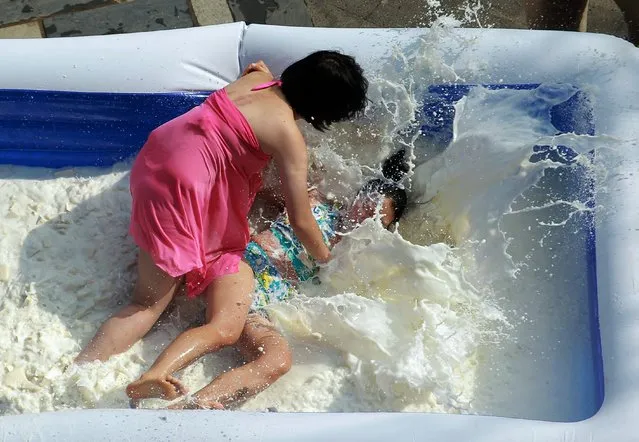
This picture taken on February 1, 2015 shows participants competing in a tofu (beancurd) wrestling competition in Fogang county, south China's Guangdong province. Participants, mostly women, fight it out in an inflatable pool which is filled with nearly two tons of fresh milk and tofu, in a promotion to attract tourists for the upcoming Chinese Lunar New Year holiday. The upcoming Chinese lunar new year of the sheep, which will fall on February 19 this year, marks the biggest festival of the year in China as hundreds of millions of people journey across the country to celebrate the season with their families. (Photo by AFP Photo/Stringer)
Details
07 Feb 2015 14:44:00
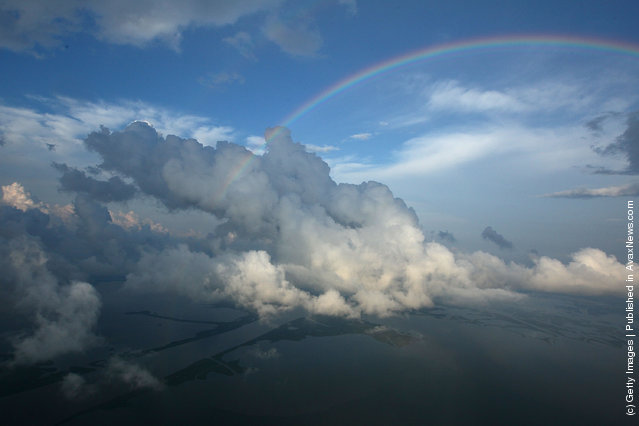
A rainbow appears over the Louisiana gulf May 26, 2010 in the Gulf of Mexico near Brush Island, Louisiana

A rainbow appears over the Louisiana gulf May 26, 2010 in the Gulf of Mexico near Brush Island, Louisiana. (Photo by Win McNamee/Getty Images)
Details
24 Oct 2011 14:43:00
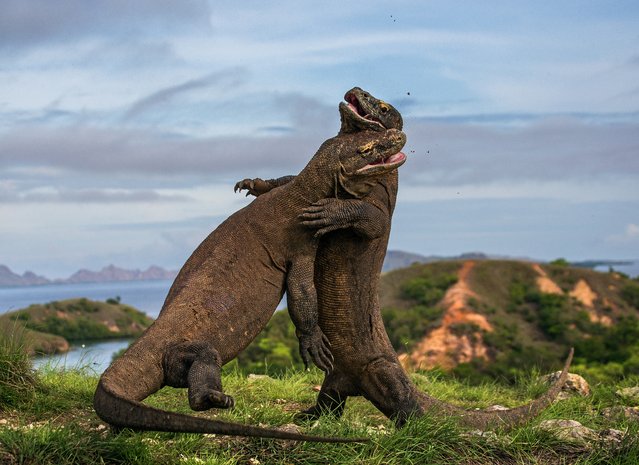
Komodo Judo by Andrey Gudkov. Finalist, Amphibians & Reptiles. Two large male Komodo dragons hissing angrily at each other in Indonesia’s Komodo national park. Komodo dragons can grow up to 8ft. (Photo by Andrey Gudkov/Wildlife Photographer of the Year 2015)

Komodo Judo by Andrey Gudkov. Finalist, Amphibians & Reptiles. Two large male Komodo dragons hissing angrily at each other in Indonesia’s Komodo national park. Komodo dragons can grow up to 8ft. (Photo by Andrey Gudkov/Wildlife Photographer of the Year 2015)
Details
16 Nov 2015 08:15:00
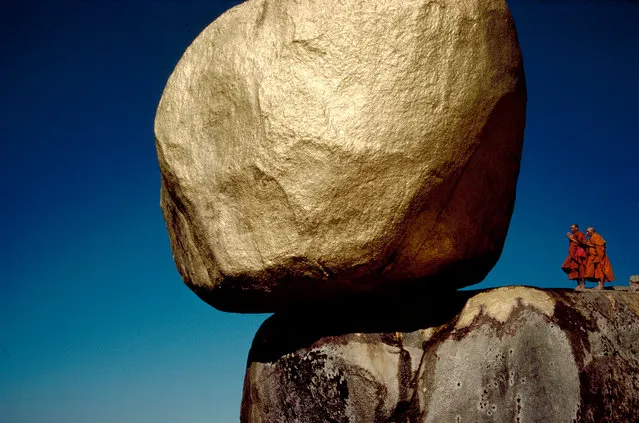
Kyaiktiyo, Burma, 1978. The Golden Rock at Shwe Pyi Daw (the Golden Country), the Buddhist holy place. Hiroji Kubota writes: “I was desperate to keep a distance from America for a while; luckily, I found Burma and its gentle and compassionate people. In the spring of 1978, on the top of the hill where I took this photo, I had two Leica bodies: the one with Tri-X and the other with Kodachrome 64. Soon after, I realised that the colour one looked very colourful and was more powerful. That was my decisive moment, to become a colour photographer”. (Photo by Hiroji Kubota/Magnum Photos)

Kyaiktiyo, Burma, 1978. The Golden Rock at Shwe Pyi Daw (the Golden Country), the Buddhist holy place. Hiroji Kubota writes: “I was desperate to keep a distance from America for a while; luckily, I found Burma and its gentle and compassionate people. In the spring of 1978, on the top of the hill where I took this photo, I had two Leica bodies: the one with Tri-X and the other with Kodachrome 64. Soon after, I realised that the colour one looked very colourful and was more powerful. That was my decisive moment, to become a colour photographer”. (Photo by Hiroji Kubota/Magnum Photos)
Details
10 Jun 2016 13:30:00
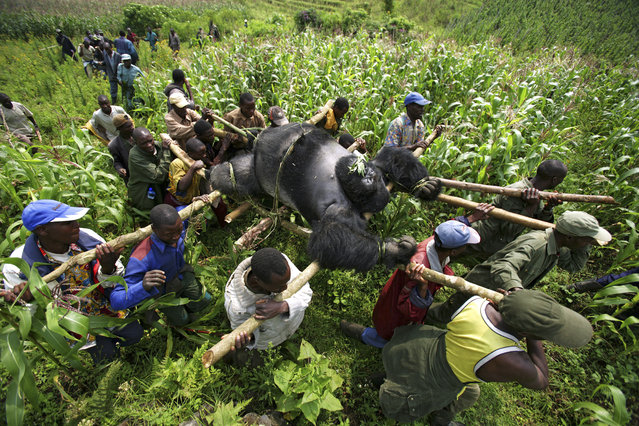
2008 Visa d'or Feature: Brent Stirton. Conservation Rangers from an Anti-Poaching unit work with locals to evacuate the bodies of four Mountain Gorrillas killed in mysterious circumstances in the park,  July 24, 2007, Virunga National Park, Eastern Congo. (Photo by Brent Stirton/Exclusive by Getty Images)

Jean-François Leroy launched Visa Pour l’Image, the international photojournalism festival, in Perpignan in 1989. Before heading up the festival, Leroy was shooting reportage for the agency Sipa Press and also working for Photo-Reporter, Le Photographe, Photo-Revue and Photo Magazine. He is the chairman of the company Images Evidence. Photo: 2008 Visa d'or Feature: Brent Stirton. Conservation Rangers from an Anti-Poaching unit work with locals to evacuate the bodies of four Mountain Gorrillas killed in mysterious circumstances in the park, July 24, 2007, Virunga National Park, Eastern Congo. (Photo by Brent Stirton/Exclusive by Getty Images)
Details
27 Aug 2013 10:42:00
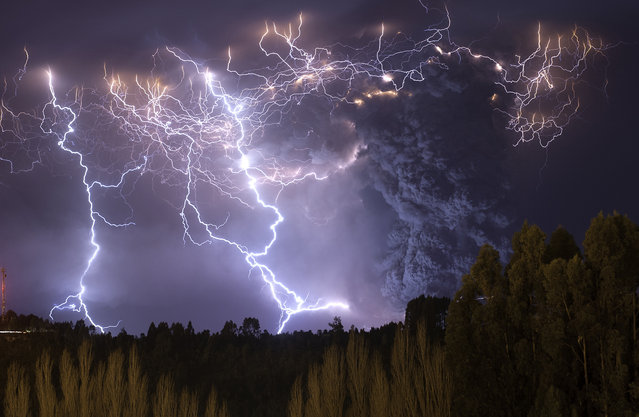
The eruption of Cordon Caulle began on June 4, 2011, located in the Region of Los Rios in Chile. For about 12 months, people and animals became accustomed to living with the daily fall of ash, which also caused problems in the air traffic in South America. The explosions and lightning during first days of the eruption could be seen from hundreds of miles around. This photograph was taken on the second night of eruption from the town of Lago Ranco. (Photo and caption by Francisco Negroni/National Geographic Traveler Photo Contest)

The eruption of Cordon Caulle began on June 4, 2011, located in the Region of Los Rios in Chile. For about 12 months, people and animals became accustomed to living with the daily fall of ash, which also caused problems in the air traffic in South America. The explosions and lightning during first days of the eruption could be seen from hundreds of miles around. This photograph was taken on the second night of eruption from the town of Lago Ranco. (Photo and caption by Francisco Negroni/National Geographic Traveler Photo Contest)

ATTENTION! All pictures are presented in high resolution. To see Hi-Res images – just TWICE click on any picture. In other words, click small picture – opens the BIG picture. Click BIG picture – opens VERY BIG picture.
Details
23 Jun 2013 11:24:00
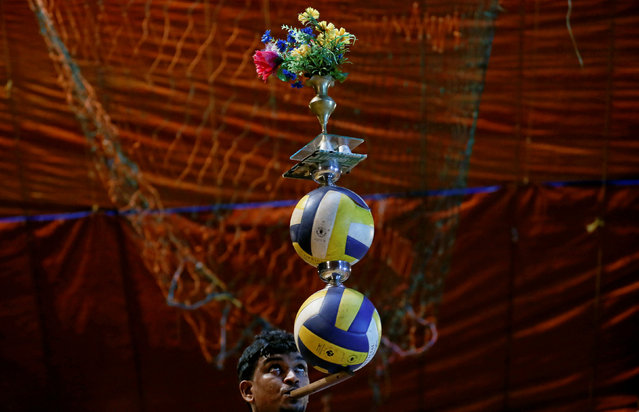
A member of Sakura circus team performs during the second day of a one week show in Padukka, near Colombo, Sri Lanka November 28, 2016. (Photo by Dinuka Liyanawatte/Reuters)

A member of Sakura circus team performs during the second day of a one week show in Padukka, near Colombo, Sri Lanka November 28, 2016. (Photo by Dinuka Liyanawatte/Reuters)
Details
29 Nov 2016 14:12:00
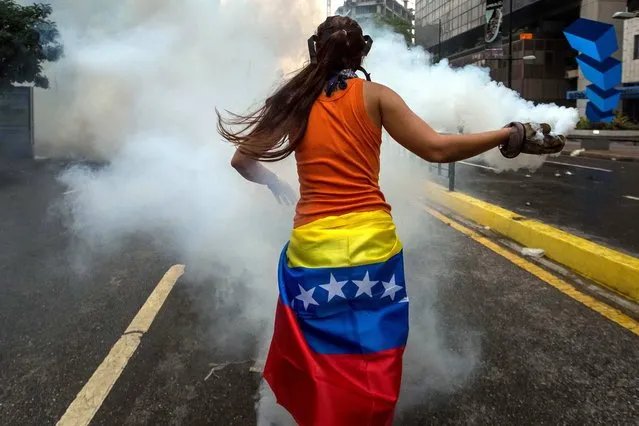
Demonstrators clash with members of the Bolivarian National Police as protests continue in Caracas, Venezuela, 20 April 2017. The Bolivarian National Guard, using tear gas, tried to disperse protests against the government of Venezuelan President Nicolas Maduro. (Photo by Miguel Gutierrez/EPA)

Demonstrators clash with members of the Bolivarian National Police as protests continue in Caracas, Venezuela, 20 April 2017. The Bolivarian National Guard, using tear gas, tried to disperse protests against the government of Venezuelan President Nicolas Maduro. (Photo by Miguel Gutierrez/EPA)
Details
26 May 2017 08:59:00