Loading...
Done
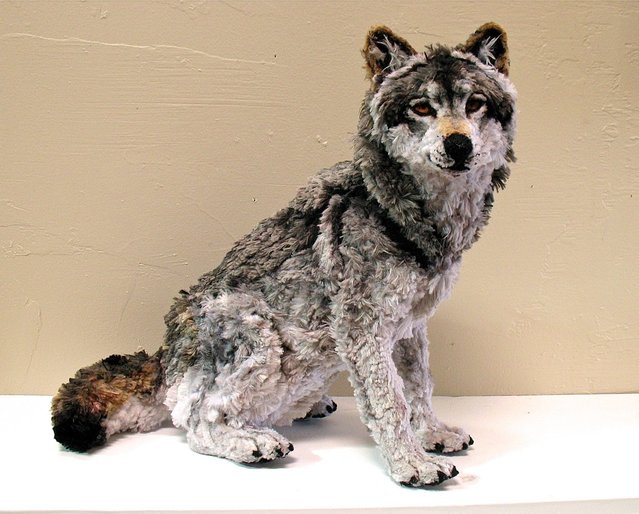
New Pipe Cleaner Wolf. (Photo by Lauren Ryan)

“These are the mind-bending sculptures that take up to 40 hours to create – as they're made entirely from pipe cleaners. The fuzzy flexible figures are made entirely from the tobacco cleaning tools – which are now more commonly found strewn across nurseries and art classrooms – to construct the incredible life-like animals”. – Caters News. Photo: New Pipe Cleaner Wolf. (Photo by Lauren Ryan)
Details
20 Nov 2013 08:17:00
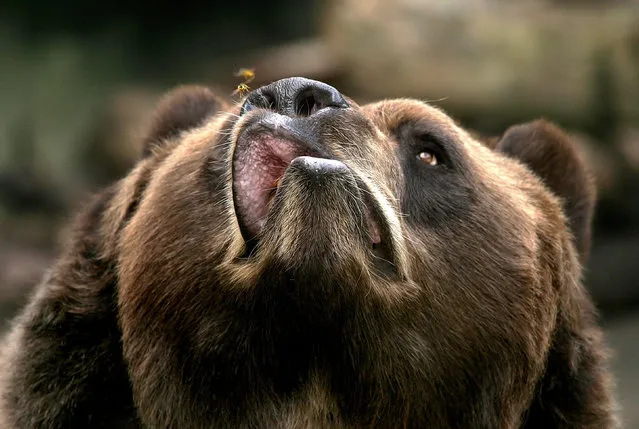
The Kodiak bear tries to chomp down on the main culprit) - These pictures capture the hilarious moment a cheeky little bee decides to pick on a grumpy bear. A massive Kodiak bear is finding this pesky bee a pain in the bear-hind as it buzzes around his head just out of reach. This incredible comedic moment was captured in the bear den at Buffalo Zoo. Terry Cervi from Buffalo, New York, U.S.A. saw this incredible sight on one of her regular visits to her local zoo. (Photo by Terry Cervi/Caters News)

These picture capture the hilarious moment a cheeky little bee decides to pick on a grumpy bear. A massive Kodiak bear is finding this pesky bee a pain in the bear-hind as it buzzes around his head just out of reach. This incredible comedic moment was captured in the bear den at Buffalo Zoo. Terry Cervi from Buffalo, New York, U.S.A. saw this incredible sight on one of her regular visits to her local zoo. (Photo by Terry Cervi/Caters News)
Details
14 Dec 2013 14:36:00
Verena Popp-Hackner And Georg Popp Professional Landscape Photographers

We – Verena Popp-Hackner and Georg Popp - are professional landscape photographers. While we are based in Vienna/Austria, running our own (rights managed) image library and a small but fine photo-gallery. Photographing our tiny country Austria, with all it's culture and nature, canoeing it's rivers or lakes and hiking the Alps is our profession but our photographic “backyard” includes the rest of the planet as well. We use analog large format cameras almost exclusively for our landscape work, shooting on 4x5” sheet film, to provide clients with the maximum of print-sharpness and details and unsurpassed clarity and depth of focus.
Details
15 Jan 2014 14:06:00
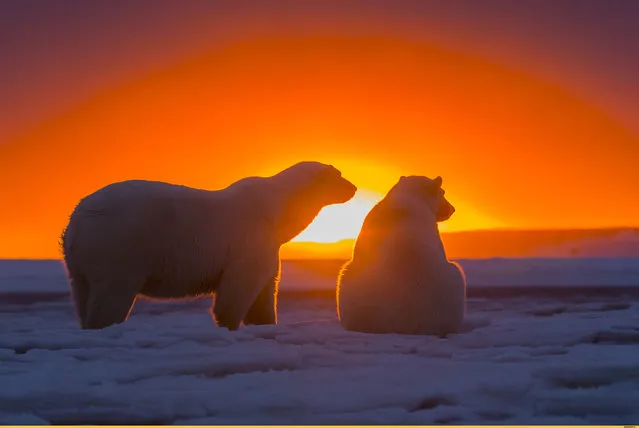
Polar Bears – In the sunset. (Photo by Sylvain Cordier/Caters News)

The stunning shots capture the moment a female bear and her two cubs enjoyed the last warm rays of the sun at the Arctic National Wildlife Refuge in Kaktovik, Alaska. The bears can be seen gazing at the vibrant sunset and appear to revel in the tranquil moment as they bask in the array of colors. (Photo by Sylvain Cordier/Caters News)
Details
13 Jan 2014 11:48:00


Japanese macaque monkeys enjoy sitting in the hot springs at Jigokudani-Onsen (Hell Valley) on January 23, 2005 in Jigokudani, Nagano-Prefecture, Japan. Japanese Macaques, also known as snow monkeys are the most northerly nonhuman primate in the world. In 1963 a female Macaque ventured into the hot springs to retrieve some soybeans. This behaviour was adopted by other monkeys, and eventually by the entire troop. This Macaque troop regularly visits the Jigokudani-Onsen springs to escape the cold. The hot springs are said to help relieve nerve pain and fatigue. (Photo by Koichi Kamoshida/Getty Images)
Details
20 May 2011 08:04:00


“BASE jumping, also sometimes written as B.A.S.E jumping, is an activity that employs an initially packed parachute to jump from fixed objects. “B.A.S.E.” is an acronym that stands for four categories of fixed objects from which one can jump: buildings, antennas, spans (bridges), and earth (cliffs)”. – Wikipedia

Photo: Felix Baumgartner, world-renowned B.A.S.E jumper, is pictured in this undated handout photo. Baumgartner will attempt the first unpowered crossing of the strait between England and France. (Photo by Red Bull via Getty Images)
Details
30 Jul 2011 13:06:00
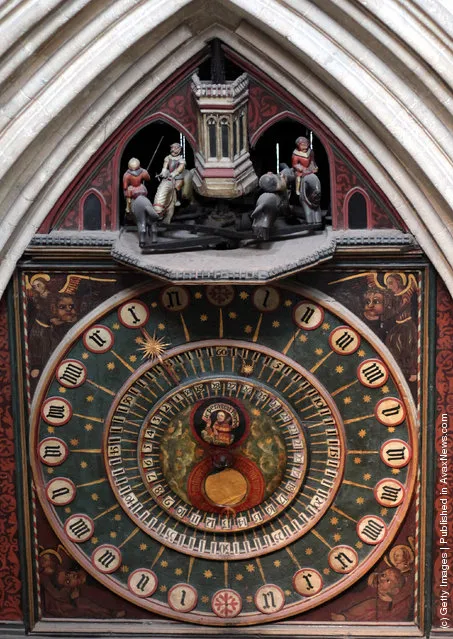
Wells Clock – World's Oldest Mechanical Clock

“Wells Cathedral is a Church of England cathedral in Wells, Somerset, England. Built between 1175 and 1490, Wells Cathedral has been described as “the most poetic of the English Cathedrals”. The Wells clock, an astronomical clock, is located in the north transept. The surviving mechanism, dated to between 1386 and 1392, was replaced in the 19th century, and was eventually moved to the Science Museum in London, where it continues to operate. It is the second-oldest surviving clock in England”. – Wikipedia

Photo: The clock face of world's oldest continually-working mechanical clock is seen as it is hand wound for the very last time on August 21, 2010 in Wells, England. (Photo by Matt Cardy/Getty Images)
Details
10 Aug 2011 11:23:00


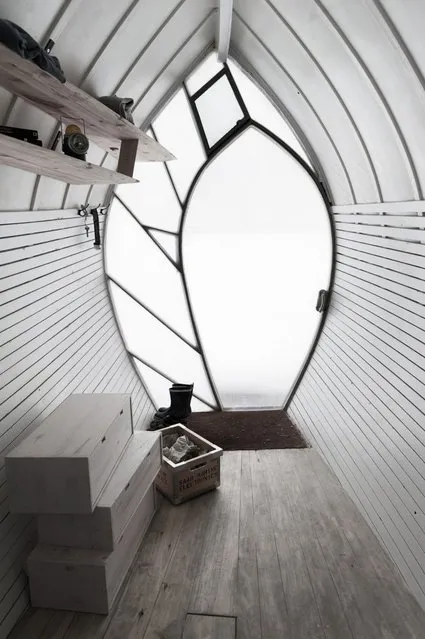
Over the past few weeks we have seen a massive popularity spike in “small space” architecture and design. The latest project to come across our desks is this beautiful Hus-1 Residence. The tiny dwelling is just 270 square feet and was both built and designed by the Swedish architect Torsten Ottesjö. ...

Details
20 Jul 2012 09:34:00