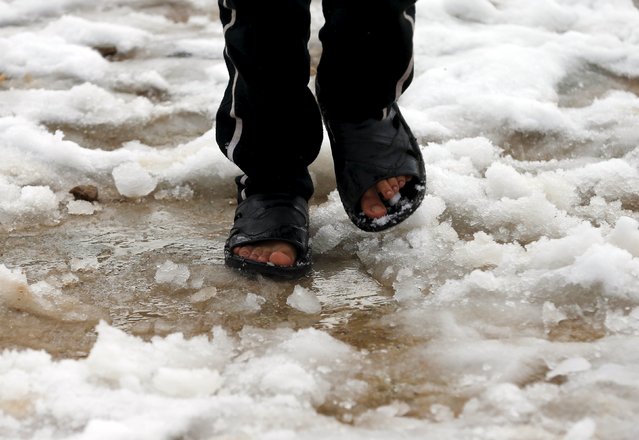
A Syrian youth Khaled from Raqqa walks on snow wearing slippers in the Bekaa Valley refugee camp in Lebanon after the first heavy snow storm hit Lebanon, January 3, 2016. (Photo by Jamal Saidi/Reuters)
A demonstrator gestures during protests around the Argentine Parliament in Buenos Aires, Argentina, 10 March 2022. Serious disturbances were registered in the surroundings of the seat of the Argentine Parliament when demonstrators protesting against the new agreement with the International Monetary Fund (IMF) clashed with the police of the city of Buenos Aires. (Photo by Juan Ignacio Roncoroni/EPA/EFE)
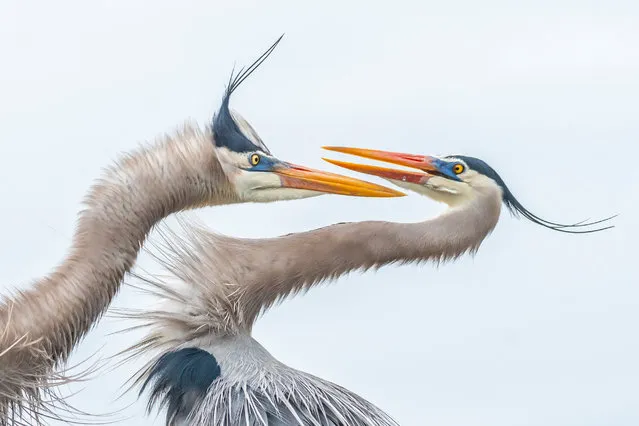
Wakodahatchee wetlands, Delray Beach, Florida, US. Equipped with sinewy necks and spear-like bills, great blue herons can lunge with fearsome speed to strike their aquatic prey. Adults will also employ rapid stabbing motions as one aspect of their complex courtship displays; they’re seemingly dangerous moves, but fitting to the intensity of mating season. (Photo by Melissa Rowell/Audubon Photography Awards)
Rugby Union, New Zealand vs Tonga, IRB Rugby World Cup 2015 Pool C, St James' Park, Newcastle, Englandon October 9, 2015: Fans is fancy dress before the game. (Photo by Andrew Yates/Reuters)
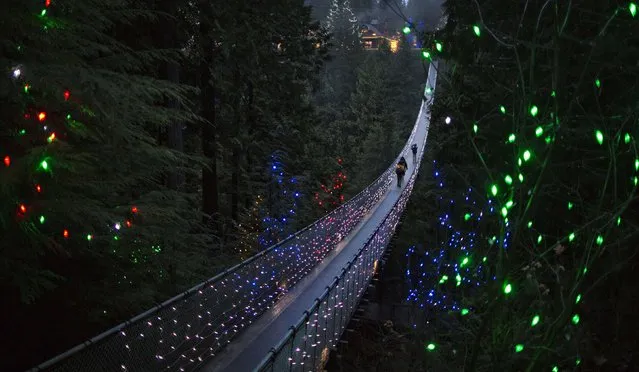
The Capilano Suspension Bridge is a simple suspension bridge crossing the Capilano River in the District of North Vancouver, British Columbia, Canada. The current bridge is 140 metres (460 ft) long and 70 metres (230 ft) above the river. It is part of a private facility, with an admission fee, and draws over 800,000 visitors a year.
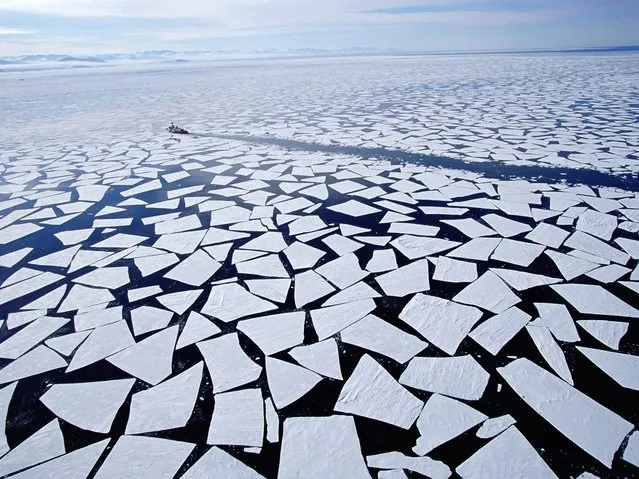
McMurdo Station is a U.S. Antarctic research centre located on the southern tip of Ross Island, which is in the New Zealand-claimed Ross Dependency on the shore of McMurdo Sound in Antarctica. It is operated by the United States through the United States Antarctic Program, a branch of the National Science Foundation. The station is the largest community in Antarctica, capable of supporting up to 1,258 residents, and serves as the United States Antarctic science facility. All personnel and cargo going to or coming from Amundsen–Scott South Pole Station first pass through McMurdo.
Revellers help a man crowdsurf as they watch The Slaves perform on The Other Stage at the Glastonbury Festival of Music and Performing Arts on Worthy Farm near the village of Pilton in Somerset, South West England, on June 30, 2019. (Photo by Oli Scarff/AFP Photo)
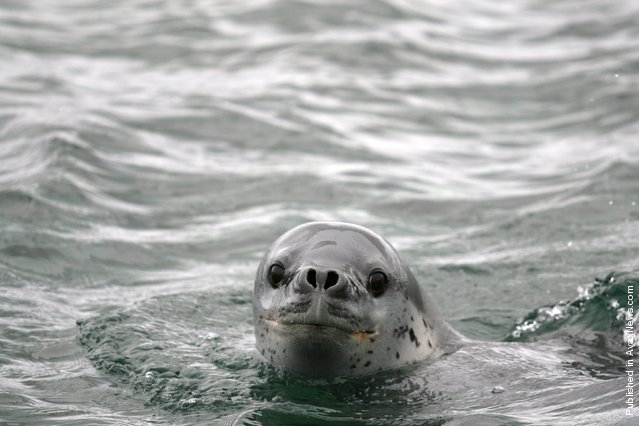
“The leopard seal (Hydrurga leptonyx), also referred to as the sea leopard, is the second largest species of seal in the Antarctic (after the southern elephant seal). It is most common in the southern hemisphere along the coast of Antarctica and on most sub-Antarctic islands, but can also be found on the coasts of southern Australia, Tasmania, South Africa, New Zealand, Lord Howe Island, Tierra del Fuego, the Cook Islands, and the Atlantic coast of South America. It can live twenty-six years, possibly more. Orcas and large sharks are the only natural predators of leopard seals”. – Wikipedia