Loading...
Done
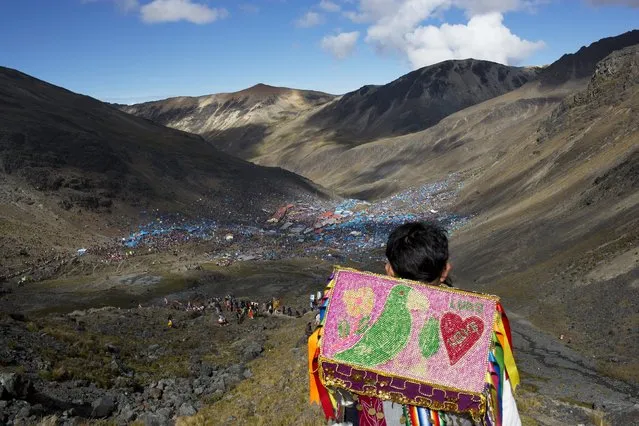
In this May 24, 2016 photo, a young boy descends the Qullqip'unqu mountain looking out at the tens of thousands of pilgrims gathered to celebrate the three-day festival Qoyllur Rit’i, translated from the Quechua language as Snow Star, in the Andean Sinakara Valley, in Peru's Cusco region. The celebration that mixes Catholic and indigenous beliefs honors Jesus as well as the area’s glacier, which is considered sacred among some indigenous people. While the native celebration is far older, the Christian part of the ritual stretches back to the 1700s, when Jesus is said to have appeared to a young shepherd in the form of another boy. (Photo by Rodrigo Abd/AP Photo)

In this May 24, 2016 photo, a young boy descends the Qullqip'unqu mountain looking out at the tens of thousands of pilgrims gathered to celebrate the three-day festival Qoyllur Rit’i, translated from the Quechua language as Snow Star, in the Andean Sinakara Valley, in Peru's Cusco region. The celebration that mixes Catholic and indigenous beliefs honors Jesus as well as the area’s glacier, which is considered sacred among some indigenous people. While the native celebration is far older, the Christian part of the ritual stretches back to the 1700s, when Jesus is said to have appeared to a young shepherd in the form of another boy. (Photo by Rodrigo Abd/AP Photo)
Details
04 Jun 2016 11:52:00
Thor Heyerdahl with a model of the balsa raft Kon Tiki

“Thor Heyerdahl (October 6, 1914, Larvik, Norway – April 18, 2002, Colla Micheri, Italy) was a Norwegian ethnographer and adventurer with a background in zoology and geography. He became notable for his Kon-Tiki expedition, in which he sailed 8,000 km (4,300 miles) by raft from South America to the Tuamotu Islands. All his expeditions are shown in the Kon-Tiki Museum, Oslo”. – Wikipedia

Photo: Norwegian anthropologist Thor Heyerdahl with a model of the balsa raft “Kon-Tiki” on which he drifted 4,300 miles from Peru to the Tuamotu Islands, proving his theory that Polynesia could originally have been populated by South Americans. (Photo by Express/Express/Getty Images). 1950
Details
09 Aug 2011 11:05:00
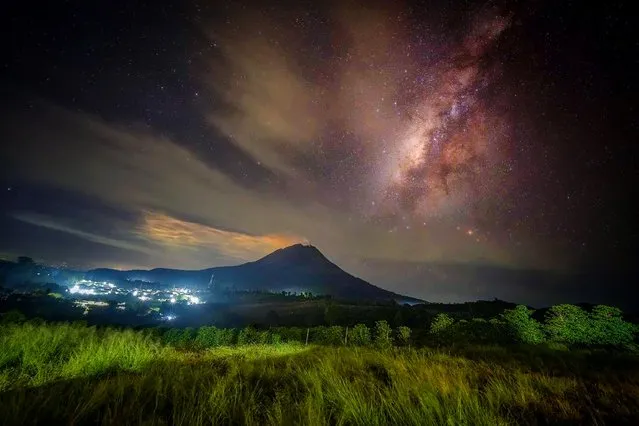
Mount Sinabung looks calm as seen from Karo, North Sumatra at dawn on August 8, 2021. (Photo by Tibta Nangin/AFP Photo)

Mount Sinabung looks calm as seen from Karo, North Sumatra at dawn on August 8, 2021. (Photo by Tibta Nangin/AFP Photo)
Details
12 Aug 2021 08:36:00
A visitor takes a picture of goldfish at the Art Aquarium exhibition in Tokyo Friday, August 12, 2016. The exhibition, featuring around 8,000 goldfish in tanks themed on Japan's Edo Period. (Photo by Koji Sasahara/AP Photo)

A visitor takes a picture of goldfish at the Art Aquarium exhibition in Tokyo Friday, August 12, 2016. The exhibition, featuring around 8,000 goldfish in tanks themed on Japan's Edo Period. (Photo by Koji Sasahara/AP Photo)
Details
14 Aug 2016 10:46:00
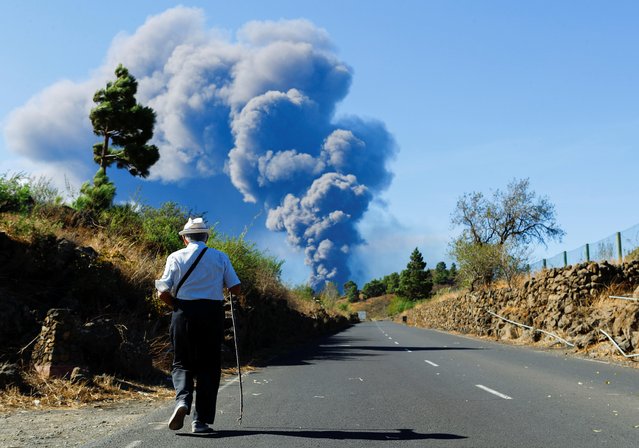
A man walks along an El Paso road while observing a large ash column from the Cumbre Vieja volcano on the Canary Island of La Palma, Spain, October 4, 2021. (Photo by Borja Suarez/Reuters)

A man walks along an El Paso road while observing a large ash column from the Cumbre Vieja volcano on the Canary Island of La Palma, Spain, October 4, 2021. (Photo by Borja Suarez/Reuters)
Details
28 Oct 2021 06:01:00
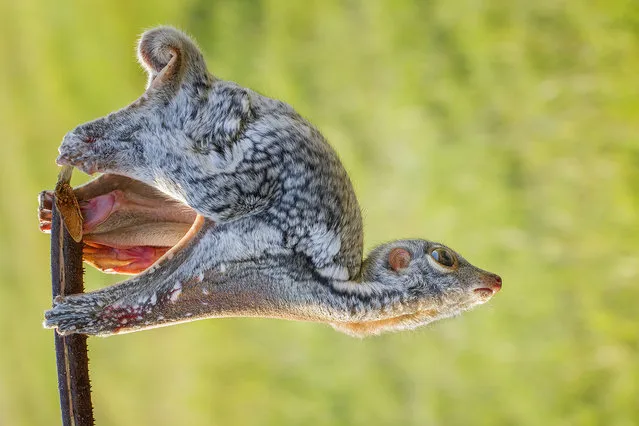
“Warming up”. This photo I capture in the early afternoon, the animal species of lemurs fly. Photo location: Sambas, West Kalimantan, Indonesia. (Photo and caption by Hendy Mp/National Geographic Photo Contest)

“Warming up”. This photo I capture in the early afternoon, the animal species of lemurs fly. Photo location: Sambas, West Kalimantan, Indonesia. (Photo and caption by Hendy Mp/National Geographic Photo Contest)
Details
03 Oct 2014 11:52:00
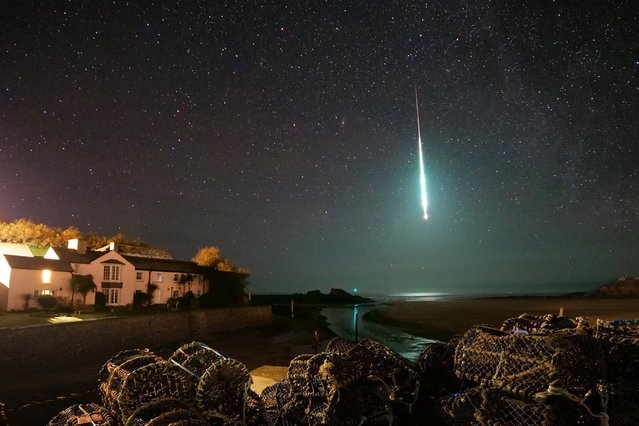
A brightly burning magnesium-rich meteor known as a bolide was captured near Bude, Cornwall on January 24, 2020. (Photo by Chris Small/Apex News)

A brightly burning magnesium-rich meteor known as a bolide was captured near Bude, Cornwall on January 24, 2020. (Photo by Chris Small/Apex News)
Details
14 Jul 2020 00:03:00
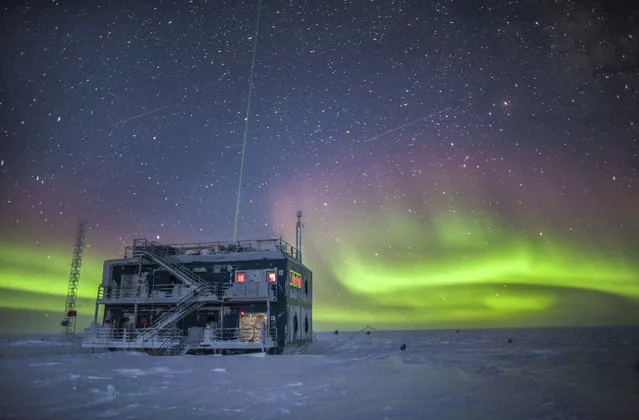
This undated photo provided by NOAA in May 2018 shows aurora australis near the South Pole Atmospheric Research Observatory in Antarctica. When a hole in the ozone formed over Antarctica, countries around the world in 1987 agreed to phase out several types of ozone-depleting chemicals called chlorofluorocarbons (CFCs). Production was banned, emissions fell and the hole shriveled. But according to a study released on Wednesday, May 16, 2018, scientists say since 2013, there’s more of a banned CFC going into the atmosphere. (Photo by Patrick Cullis/NOAA via AP Photo)

This undated photo provided by NOAA in May 2018 shows aurora australis near the South Pole Atmospheric Research Observatory in Antarctica. When a hole in the ozone formed over Antarctica, countries around the world in 1987 agreed to phase out several types of ozone-depleting chemicals called chlorofluorocarbons (CFCs). Production was banned, emissions fell and the hole shriveled. But according to a study released on Wednesday, May 16, 2018, scientists say since 2013, there’s more of a banned CFC going into the atmosphere. (Photo by Patrick Cullis/NOAA via AP Photo)
Details
15 Aug 2018 00:05:00