Loading...
Done
A couple rides their motorcycle at the Qian Dao Lake rally, on May 11, 2013. (Photo by Carlos Barria/Reuters)

“A girl arrives at the parking lot wearing tiny leather shorts and sits on the back of a bike with a horse power of more than 1,000 CC. Next to her a man gets ready to ride, wearing a skeleton mask. It’s more than a fashion show, it’s an extravaganza on two wheels along Chinese roads”. – Carlos Barria. Photo: A couple rides their motorcycle at the Qian Dao Lake rally, on May 11, 2013. (Photo by Carlos Barria/Reuters)
Details
15 May 2013 11:23:00
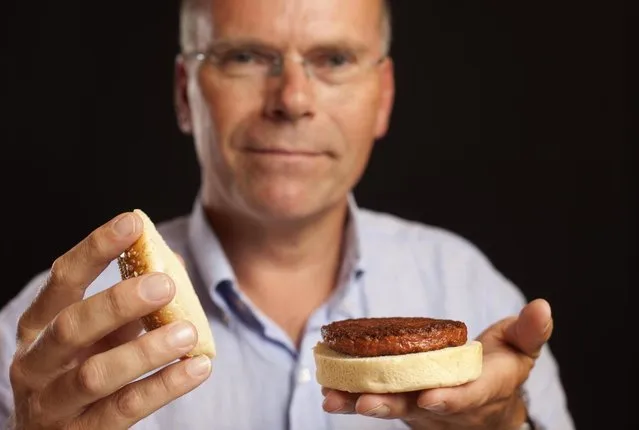
In this handout image provided by Ogilvy, a burger made from cultured beef, which has been developed by Professor Mark Post of Maastricht University in the Netherlands (pictured) is shown to the media during a press conference on August 5, 2013 in London, England. Cultured Beef could help solve the coming food crisis and combat climate change with commercial production of Cultured Beef beginning within ten to twenty years. (Photo by David Parry via Getty Images)

In this handout image provided by Ogilvy, a burger made from cultured beef, which has been developed by Professor Mark Post of Maastricht University in the Netherlands (pictured) is shown to the media during a press conference on August 5, 2013 in London, England. The in-vitro burger, cultured from cattle stem cells, the first example of what its creator says could provide an answer to global food shortages and help combat climate change, was fried in a pan and tasted by two volunteers. The burger is the result of years of research by Dutch scientist Mark Post, a vascular biologist at the University of Maastricht, who is working to show how meat grown in petri dishes might one day be a true alternative to meat from livestock.The meat in the burger has been made by knitting together around 20,000 strands of protein that has been cultured from cattle stem cells in Post's lab. (Photo by David Parry)
Details
06 Aug 2013 08:48:00
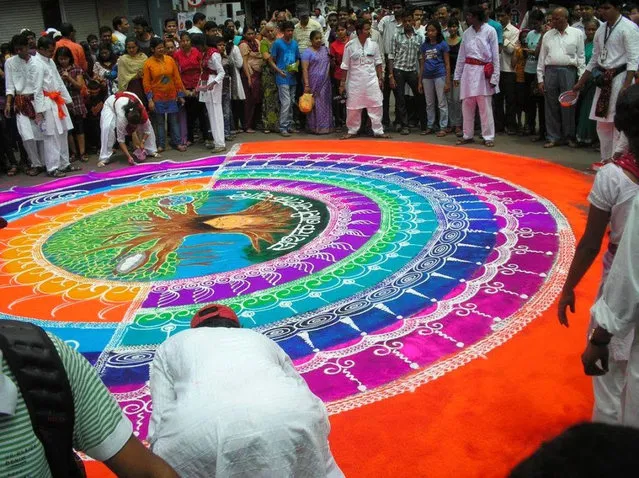
Rangoli Folk Art From India

Rangoli, also known as kolam or Muggu, is a folk art from India in which patterns are created on the floor in living rooms or courtyards using materials such as colored rice, dry flour, colored sand or flower petals. It is usually made during Diwali, Onam, Pongal and other Indian festivals. They are meant to be sacred welcoming areas for the Hindu deities. The ancient symbols have been passed down through the ages, from each generation to the next, keeping both the art form and the tradition alive. Similar practices are followed in different Indian states: in Tamil Nadu, there is Kolam in Tamil Nadu; Mandana in Rajasthan; Chaookpurna in Chhattisgarh; Alpana in West Bengal; Aripana in Bihar; Chowk pujan in Uttar Pradesh; Muggu in Andhra Pradesh and others.
Details
16 Jun 2014 10:37:00
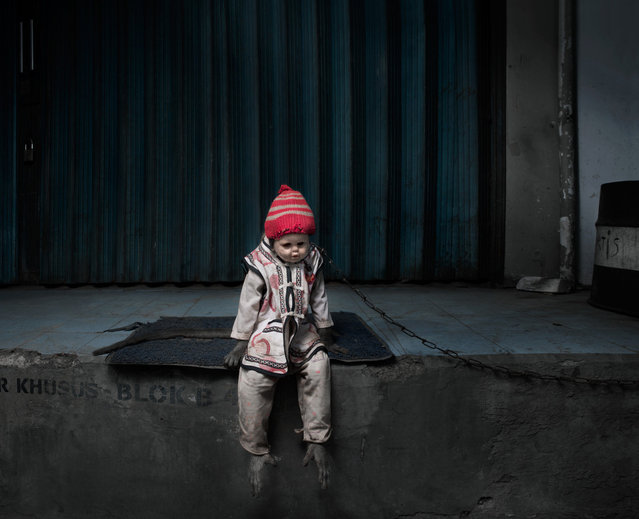
The Monkey and the Mask: Terrifying Portraits of Indonesia’s Street-Performing Macaques. (Photo by Perttu Saksa)

“A Kind of You” is a documentary work of an uncanny asian tradition, where monkeys are trained and dressed to act humanlike in order to ask money from the bypassers. Modern city culture has turned the old tradition in to eerie and haunting act of cruel street theatre where animals become something else, never able to reach our expectations”. – Perttu Saksa. (Photo by Perttu Saksa)

SEE ALSO: «Topeng Monyet: The Masked Monkeys Of Indonesia»


Details
06 Nov 2013 10:42:00


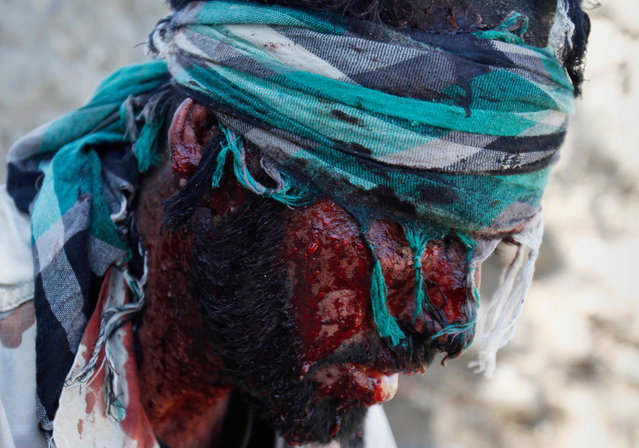
A wounded member of the Afghan police reaction force waits for treatment in Alingar, Laghman province, on April 30, 2012. A bomb exploded next to opium poppy fields during a poppy eradication campaign in, wounding two Afghan policemen, police officials said. (AP Photo/Rahmat Gul)
Details
06 May 2012 12:10:00


A woman sits next to a Gollum figure on the “Middle-earth Shuttle” subway train November 18, 2003 in New York City. The train's cars were decorated with Middle-earth creatures, vines, moss and stones to celebrate the November 18 DVD and VHS release of the Special Extended Edition of The Lord of the Rings: The Two Towers. (Photo by Mario Tama/Getty Images)
Details
08 Jun 2011 09:36:00
Tridacna Gigas, or Giant Clams

“The giant clam, Tridacna gigas (known as pā’ua in Cook Islands Māori), is the largest living bivalve mollusc. T. gigas is one of the most endangered clam species. It was mentioned as early as 1825 in scientific reports. One of a number of large clam species native to the shallow coral reefs of the South Pacific and Indian oceans, they can weigh more than 200 kilograms (440 lb) measure as much as 120 cm (47 in) across, and have an average lifespan in the wild of 100 years or more”. – Wikipedia

Photo: Tridacna Gigas, or Giant Clams spew water as a traditional fisherman passes by a small sanctuary on January 23, 2004 near Bolinao in the Northern Philippines. The clams, prime builders for coral reefs and providing shelter for spawning fish and other marine life, are exposed by low tides in the sanctuary. Overfishing and pollution throughout the country are not only threatening food security, but are also starting to choke one of the few working clam sanctuaries in the world. (Photo by David Greedy/Getty Images)
Details
01 Oct 2011 13:10:00
A young boy adjusts his friend's Adolf Hitler mask during a game on a street in King's Cross, London, 1938

A young boy adjusts his friend's Adolf Hitler mask during a game on a street in King's Cross, London. (Photo by William Vanderson/Getty Images). 1938
Details
02 Dec 2011 09:12:00