Loading...
Done
Burning Man Festival

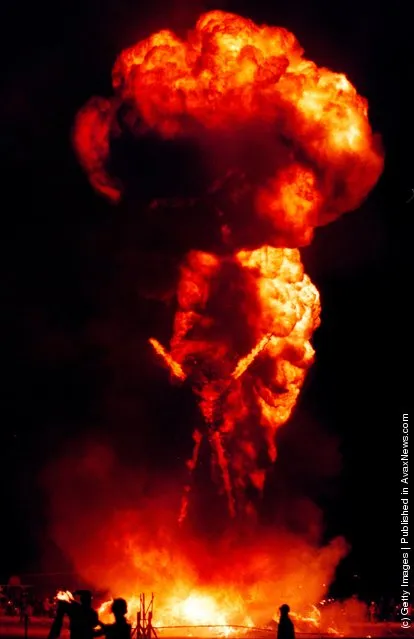
“Burning Man is a week-long annual event held in the Black Rock Desert in northern Nevada, in the United States. The event starts on the Monday before the American Labor Day holiday, and ends on the holiday itself. It takes its name from the ritual burning of a large wooden effigy on Saturday evening. The event is described by many participants as an experiment in community, radical self-expression, and radical self-reliance”. – Wikipedia

Photo: A fireball billows up from a 52-foot tall wooden man as it goes up in flames September 2, 2000 during the15th annual Burning Man festival in the Black Rock Desert near Gerlach, Nevada. Despite high winds, dust storms, and a bit of rain, some 27,000 people camped out on a remote desert playa, or dry lake, for the week-long counter-cultural celebration of art and “radical self-expression”. (Photo by David McNew/Newsmakers)
Details
15 Oct 2011 10:41:00
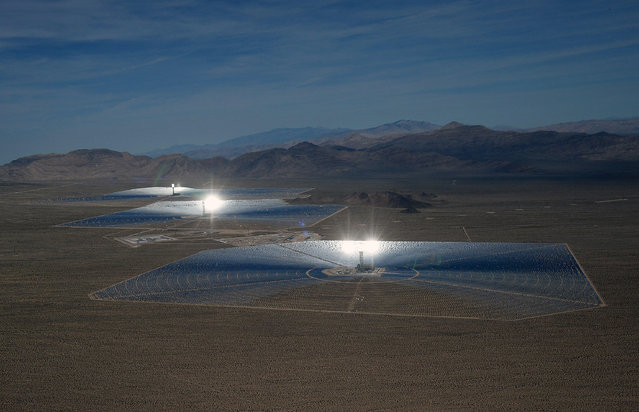
The Ivanpah Solar Electric Generating System is seen in an aerial view on February 20, 2014 in the Mojave Desert in California near Primm, Nevada. (Photo by Ethan Miller/Getty Images)

The Ivanpah Solar Electric Generating System is seen in an aerial view on February 20, 2014 in the Mojave Desert in California near Primm, Nevada. The largest solar thermal power-tower system in the world, owned by NRG Energy, Google and BrightSource Energy, opened last week in the Ivanpah Dry Lake and uses 347,000 computer-controlled mirrors to focus sunlight onto boilers on top of three 459-foot towers, where water is heated to produce steam to power turbines providing power to more than 140,000 California homes. (Photo by Ethan Miller/Getty Images)
Details
14 Apr 2014 11:01:00
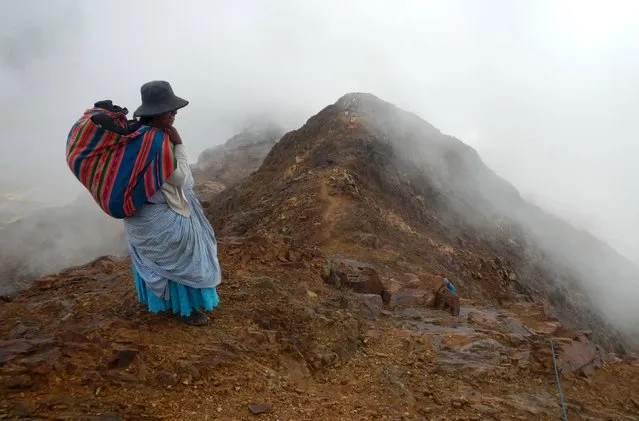
A porter stands at the bottom of the Illimani mountain, on the outskirts of La Paz, Bolivia, April 16, 2016. (Photo by David Mercado/Reuters)

A porter stands at the bottom of the Illimani mountain, on the outskirts of La Paz, Bolivia, April 16, 2016. For years, Lydia Huayllas, 48, has worked as a cook at base camps and mountain-climbing refuges on the steep, glacial slopes of Huayna Potosi, a 19,974-foot (6,088-meter) Andean peak outside of La Paz, Bolivia. But two years ago, she and 10 other Aymara indigenous women, ages 42 to 50, who also worked as porters and cooks for mountaineers, put on crampons – spikes fixed to a boot for climbing – under their wide traditional skirts and started to do their own climbing. (Photo by David Mercado/Reuters)
Details
22 Apr 2016 12:33:00
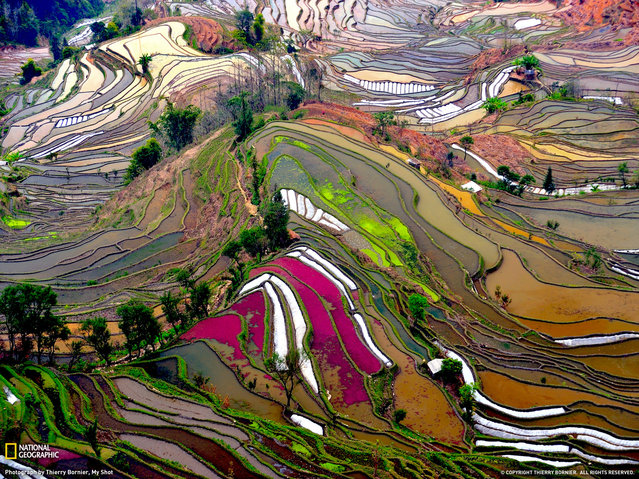
Longsheng Rice Terraces

The Longsheng Rice Terraces are located in Longsheng County, about 100 km (2 hours drive) from Guilin, Guangxi, China. The most popular are Ping An Rice Terrace and Jinkeng Rice Terrace. The terraced fields are built along the slope winding from the riverside up to the mountain top, the highest part being 880 m in elevation while the lowest part is 380 m[citation needed]. The coiling line that starts from the mountain foot up to the mountain top divides the mountain into layers of water glittering in the sun in spring, layers of green rice shoots in summer, layers of golden rice in fall, and layers of silvery frost in winter. The terraced fields were mostly built during the Ming Dynasty, about 500 years ago.
Details
18 Oct 2013 12:45:00
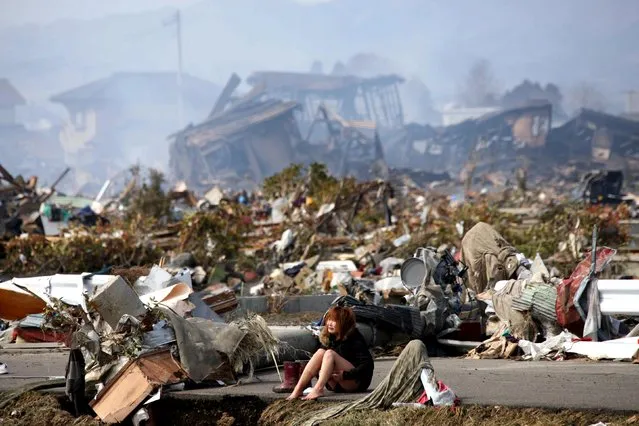
A woman cries while sitting on a road amid the destroyed city of Natori, Miyagi Prefecture in northern Japan March 13, 2011, after a massive earthquake and tsunami that are feared to have killed more than 10,000 people. (Photo by Asahi Shimbun/Reuters)

A woman cries while sitting on a road amid the destroyed city of Natori, Miyagi Prefecture in northern Japan March 13, 2011, after a massive earthquake and tsunami. Five years on from the tsunami that triggered meltdowns at Japan's Fukushima nuclear plant, the page is anything but turned. A magnitude 9 earthquake and towering tsunami on March 11, 2011 killed nearly 16,000 people along Japan's northeastern coast and left more than 2,500 missing. The 10-metre (33-foot) tsunami swept away everything in its path, including houses, ships, cars and farm buildings. (Photo by Asahi Shimbun/Reuters)
Details
09 Mar 2016 12:40:00
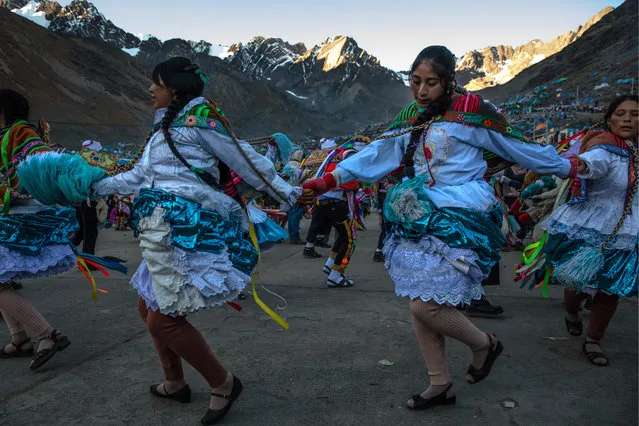
Costumed dancers parade on the first day of the annual Qoyllur Rit'i festival on May 27, 2018 in Ocongate, Peru. (Photo by Dan Kitwood/Getty Images)

Costumed dancers parade on the first day of the annual Qoyllur Rit'i festival on May 27, 2018 in Ocongate, Peru. Every year, since 1783 in the Sinakara Valley at the foot of Mt Ausagante, the Qoyllur Rit'i, or “Snow and Star” festival draws tens of thousands of pilgrims from across the Peruvian Andes and beyond to what is the biggest religious gathering of its kind. Since 1780 the event merged into a mosaic of indigenous, pagan and Catholic worship when an image of Jesus appeared on a boulder after the death of a young shepherd. (Photo by Dan Kitwood/Getty Images)
Details
05 Jun 2018 00:01:00
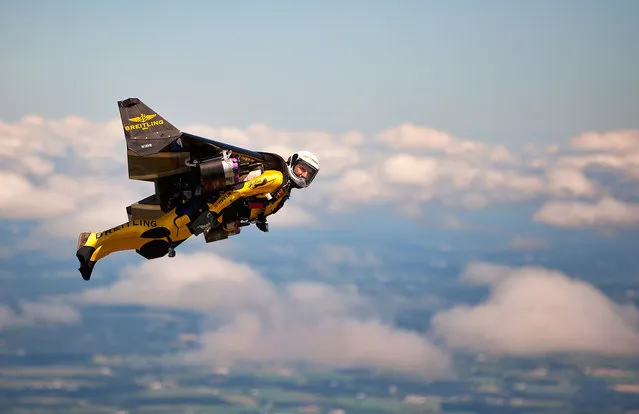
Jetman during a trial flight from Fond du Lac airport on Monday July 29, 2013. While skydiving several years ago Yves Rossy thought it would be cool to not just fall to earth but fly around with a jetpack on his back. So he invented one and will jump out of a helicopter over Oshkosh on Tuesday at AirVenture air and zoom around in his jetpack, his first public appearance in the U.S. (Photo by Mike Shore/Courtesy of Breitling)

Yves “Jetman”, Rossy made his first public performance in the United States on Tuesday during the afternoon air show at EAA AirVenture. As thousands of spectators leaned back and clicked cameras, Rossy jumped out of a helicopter with his 6-foot carbon fiber wing armed with four 45-pound-thrust JetCat engines strapped to his back. Photo: Jetman during a trial flight from Fond du Lac airport on Monday July 29, 2013. (Photo by Mike Shore/Courtesy of Breitling)
Details
31 Jul 2013 13:05:00
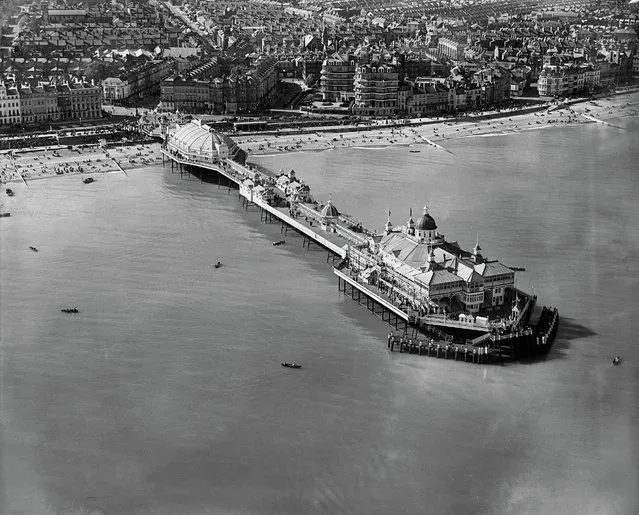
While the lido was described as bringing “modernism to the masses” on the British coast it was just the latest example of a trend that had been developing since Victorian times – transforming seaside towns into resorts for leisure and entertainment. In the latter half of the nineteenth century, the fashion was for local authorities to build great piers stretching from the promenade out into the sea

While the lido was described as bringing “modernism to the masses” on the British coast it was just the latest example of a trend that had been developing since Victorian times – transforming seaside towns into resorts for leisure and entertainment. In the latter half of the nineteenth century, the fashion was for local authorities to build great piers stretching from the promenade out into the sea. The Eastbourne Pier, pictured here in May 1931, was erected between 1866 and 1870 to an ingenious design by Eugenius Birch, which saw the structure sitting on special cups allowing the supporting struts to “move” in bad weather. Arranged on the pier's 1,000-foot length were kiosks, a theatre, a ballroom and a camera obscura. 1931. (Photo by Aerofilms Collection via “A History of Britain From Above”)
Details
25 Feb 2014 12:59:00