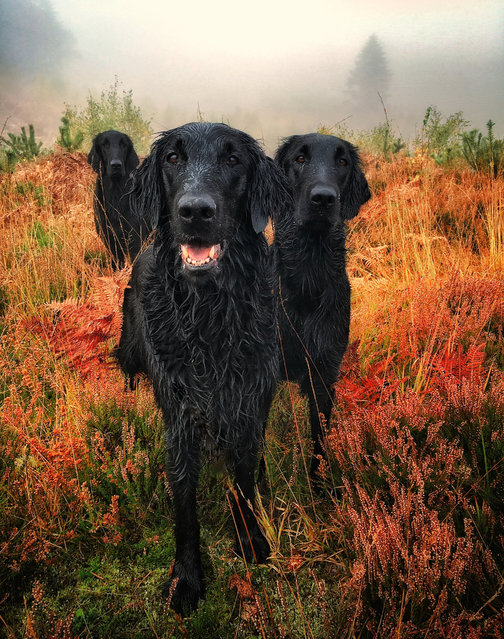
First place, Portrait. Three flat-coated retrievers – Crew, Darcie and Pagan – by Carol Durrant from the UK. (Photo by Carol Durrant/Dog Photographer of the Year 2018)
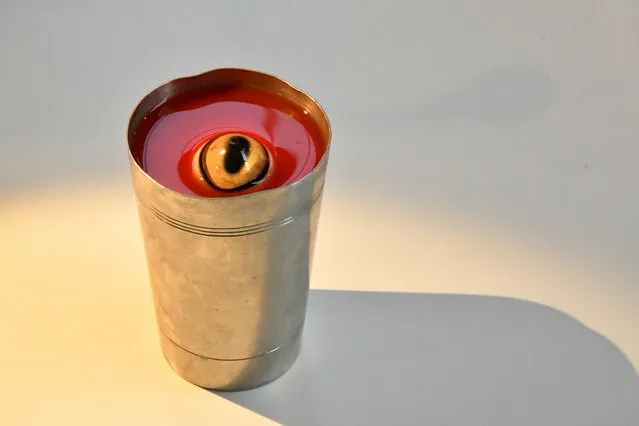
A Mongolian Bloody Mary, made with pickled sheep eyeballs and tomato juice, is displayed at the Disgusting Food Museum in Malmo, Sweden November 1, 2018. (Photo by Mikael Nilsson/Reuters)
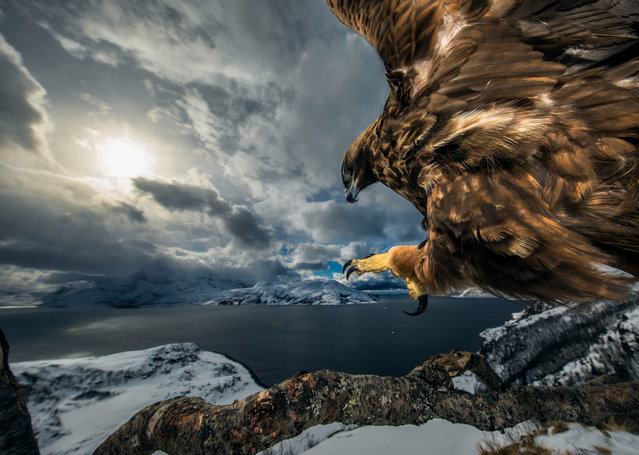
Birds behaviour winner: Land of the Eagle by Audun Rikardsen, Norway. High on a ledge, on the coast near his home in northern Norway, Rikardsen carefully positioned an old tree branch that he hoped would make a perfect golden eagle lookout. To this, he bolted a tripod head with a camera, flashes and motion sensor attached, and built himself a hide a short distance away. From time to time, he left road‑kill carrion nearby. Very gradually – over the next three years – a golden eagle got used to the camera and started to use the branch regularly to survey the coast below. (Photo by Audun Rikardsen/2019 Wildlife Photographer of the Year)
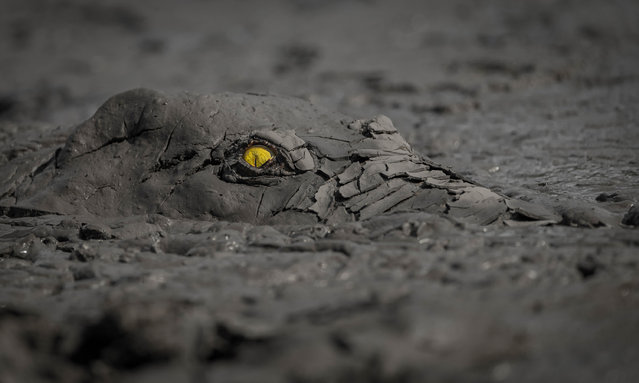
The German Society for Nature Photography (GDT) has selected its Nature Photographer of the Year 2020. Here: Winner, Other animals. Jens Cullmann – Danger in the Mud. Crocodile in a drying pool. (Photo by Jens Cullmann/2020 GDT Nature Photographer of the Year)
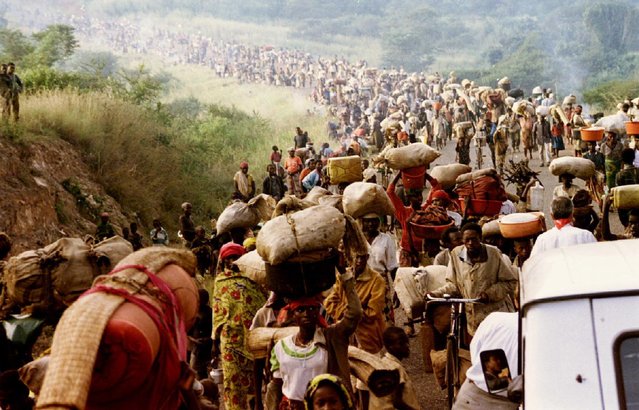
Rwandan refugees cross the Rusumo border to Tanzania from Rwanda carrying their belongings, goats, mattresses and cows, May 30, 1994. The bloodshed that claimed 800,000 Tutsi and moderate Hutu lives began 25 years ago on April 7, 1994, when a plane carrying Rwandan President Juvenal Habyarimana, Burundi President Cyprien Ntaryamira and a French air crew was shot down. (Photo by Jeremiah Kamau/Reuters)
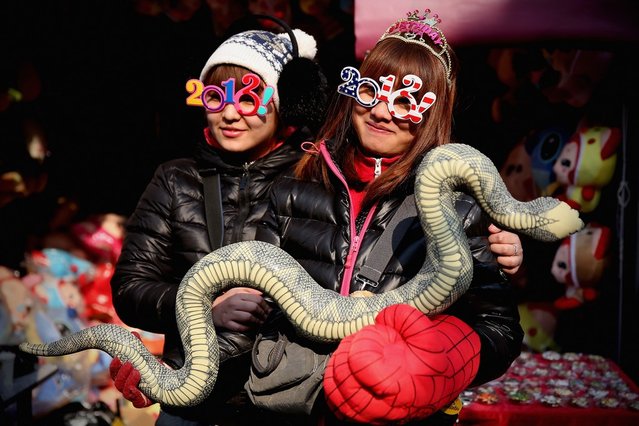
The vendors show the toy of snake at the Spring Festival Temple Fair for celebrating Chinese Lunar New Year of Snake at the Temple of Earth park on February 9, 2013 in Beijing, China. The Chinese Lunar New Year of Snake also known as the Spring Festival, which is based on the Lunisolar Chinese calendar, is celebrated from the first day of the first month of the lunar year and ends with Lantern Festival on the Fifteenth day. (Photo by Feng Li)
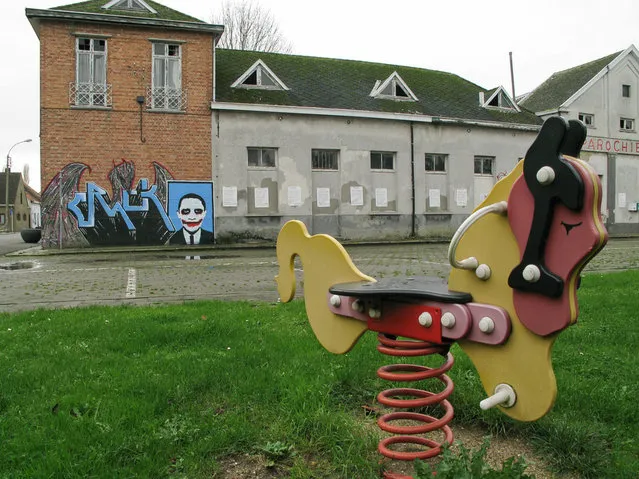
Doel is a 700 year old village on the river Scheldt in Belgium. Near to the local nuclear power plant, with its two giant cooling towers, it became the target for demolition not once but twice in order to make way for the ever expanding harbor. The successful protest groups of the seventies could not compete in the 90's and as residents began to leave, the government refused to rent out the properties again and instead let them fall into disrepair. On the 23rd of March 2007, the government decided that the village would be demolished by 2009 and in June 2008, residents received a letter informing them that they were to vacate their homes by the 1st of September 2009.