Loading...
Done
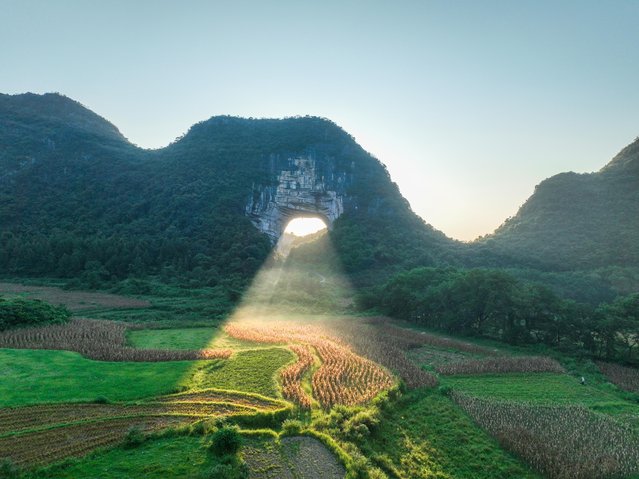
Aerial view of sunbeam shining through mountain cave at Yueyan National Forest Park on August 27, 2024 in Yongzhou, Hunan Province of China. (Photo by Jiang Keqing/VCG via Getty Images)

Aerial view of sunbeam shining through mountain cave at Yueyan National Forest Park on August 27, 2024 in Yongzhou, Hunan Province of China. (Photo by Jiang Keqing/VCG via Getty Images)
Details
07 Sep 2024 03:50:00
An Indian woman dressed as Hindu Goddess Kali participates in a “Shivratri” procession in Allahabad, India, Thursday, Feb. 27, 2014. “Shivaratri”, or the night of Shiva, is dedicated to the worship of Lord Shiva, the Hindu god of death and destruction. (Photo by Rajesh Kumar SinghAP Photo)

An Indian woman dressed as Hindu Goddess Kali participates in a “Shivratri” procession in Allahabad, India, Thursday, Feb. 27, 2014. “Shivaratri”, or the night of Shiva, is dedicated to the worship of Lord Shiva, the Hindu god of death and destruction. (Photo by Rajesh Kumar SinghAP Photo)
Details
01 Mar 2014 12:58:00
A decades-old television. (Photo by Mark C. O'Flaherty)

The official name for this tiny speck of land – the size of 12 football pitches – is Hashima, but few call it that. In English, its most commonly used name means “Battleship Island” and, viewed from a certain angle offshore, its silhouette is uncannily dreadnought in nature. It was a mining facility until 1974, when it was abandoned to the elements, before partially reopening as a tourist attraction in 2009. Photo: A decades-old television. (Photo by Mark C. O'Flaherty)
Details
15 Jun 2014 11:24:00
A young worshipper holds a lotus flower as Buddhist monks gather at Wat Arun Buddhist temple during Asaha Bucha day in Bangkok on July 20, 2024. (Photo by Chanakarn Laosarakham/AFP Photo)

A young worshipper holds a lotus flower as Buddhist monks gather at Wat Arun Buddhist temple during Asaha Bucha day in Bangkok on July 20, 2024. (Photo by Chanakarn Laosarakham/AFP Photo)
Details
08 Aug 2024 05:47:00
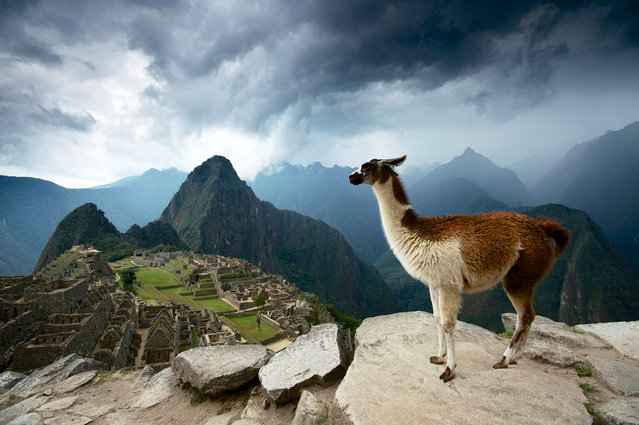
Machu Picchu, Peru. A llama’s-eye view of the legendary Inca settlement at Machu Picchu, isolated high in the Peruvian Andes. (Photo by Jim Turner/National Geographic)

Machu Picchu, Peru. A llama’s-eye view of the legendary Inca settlement at Machu Picchu, isolated high in the Peruvian Andes. (Photo by Jim Turner/National Geographic)
Details
16 Nov 2015 08:13:00
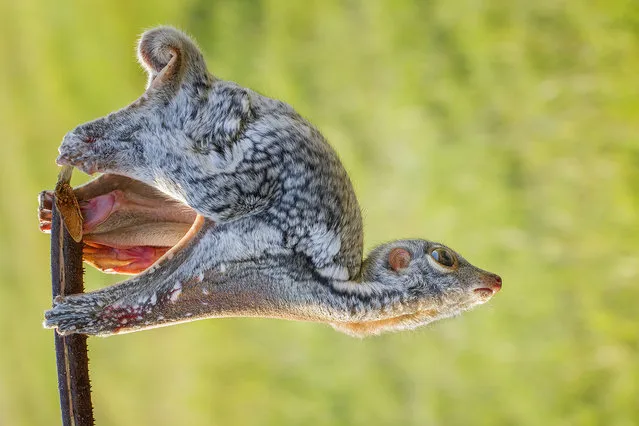
“Warming up”. This photo I capture in the early afternoon, the animal species of lemurs fly. Photo location: Sambas, West Kalimantan, Indonesia. (Photo and caption by Hendy Mp/National Geographic Photo Contest)

“Warming up”. This photo I capture in the early afternoon, the animal species of lemurs fly. Photo location: Sambas, West Kalimantan, Indonesia. (Photo and caption by Hendy Mp/National Geographic Photo Contest)
Details
03 Oct 2014 11:52:00
An aerial view shows a sinkhole 3.5 km (2 miles) to the east of Solikamsk-2 mine in Perm region, November 20, 2014. Shares in Russia's Uralkali, the world's top potash producer, fell sharply for a second day on Wednesday after a mine accident that could reduce global supplies and push up prices of the crop nutrient worldwide. (Photo by Reuters/Press service of Uralkali company)

An aerial view shows a sinkhole 3.5 km (2 miles) to the east of Solikamsk-2 mine in Perm region, November 20, 2014. Shares in Russia's Uralkali, the world's top potash producer, fell sharply for a second day on Wednesday after a mine accident that could reduce global supplies and push up prices of the crop nutrient worldwide. Uralkali shares have fallen 28 percent since Tuesday when it suspended work at its Solikamsk-2 mine, which accounts for a fifth of the company's output and 3.5 percent of global capacity, following an inflow of water. A sinkhole, stretching 30 by 40 metres (yards), found at an abandoned mine 3.5 km (2 miles) to the east, increased concern about the future of the mine because an inflow of water and the resulting sinkhole in 2006 forced another Uralkali operation to shut permanently. (Photo by Reuters/Press service of Uralkali company)
Details
22 Nov 2014 13:51:00
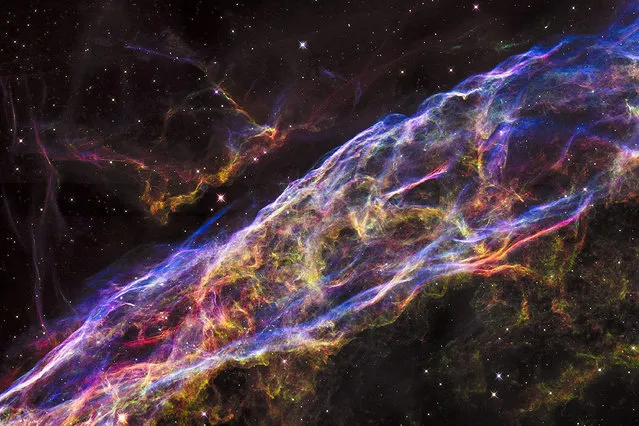
A small section of the expanding remains of the Veil Nebula, a massive star that exploded about 8,000 years ago. The entire nebula is 110 light-years across, covering six full moons on the sky as seen from Earth, and resides about 2,100 light-years away in the constellation Cygnus, the Swan. (Photo by Reuters/NASA/ESA/Hubble)

A small section of the expanding remains of the Veil Nebula, a massive star that exploded about 8,000 years ago. The entire nebula is 110 light-years across, covering six full moons on the sky as seen from Earth, and resides about 2,100 light-years away in the constellation Cygnus, the Swan. (Photo by Reuters/NASA/ESA/Hubble)
Details
29 Feb 2016 11:30:00