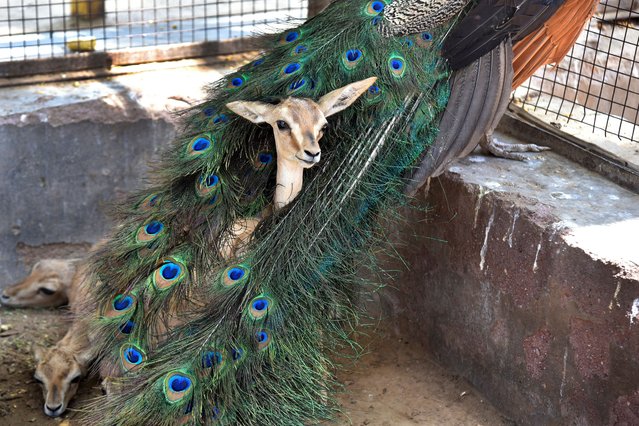
A Chinkara gazelle fawn rests in the plumage of a peacock at an animal rescue center on a hot summer day in Bikaner, Rajasthan, India, Thursday, May 23, 2024. (Photo by Dinesh Gupta/AP Photo)
Couples take part in a Valentine's Day attempt to break the record for the world's largest simultaneous gay kiss on February 14, 2004 in Rome, Italy. (Photo by Franco Origlia/Getty Images)
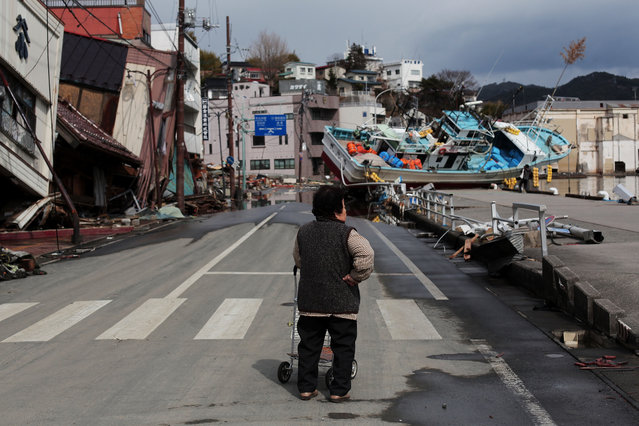
A woman surveys the damage after the earthquake on March 17, 2011 in Kensennuma, Japan. Residents were allowed back to their homes today and began the massive cleanup operation caused by a 9.0 magnitude strong earthquake that struck on March 11 off the coast of north-eastern Japan. The quake triggered a tsunami wave of up to 10 metres which engulfed large parts of north-eastern Japan. The death toll has risen past 5000 with at least 8600 people still missing. (Photo by Chris McGrath/Getty Images)
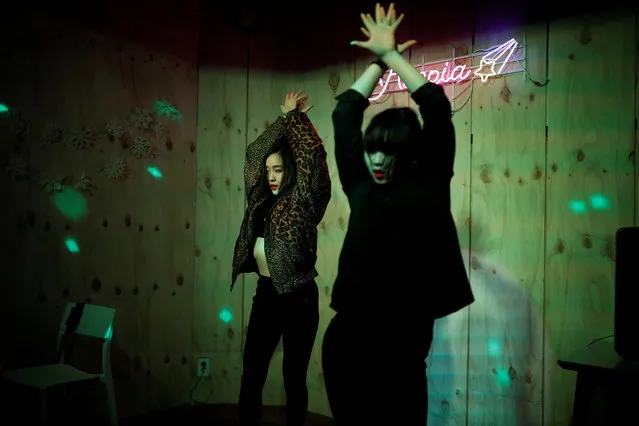
Japanese Yuuka Hasumi, 17, and Ibuki Ito, 17, also from Japan, who want to become K-pop stars, perform at an Acopia School party in Seoul, South Korea, March 16, 2019. Acopia is a prep school offering young Japanese a shot at K-pop stardom, teaching them the dance moves, the songs and also the language. (Photo by Kim Hong-Ji/Reuters)
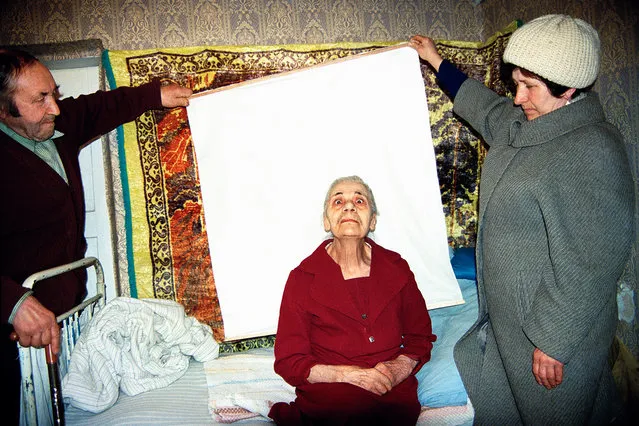
In 1994, after the fall of the Soviet Union, all Ukrainians had to get a new passport – and photographer Alexander Chekmenev was on hand to take their photos. The snatched extra shots he took are remarkable in their honesty and tenderness. (Photo by Alexander Chekmenev/The Guardian)
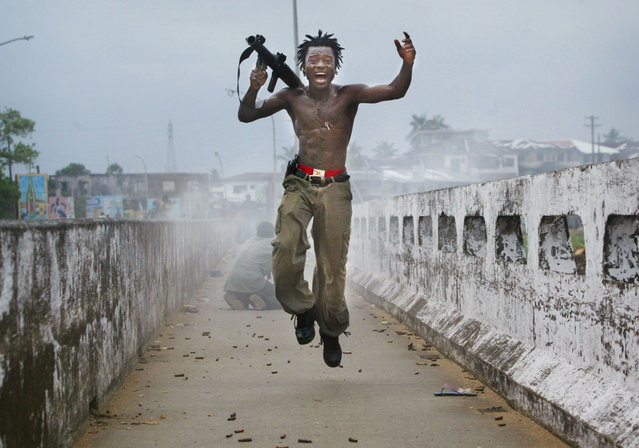
Chris Hondros, a Getty Images photographer, was fatally wounded on April 20, 2011, in a mortar attack by government forces while covering the civil war in Libya. Hondros' work is woven in our history as he covered everything from politics to marathons. A new film will focus on his life as told through his images. Here's a look at some of his finest and final work. Some of these images are graphic in nature
I know, this answer was a little too short, so let me explain in a little more detail.
Imagine tossing a coin. Normally, any normal coin toss has two possible outcomes - heads or tails - with each one having a 50% chance of happening. Ideally, that is, because factors like the force of your finger tossing the coin, gravity, the wind, the moon phase and a passing TARDIS can all influence the outcome of the toss - but I have deviated from the subject.