Loading...
Done
Students Throughout The UK Receive Their A Level Results

Badminton School sixth form pupils (L-R) Lucy Warden, who got 3 A* and is off to study English at Durham, Sam Crumpton, who got 1 A* and 2 A's and is off to study to be a vet at Cambridge and Madeline Sunter, who got 2 A* and 1 B, and is off to study fashion at St. Martins, celebrate their A-level results on August 18, 2011 in Bristol, England. With another record year for A-level results, sixth-form students face a scramble for university places in the final year before tuition fees rise. According to the examination bodies the pass rate rose for the 29th successive year to hit 97.8 percent, while around one in 12 exams achieved the top A* grade. (Photo by Matt Cardy/Getty Images)
Details
19 Aug 2011 09:00:00
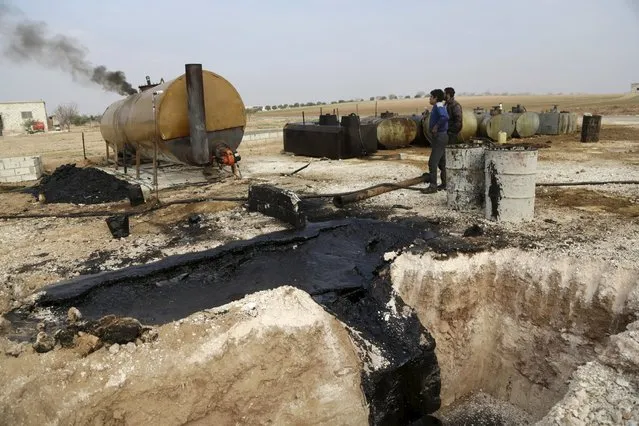
Men work at a makeshift oil refinery site in Marchmarin town, southern countryside of Idlib, Syria December 16, 2015. (Photo by Khalil Ashawi/Reuters)

Men work at a makeshift oil refinery site in Marchmarin town, southern countryside of Idlib, Syria December 16, 2015. The refinery site, owned by Yousef Ayoub, 34, has been active for 4 months. Ayoub says that he gets the crude oil from Islamic State-controlled areas in Deir al-Zor province and Iraq. The price for a barrel of crude oil varies and is controlled by the Islamic State, but it is currently at $44 dollars per barrel, he said. (Photo by Khalil Ashawi/Reuters)
Details
18 Dec 2015 08:05:00
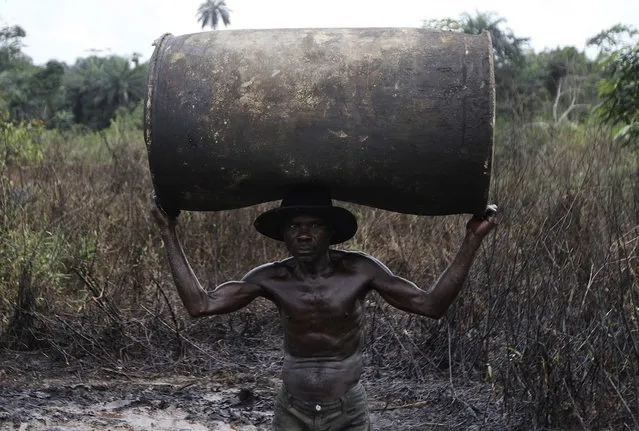
Ebiowei, 48, carries an empty oil container on his head to a place where it would be filled with refined fuel at an illegal refinery site near river Nun in Nigeria's oil state of Bayelsa November 27, 2012. (Photo by Akintunde Akinleye/Reuters)

Ebiowei, 48, carries an empty oil container on his head to a place where it would be filled with refined fuel at an illegal refinery site near river Nun in Nigeria's oil state of Bayelsa November 27, 2012. Locals in the industry say workers can earn $50 to $60 a day. Thousands of people in Nigeria engage in a practice known locally as “oil bunkering” – hacking into pipelines to steal crude then refining it or selling it abroad. The practice, which leaves oil spewing from pipelines for miles around, managed to lift around a fifth of Nigeria's two million barrel a day production last year according to the finance ministry. (Photo by Akintunde Akinleye/Reuters)
Details
18 Jan 2013 14:29:00
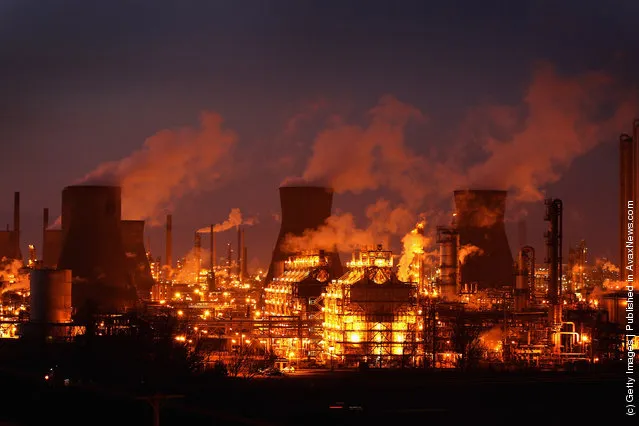
An illuminated Grangemouth Oil Refinery emits smoke in Grangemouth, Scotland

An illuminated Grangemouth Oil Refinery emits smoke on March 29, 2012 in Grangemouth, Scotland. Government ministers appear to have caused sporadic panic buying of fuel after suggesting that motorists should store petrol in jerry cans at home. Tanker divers have announced that they will strike over pay and conditions, although they have not yet given a date. (Photo by Jeff J. Mitchell/Getty Images)
Details
30 Mar 2012 11:00:00
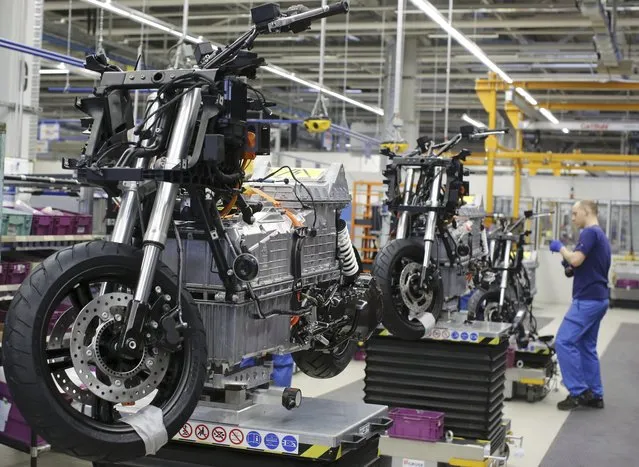
A mechanic assembles a BMW C evolution electric maxi-scooter at the BMW Berlin motorcycle plant February 23, 2015. The storage capacity of the BMW C evolution's high-voltage 8 kWh battery provides a range of up to 100 kilometres and a maximum speed of 120 km/h. (Photo by Fabrizio Bensch/Reuters)

A mechanic assembles a BMW C evolution electric maxi-scooter at the BMW Berlin motorcycle plant February 23, 2015. The storage capacity of the BMW C evolution's high-voltage 8 kWh battery provides a range of up to 100 kilometres and a maximum speed of 120 km/h. (Photo by Fabrizio Bensch/Reuters)
Details
25 Feb 2015 08:38:00
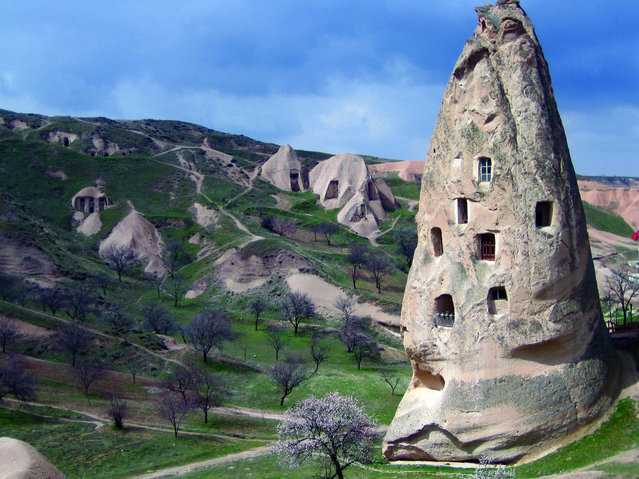
Multi-Level Underground City, Cappadocia, Turkey

Cappadocia is a historical region in Central Anatolia, largely in Nevşehir Province, in Turkey.
In the time of Herodotus, the Cappadocians were reported as occupying the whole region from Mount Taurus to the vicinity of the Euxine (Black Sea). Cappadocia, in this sense, was bounded in the south by the chain of the Taurus Mountains that separate it from Cilicia, to the east by the upper Euphrates and the Armenian Highland, to the north by Pontus, and to the west by Lycaonia and eastern Galatia.
Details
05 Apr 2013 09:50:00


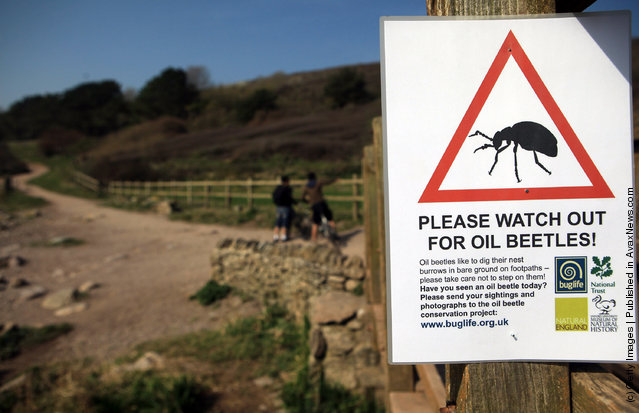
People enjoy the fine weather on the coast at Wembury during the first ever nationwide survey to map the location of the threatened and creatures on March 24, 2011 in near Plymouth, England. Often found on the coast, and particularly in the south west of England, the number of oil beetle species found in the UK has halved in the last 100 years and the survey will help establish the whereabouts of the remaining four species and boost efforts to secure their future. The survey is being launched today by Buglife: The Invertebrate Trust and the National Trust in partnership with Natural England and Oxford University Museum of Natural History. (Photo by Matt Cardy/Getty Images)
Details
25 Mar 2011 15:20:00
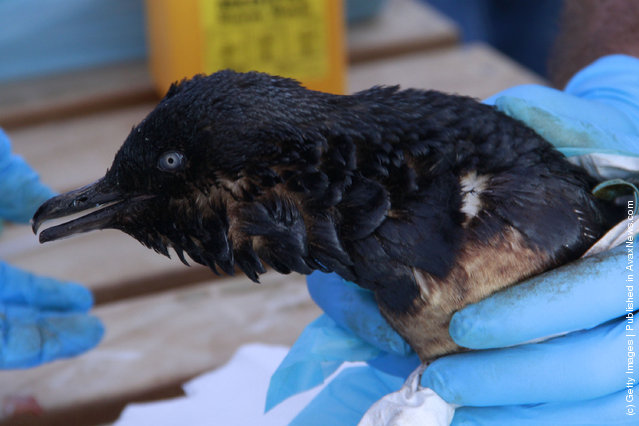
Penguin in oil

A little blue penguin which was found at Papamoa Beach, covered in oil after the Liberian cargo ship, Rena, hit a reef, on October 7, 2011, in Tauranga, New Zealand. Reports of an oil sheen have been spotted on the surface of the water surrounding the ship and two penguins have been found covered in oil. (Photo by SUNLIVE New Zealand/Getty Images)
Details
10 Oct 2011 08:15:00