Loading...
Done
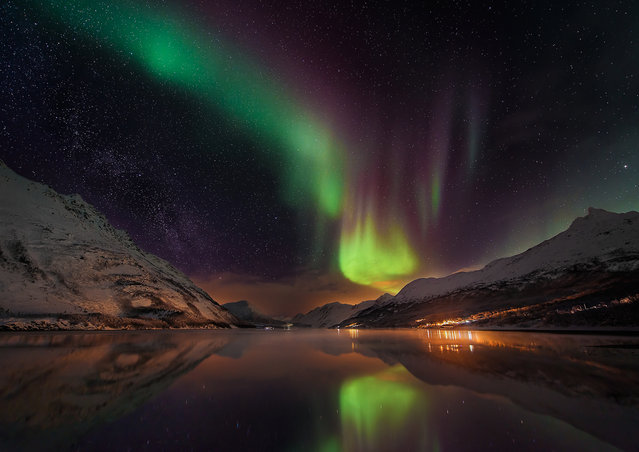
Some of the best entries so far in the 2016 Insight Astronomy Photographer of the Year competition. There are two weeks left to enter, and the winners will be announced in September. Here: Aurora over Laksvatn Fjord, Laksvatn, Norway. The aurora borealis dances in the skies over the town of Laksvatn, with the Milky Way to the left. The image is a single shot with no compositing, only post-processing to bring out the aurora, and some colour corrections. (Photo by Matt Walford/National Maritime Museum)

Some of the best entries so far in the 2016 Insight Astronomy Photographer of the Year competition. There are two weeks left to enter, and the winners will be announced in September. Here: Aurora over Laksvatn Fjord, Laksvatn, Norway. The aurora borealis dances in the skies over the town of Laksvatn, with the Milky Way to the left. The image is a single shot with no compositing, only post-processing to bring out the aurora, and some colour corrections. The photographer Matt Walford said: “I love the way the northern lights look like they are just wistfully dancing over the fjord, framed by the mountains on either side”. (Photo by Matt Walford/National Maritime Museum)
Details
01 Jul 2016 12:13:00
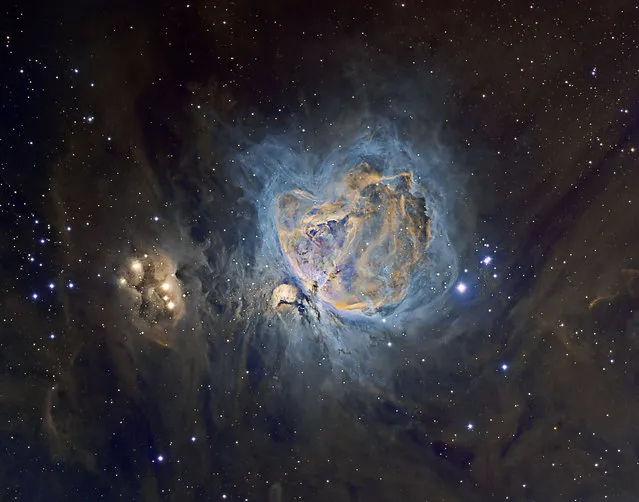
M42 Subtle V1 cropped. One of the most well-known astronomical objects in our universe is the Orion Nebula and this image depicts the wider region of the Orion Molecular Cloud Complex that is its home. This complex also includes another popular target for astrophotographers, the Horsehead Nebula, as well as Barnard’s Loop and the Running Man Nebula, which can be seen to the left of this photograph. (Photo by Patrick Gilliland)

M42 Subtle V1 cropped. One of the most well-known astronomical objects in our universe is the Orion Nebula and this image depicts the wider region of the Orion Molecular Cloud Complex that is its home. This complex also includes another popular target for astrophotographers, the Horsehead Nebula, as well as Barnard’s Loop and the Running Man Nebula, which can be seen to the left of this photograph. (Photo by Patrick Gilliland)
Details
17 Nov 2015 08:05:00
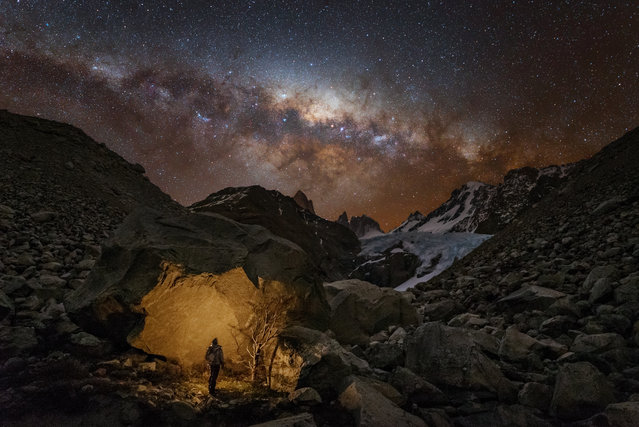
“People and Space”. Winner: Wanderer in Patagonia by Yuri Zvezdny (Russia) A lone stargazer stares up at the stars of our galaxy, the Milky Way, as they stretch across the night sky over the glacier “White Stones” (Piedras Blancas) in the Los Glaciares National Park, Argentina. El Chaltén, Santa Cruz Province, Argentina, 27 September 2016 iOptron Sky-Tracker mount, Sony A7S camera, 18 mm f/2.8 lens, ISO 5000, 30-second exposure Wanderer in Patagonia. (Photo by Yuri Zvezdny/Insight Astronomy Photographer of the Year 2017)

“People and Space”. Winner: Wanderer in Patagonia by Yuri Zvezdny (Russia) A lone stargazer stares up at the stars of our galaxy, the Milky Way, as they stretch across the night sky over the glacier “White Stones” (Piedras Blancas) in the Los Glaciares National Park, Argentina. El Chaltén, Santa Cruz Province, Argentina, 27 September 2016 iOptron Sky-Tracker mount, Sony A7S camera, 18 mm f/2.8 lens, ISO 5000, 30-second exposure Wanderer in Patagonia. (Photo by Yuri Zvezdny/Insight Astronomy Photographer of the Year 2017)
Details
18 Sep 2017 07:09:00
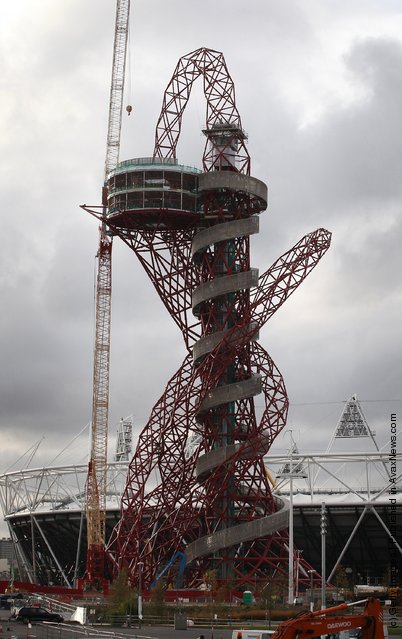
London 2012 ArcelorMittal Orbit Sculpture by Anish Kapoor

The London 2012 ArcelorMittal Orbit Sculpture at the Olympic park nears completion on November 4, 2011 in London, England. The Ј22 million sculpture designed by Anish Kapoor is nearly complete. Standing at 115 meters tall the permanent structure is Britain's largest artwork and houses an observation deck near the top. (Photo by Peter Macdiarmid/Getty Images)
Details
05 Nov 2011 13:28:00
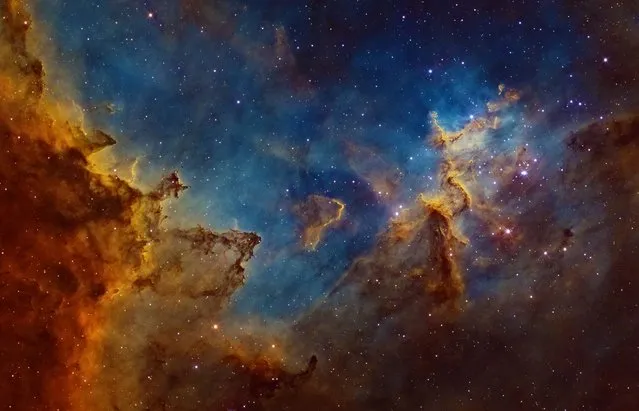
Centre of the Heart Nebula by Ivan Eder (Hungary). Situated 7500 light years away in the ‘W’-shaped constellation of Cassiopeia, the Heart Nebula is a vast region of glowing gas, energized by a cluster of young stars at its centre. The image depicts the central region, where dust clouds are being eroded and moulded into rugged shapes by the searing cosmic radiation. (Photo by Ivan Eder)

The competition, which is run by the Royal Observatory Greenwich in association with BBC Sky at Night Magazine, is now in its sixth year and has received over 2,500 entries. Photo: Centre of the Heart Nebula by Ivan Eder (Hungary). Situated 7500 light years away in the “W”-shaped constellation of Cassiopeia, the Heart Nebula is a vast region of glowing gas, energized by a cluster of young stars at its centre. The image depicts the central region, where dust clouds are being eroded and moulded into rugged shapes by the searing cosmic radiation. (Photo by Ivan Eder)
Details
03 Jul 2014 11:59:00
Astronomy Photographer Of The Year 2013 Part2

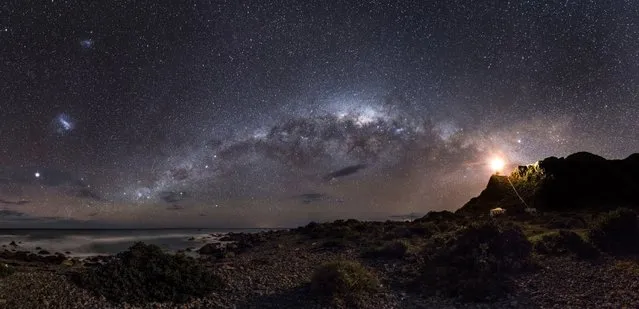
The Royal Observatory just announced its Astronomy Photographer Of The Year 2013 winners. Australian photographer Mark Gee was chosen among a thousand amateur and professional photographers around the globe to win the top title. His work is part of an exhibition of the winning photographers, which opened on Sept. 19 at the Royal Observatory Greenwich. The Royal Observatory shared with us the winners and notable mentions of the competition. Their descriptions of the prizewinners can be found below the images.
Details
05 Oct 2013 12:23:00
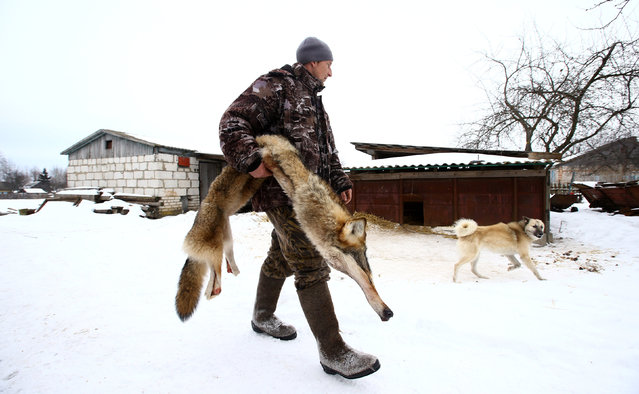
Nikolay Skidan, a hunter, carries the skin of a wolf in the village of Khrapkovo, Belarus February 1, 2017. (Photo by Vasily Fedosenko/Reuters)

Nikolay Skidan, a hunter, carries the skin of a wolf in the village of Khrapkovo, Belarus February 1, 2017. Wolf fur grows thickest in winter, so Belarussian hunter Vladimir Krivenchik only sets his traps once snow is on the ground. He and his wife live on the edge of the Chernobyl exclusion zone – 2,600 square km of land on the Belarus-Ukraine border that was contaminated by a nuclear disaster in 1986. (Photo by Vasily Fedosenko/Reuters)
Details
16 Feb 2017 00:04:00
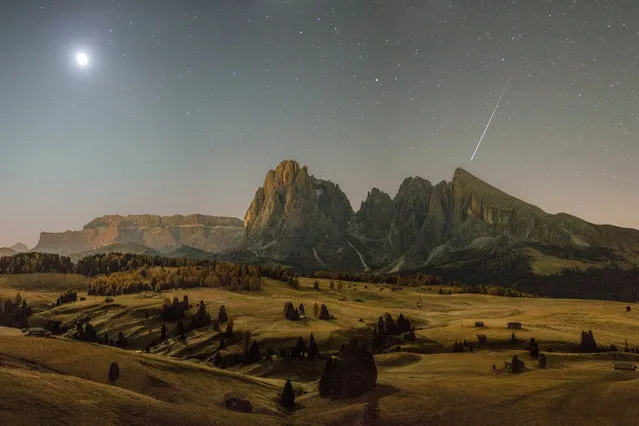
Young category winner. Great autumn morning by Fabian Dalpiaz. (Photo by Fabian Dalpiaz/2018 Astronomy Photographer of the Year)

Young category winner. Great autumn morning by Fabian Dalpiaz. (Photo by Fabian Dalpiaz/2018 Astronomy Photographer of the Year)
Details
26 Oct 2018 00:03:00