Loading...
Done
The spinning vortex of Saturn's north polar storm resembles a deep red rose of giant proportions surrounded by green foliage in this false-color image from NASA's Cassini spacecraft. (Photo by NASA/JPL-Caltech/SSI)

NASA's Cassini spacecraft has provided scientists the first close-up, visible-light views of a behemoth hurricane swirling around Saturn's north pole. In high-resolution pictures and video, scientists see the hurricane's eye is about 1,250 miles (2,000 kilometers) wide, 20 times larger than the average hurricane eye on Earth. Thin, bright clouds at the outer edge of the hurricane are traveling 330 mph(150 meters per second). The hurricane swirls inside a large, mysterious, six-sided weather pattern known as the hexagon. Photo: The spinning vortex of Saturn's north polar storm resembles a deep red rose of giant proportions surrounded by green foliage in this false-color image from NASA's Cassini spacecraft. (Photo by NASA/JPL-Caltech/SSI)
Details
31 May 2015 09:11:00


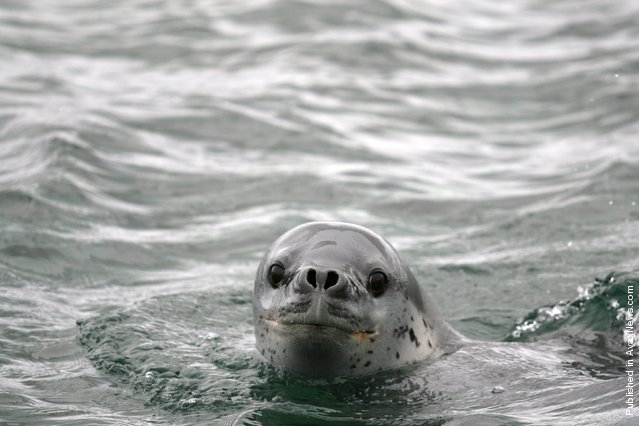
“The leopard seal (Hydrurga leptonyx), also referred to as the sea leopard, is the second largest species of seal in the Antarctic (after the southern elephant seal). It is most common in the southern hemisphere along the coast of Antarctica and on most sub-Antarctic islands, but can also be found on the coasts of southern Australia, Tasmania, South Africa, New Zealand, Lord Howe Island, Tierra del Fuego, the Cook Islands, and the Atlantic coast of South America. It can live twenty-six years, possibly more. Orcas and large sharks are the only natural predators of leopard seals”. – Wikipedia

Photo by: Gilad Rom; Source: Flickr
Details
13 Nov 2011 11:24:00
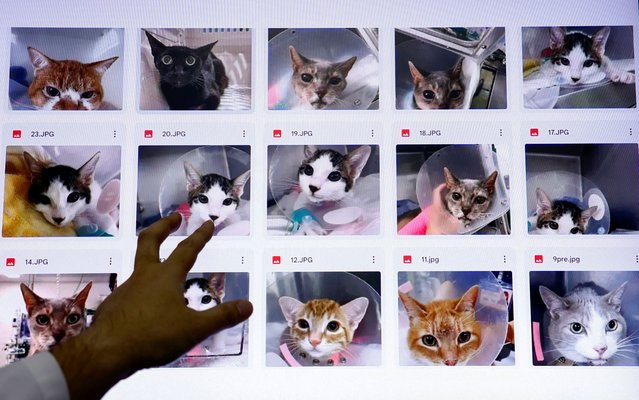
Nihon University professor and head of Nihon University Animal Medical Center Kazuya Edamura, 49, points to cat photos on a computer screen, which are used to train the AI of “CatsMe!”, an AI-driven smartphone application jointly developed by tech startup Carelogy and researchers at Nihon University that purports to tell when a cat is feeling pain, as he gives a lecture to students on diagnosing pain in cats, at the medical center in Fujisawa, south of Tokyo, Japan on June 11, 2024. (Photo by Issei Kato/Reuters)

Nihon University professor and head of Nihon University Animal Medical Center Kazuya Edamura, 49, points to cat photos on a computer screen, which are used to train the AI of “CatsMe!”, an AI-driven smartphone application jointly developed by tech startup Carelogy and researchers at Nihon University that purports to tell when a cat is feeling pain, as he gives a lecture to students on diagnosing pain in cats, at the medical center in Fujisawa, south of Tokyo, Japan on June 11, 2024. (Photo by Issei Kato/Reuters)
Details
29 Jun 2024 02:02:00
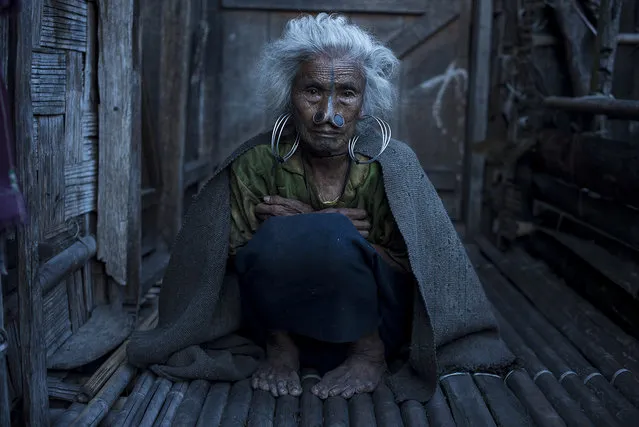
“YagYang”. The Apatani are tribal people living in north east of India in the region of Arunachal Pradesh. Tattooing and stuffing of large nose plugs is the particularity of these women. YagYang 75 years old, her husband passed away few months ago and she feels very alone, during my visit I was very fond of this woman and I wanted to spend some more time with her, so I asked her which was her favorite dish. Photo location: India. (Photo and caption by Passarini Mattia/National Geographic Photo Contest)

“YagYang”. The Apatani are tribal people living in north east of India in the region of Arunachal Pradesh. Tattooing and stuffing of large nose plugs is the particularity of these women. YagYang 75 years old, her husband passed away few months ago and she feels very alone, during my visit I was very fond of this woman and I wanted to spend some more time with her, so I asked her which was her favorite dish. The next day i returned with the fresh fish, as she mentioned, and when she saw me she was very happy and welcomed me with a big smile. Photo location: India. (Photo and caption by Passarini Mattia/National Geographic Photo Contest)
Details
05 Nov 2014 11:55:00
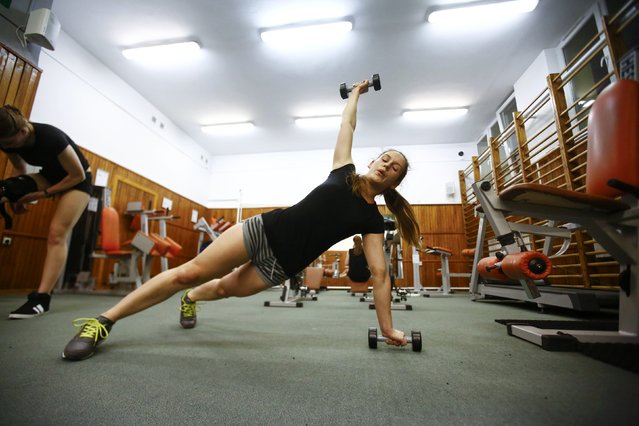
Urszula Sidoruk, 19, from the paramilitary group SJS Strzelec (Shooters Association), trains her workout at a gym in Siedlce, eastern Poland March 18, 2014. (Photo by Kacper Pempel/Reuters)

Urszula Sidoruk, 19, from the paramilitary group SJS Strzelec (Shooters Association), trains her workout at a gym in Siedlce, eastern Poland March 18, 2014. Inspired by the war in Ukraine, growing numbers of Poles are joining volunteer paramilitary groups, where they receive basic army training and prepare to defend their homeland. (Photo by Kacper Pempel/Reuters)
Details
22 Mar 2015 11:36:00
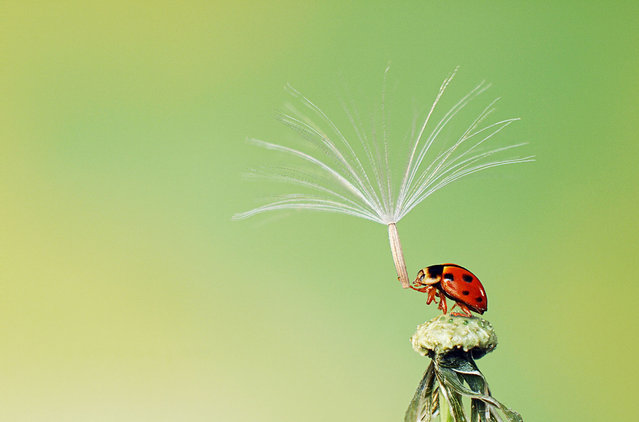
“The Last Pollen Spore Preparing to Leave a Ladybug Trying to Hold On, Because It Didn't Want to Be Alone”. Photo by Hiep Nguyen Hoang (Hanoi, Vietnam). Photographed in Hanoi, Vietnam, April 2012.

“The Last Pollen Spore Preparing to Leave a Ladybug Trying to Hold On, Because It Didn't Want to Be Alone”. Photo by Hiep Nguyen Hoang (Hanoi, Vietnam). Photographed in Hanoi, Vietnam, April 2012.
Details
08 Mar 2013 12:09:00
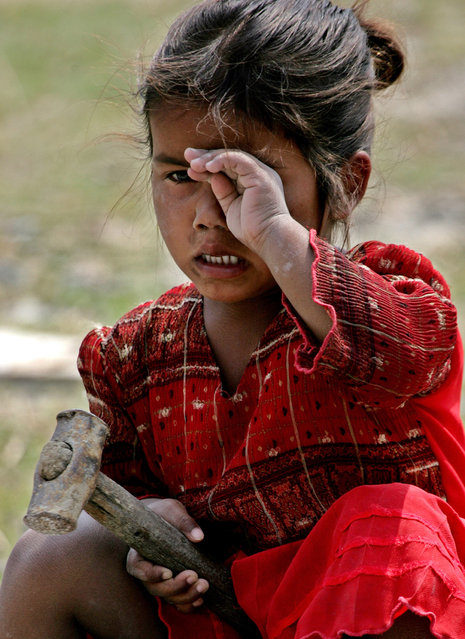
5-year-old Rina Kumari rubs her eye while cracking stones on the banks of Mahananda river in Siliguri, northeast India, March 5, 2005. Over 400 million people in India live below the internationally agreed poverty line (living on less than US $1 per day). According to estimates, several hundred thousand children work as labourers and beg on the streets in India. Photo taken on March 5, 2005. (Photo by Desmond Boylan/Reuters)

5-year-old Rina Kumari rubs her eye while cracking stones on the banks of Mahananda river in Siliguri, northeast India, March 5, 2005. Over 400 million people in India live below the internationally agreed poverty line (living on less than US $1 per day). According to estimates, several hundred thousand children work as labourers and beg on the streets in India. (Photo by Desmond Boylan/Reuters)
Details
13 Jun 2014 12:07:00
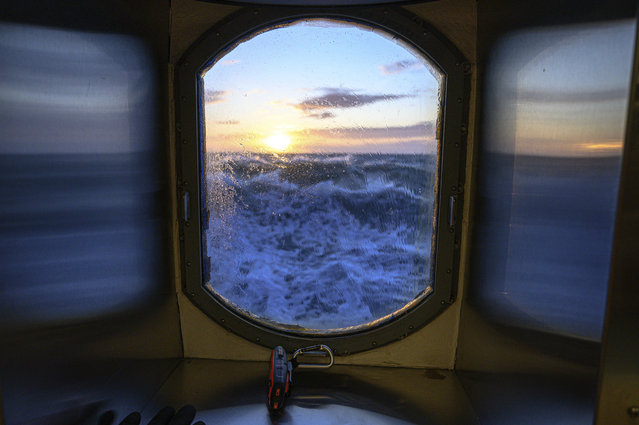
This November 8, 2019, photo provided by John Guillote shows a view from the main lab of the Sikuliaq in the Chukchi Sea. University of Washington scientists onboard the research vessel are studying the changes and how less sea ice will affect coastlines, which already are vulnerable to erosion because increased waves delivered by storms. More erosion would increase the chance of winter flooding in villages and danger to hunters in small boats. (Photo by John Guillote via AP Photo)

This November 8, 2019, photo provided by John Guillote shows a view from the main lab of the Sikuliaq in the Chukchi Sea. University of Washington scientists onboard the research vessel are studying the changes and how less sea ice will affect coastlines, which already are vulnerable to erosion because increased waves delivered by storms. More erosion would increase the chance of winter flooding in villages and danger to hunters in small boats. (Photo by John Guillote via AP Photo)
Details
26 Aug 2021 08:22:00