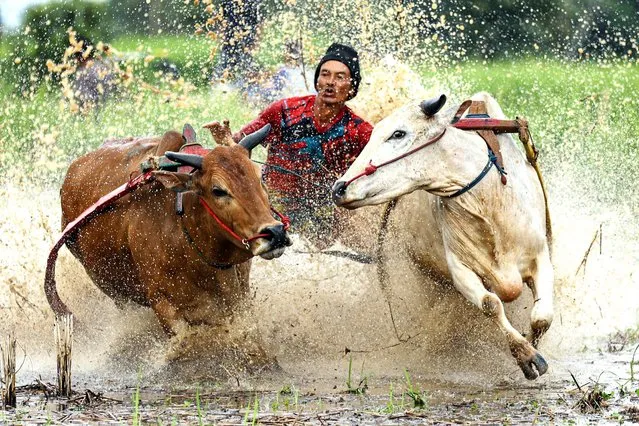
A man participates in the Pacu Jawi, a traditional bull race, at Nagari Labuah, in Tanah Datar of West Sumatra, Indonesia, on April 13, 2024. (Photo by Yorri Farli/Xinhua News Agency/Alamy Live News)
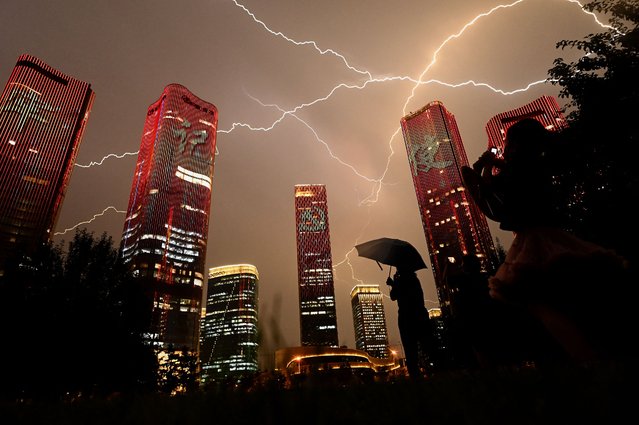
People look at buildings displaying a light show on the eve of the 100th anniversary of the Chinese Communist Party in Beijing on June 30, 2021. (Photo by Noel Celis/AFP Photo)
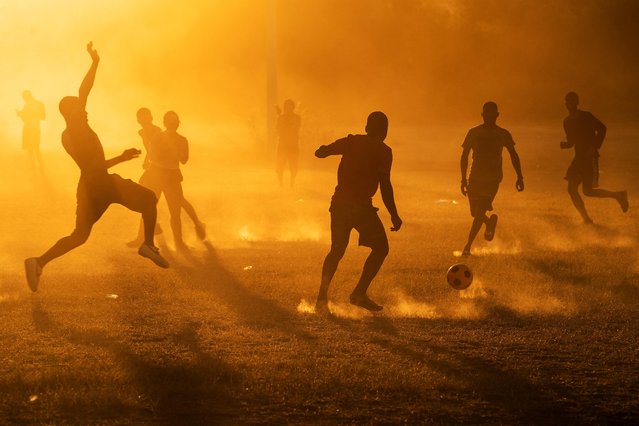
Migrants seeking asylum in the U.S., who returned to the Mexican side of the border to avoid deportation, play soccer in a makeshift migrant camp in Braulio Fernandez Ecological Park in Ciudad Acuna, Mexico, September 22, 2021. (Photo by Go Nakamura/Reuters)
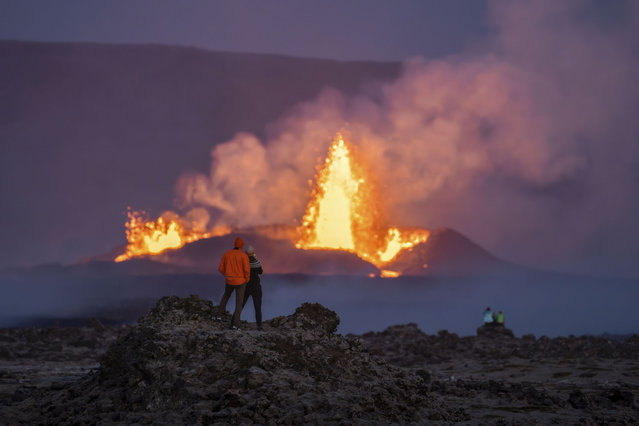
People watch the erupting craters and the lava fountains from the old lava fields around the eruption site on the Reykjanes Peninsula, in Iceland, Wednesday, August 28, 2024. (Photo by Marco di Marco/AP Photo)
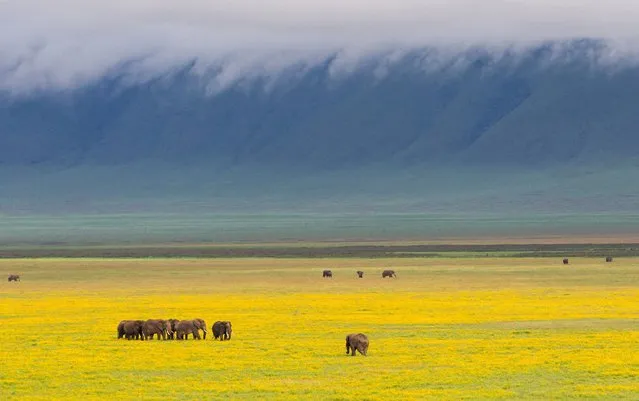
Ngorongoro Crater (Tanzania). At 610m deep and 260 sq km, this is the largest unflooded caldera in the world. A blue-green vision from above it's a haven for engangered wildlife and Maasai livestock. The crater was formed three million years ago when a giant volcano, which could have been as high as Kilimanjaro, exploded and collapsed. The caldera formed the concentric fractures in the crust cracked down to a magma reservoir deep underground. (Photo by John Bryant/Getty Images)
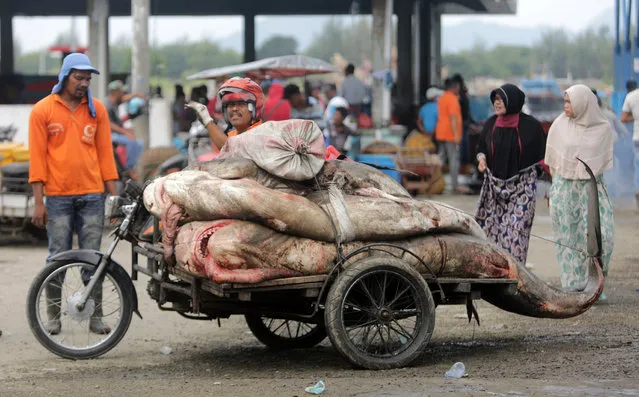
Fisherman transport sharks to the fish market in the traditional fishing port in Banda Aceh, Indonesia, 26 August 2020. According to media reports, the marine and fisheries sector is considered as one of the affected by the coronavirus pandemic, affecting more than 3.5 million fishermen and all sectors working throughout the supply chain. (Photo by Hotli Simanjuntak/EPA/EFE)
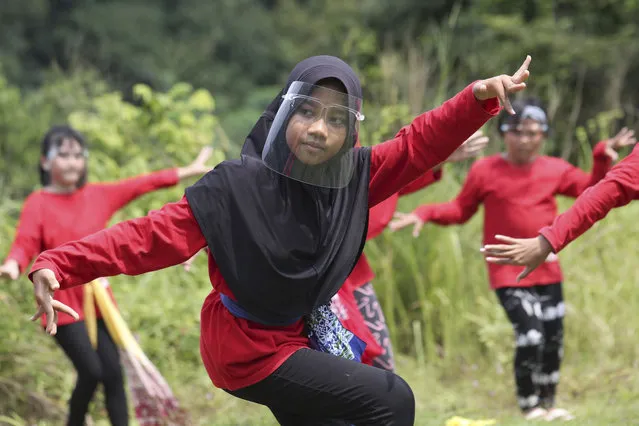
Dancers wearing face shields to prevent the spread of the coronavirus perform during an exercise in Tangerang, Indonesia, Saturday, November 28, 2020, (Photo by Tatan Syuflana/AP Photo)