Loading...
Done
Hunger Pains Food Fashion

The color, texture and shape of food has inspired a collection of artists and fashion designers to create clothing inspired by culinary creations. Hunger Pains Food Fashion is a project photographed by Ted Sabarese and created by a team of 15 designers led by Ami Goodheart. Two Project Runway alums, Daniel Feld and Wesley Nault, wove the artichoke dress shown above. The model stood for six hours while the duo crafted the dress leaf by leaf before the first photograph was taken.
Details
27 May 2012 13:53:00
Charlize Theron and Kristen Stewart

“There’s so much that Snow White has been deprived of in terms of having the proper time to really develop and hone who she is. She’s put in jail at the beginning of her life, so she’s a stunted person. She has a really idealized concept of what the world is, and how people should live, and how wonderful things all can be, and there is this debilitating isolation that she feels because she has been locked away in a little cell for seven years. ...
Kristen Stewart
Details
12 May 2015 09:04:00
little people street art

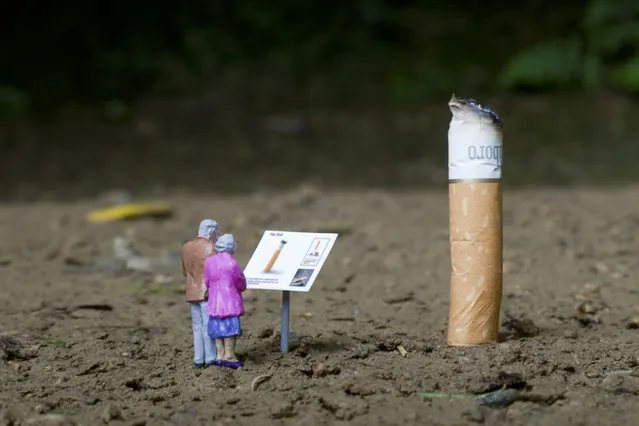
The street artist known only as Slinkachu has been abandoning little people on the streets of London since 2006. His first project, “Little People in the City”, saw minature men, women and children living their lives on the streets of London and was immortalised in the 2008 book entitled “Little People in the City”. Since then, Slinkachu has done a number of other projects, notably “Whatever Happened to the Men of Tomorrow” which documented the decline of a tiny, middleaged and balding super-hero on the streets of London and “Inner City Snail – a slow moving street art project” which saw Slinkachu “customising” a number of London snails which then presumably went about their business none the wiser.
Details
09 Jun 2012 12:11:00
3D drawings


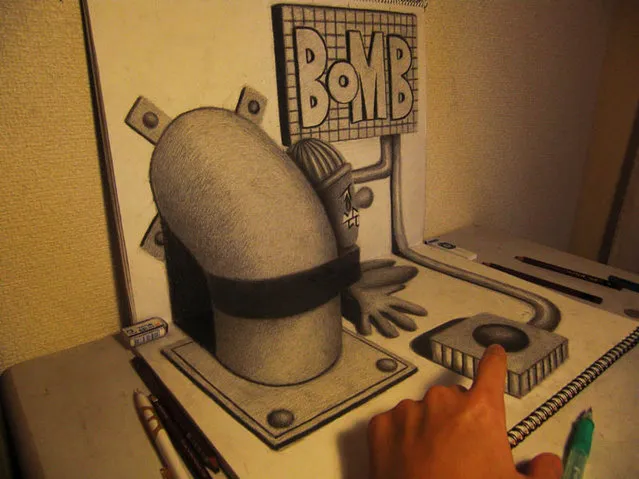
Nagai Hideyuki is a 21 year old artist from Tokyo, Japan. His recent series of 3D artworks using only paper and pencils have been spreading like wildfire online. And for good reason, his drawings are truly incredible. His typical set up involves two sketchbooks. One placed upright against a wall while the other lays flat on his desk. This simple set up is the environment for his anamorphic art.
Details
01 Jul 2012 14:21:00
Kaindy Lake in Kazakhstan

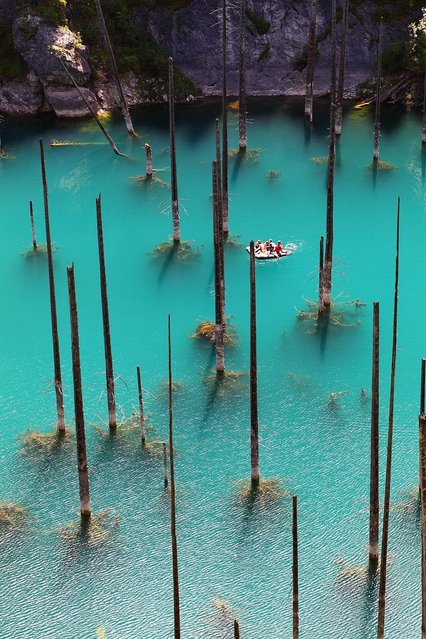
Kaindy Lake (Kazakh: Қайыңды көлі, Qayındı köli) is a 400 metre long lake in Kazakhstan that reaches depths near 30 metres in some areas. It is located 129 km ESE of the city of Almaty and is 2,000 metres above sea level. It was created by the result of an enormous limestone landslide, triggered by the 1911 Kebin earthquake. The track to Kaindy lake has many scenic views to the Saty Gorge, the Chilik River valley and the Kaindy Gorge. Dried-out trunks of submerged Picea schrenkiana trees rise above the surface.
Details
06 Aug 2012 09:58:00


Defined according to wikipedia it is “a recent and informal geologic chronological term that serves to mark the evidence and extent of human activities that have had a significant global impact on the Earth’s ecosystems. The term was coined by ecologist Eugene Stoermer but has been widely popularized by the Nobel Prize-winning atmospheric chemist Paul Crutzen.”

The images here where created by Felix Pharand-Deschenes depicting how various human influences, from road and rail, to internet cables and airlines create significant patterns covering the Earth. What can we learn from these patterns in how they are influencing the environment
Details
19 Aug 2012 10:40:00
Little squirrel in Minsk worked with the taxi driver

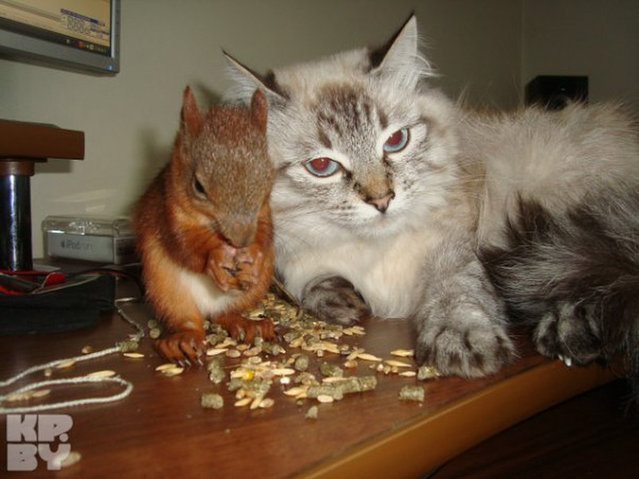
Belarusian soldiers found a little squirrel two years ago. The little baby squirrel was just about to die but the officer of the team Peter Pankraty start feeding and taking care of it. The squirrel survived and two years later it just refuses to be separated by its saviour. Now Peter is taxi driver and squirrel Minsk makes him a good company through the entire shift. He uses the squirrel as an attraction and even promotes the tax at his taxi as “Just 45 cents and a few nuts per km”.
Details
04 Oct 2012 08:46:00
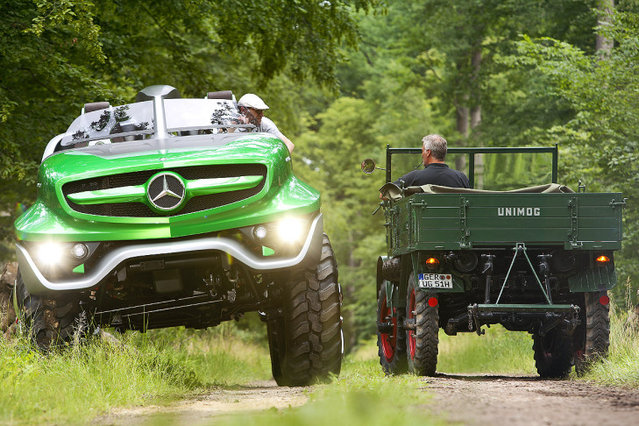
Mercedes-Benz Unimog Concept

How much do things change in 60 years? Sometimes the best answer to that kind of question is a picture. Here you can see an original Unimog (right), built sometime between the start of production in 1948 and 1951, when Mercedes bought the operation in order to expand it enough to keep up with demand. On the left is a “60th Anniversary” Unimog design concept, celebrating not the actual birth of the Unimog, but its purchase by Mercedes. Needless to say, the contrast between the two is… breathtaking. And if you’re curious about the evolution of this hugely influential vehicle, if you can’t help wondering how it grew from a (relatively) tiny, spartan utility vehicle to a garish, Mercedes-starred behemoth.
Details
31 Oct 2012 11:24:00