Loading...
Done
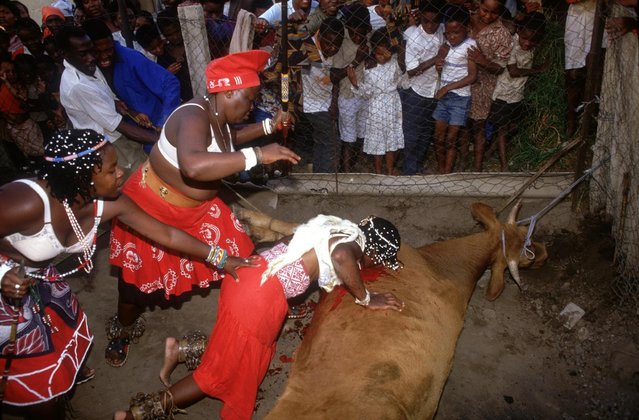
South African Sangomas are wizards and witches who are supposedly chosen by their ancestors to follow a traditional training and go through a rite of passage after which they become Sangomas and can cure and help people. They are so respected and trusted that western medical authorities have actually advised the government of South Africa to develop its cooperation with Sangomas in order to improve hygiene and health among the population. Today is graduation day for Trissa, 25, a Sangoma student in Tembisa, near Pretoria. Thanks to the help of the spirits of her ancestors, she has found a cow that had been hidden. The cow has then been killed by Sangoma Thelma and Trissa is now drinking its blood, thus becoming a Sangoma and changing her name to Nomadlozi. Location: Tembisa, near Pretoria, South Africa. (Photo by Patrick Durand/Sygma via Getty Images)

South African Sangomas are wizards and witches who are supposedly chosen by their ancestors to follow a traditional training and go through a rite of passage after which they become Sangomas and can cure and help people. They are so respected and trusted that western medical authorities have actually advised the government of South Africa to develop its cooperation with Sangomas in order to improve hygiene and health among the population. (Photo by Patrick Durand/Sygma via Getty Images)
Details
24 Feb 2017 00:05:00
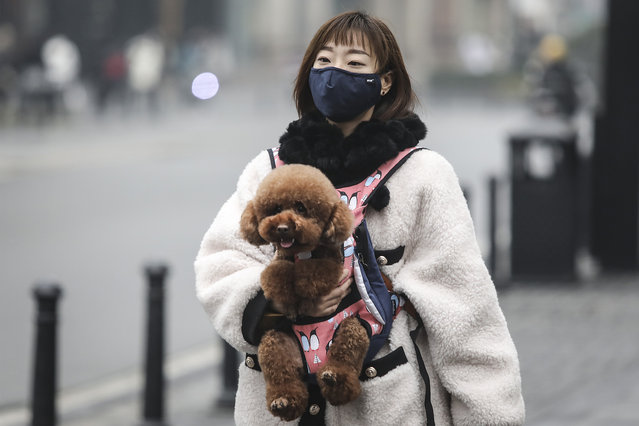
A woman wears a mask while carrying a dog in the street on January 22, 2020 in Wuhan, Hubei province, China. A new infectious coronavirus known as “2019-nCoV” was discovered in Wuhan as the number of cases rose to over 400 in mainland China. Health officials stepped up efforts to contain the spread of the pneumonia-like disease which medicals experts confirmed can be passed from human to human. The death toll has reached 17 people as the Wuhan government issued regulations today that residents must wear masks in public places. Cases have been reported in other countries including the United States, Thailand, Japan, Taiwan, and South Korea. (Photo by Getty Images/China Stringer Network)

A woman wears a mask while carrying a dog in the street on January 22, 2020 in Wuhan, Hubei province, China. A new infectious coronavirus known as “2019-nCoV” was discovered in Wuhan as the number of cases rose to over 400 in mainland China. Health officials stepped up efforts to contain the spread of the pneumonia-like disease which medicals experts confirmed can be passed from human to human. The death toll has reached 17 people as the Wuhan government issued regulations today that residents must wear masks in public places. Cases have been reported in other countries including the United States, Thailand, Japan, Taiwan, and South Korea. (Photo by Getty Images/China Stringer Network)
Details
31 Dec 2020 00:01:00
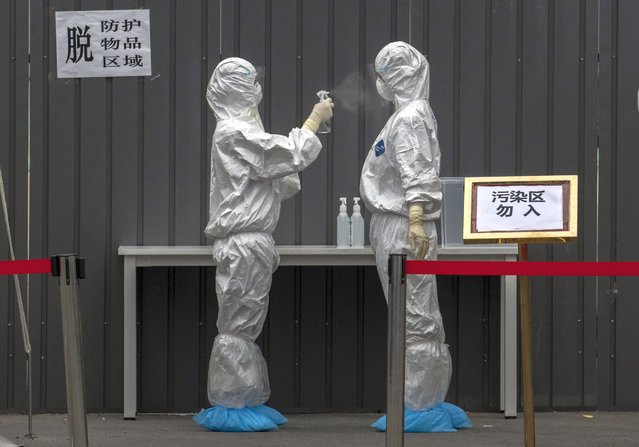
Chinese epidemic control workers wear protective suits as they disinfect each other after performing nucleic acid swab test for COVID-19 on citizens at a government testing site in Xicheng District during an organized tour on June 24, 2020 in Beijing, China. While Chinese government medical officials have said they believe they have controlled the spread, authorities are trying to contain the outbreak linked to the Xinfadi wholesale food market, Beijing's biggest supplier of produce and meat. More than 2.5 million people have undergone nucleic acid tests for COVID-19 at dozens of sites across the city in recent days, with officials using contact tracing to target high and middle risk areas and people who may have had contact with the market or food that came from there. Several neighborhoods have been locked down and a number of other food markets have been closed, The outbreak has triggered fears of a second wave of infection after 56 straight days with no domestically transmitted cases in the capital. (Photo by Kevin Frayer/Getty Images)

Chinese epidemic control workers wear protective suits as they disinfect each other after performing nucleic acid swab test for COVID-19 on citizens at a government testing site in Xicheng District during an organized tour on June 24, 2020 in Beijing, China. While Chinese government medical officials have said they believe they have controlled the spread, authorities are trying to contain the outbreak linked to the Xinfadi wholesale food market, Beijing's biggest supplier of produce and meat. (Photo by Kevin Frayer/Getty Images)
Details
26 Jun 2020 00:01:00
Bluebella Lingerie advertising photo shoot, Oxford Circus, London, Great Britain on September 14, 2017. Bluebella has staged its most daring lingerie campaign yet, sending 19 models to strut their stuff in skimp smalls on one of London's busiest junctions. Bluebella organised the show early in the morning to minimise congestion ahead of London Fashion Week which starts on Friday 15th September. The “models” included a medical PA, a company boss, four students, two actors, a musician and two writers. (Photo by Cavendish Press/LESAUVAGE/Bluebella)

Bluebella Lingerie advertising photo shoot, Oxford Circus, London, Great Britain on September 14, 2017. Bluebella has staged its most daring lingerie campaign yet, sending 19 models to strut their stuff in skimp smalls on one of London's busiest junctions. Bluebella organised the show early in the morning to minimise congestion ahead of London Fashion Week which starts on Friday 15th September. The “models” included a medical PA, a company boss, four students, two actors, a musician and two writers. (Photo by Cavendish Press/LESAUVAGE/Bluebella)
Details
15 Sep 2017 06:58:00
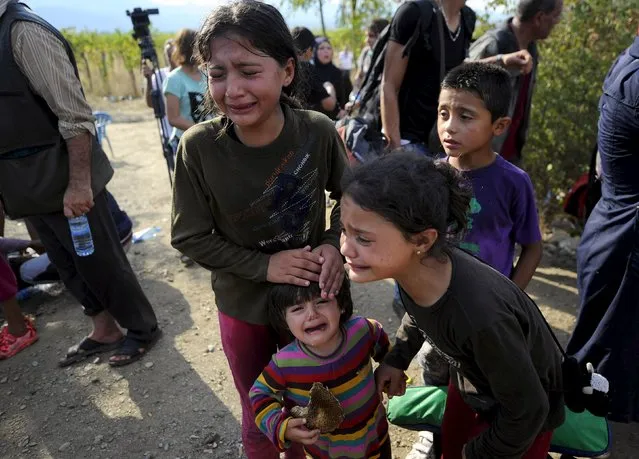
Girls cry as they get separated from their family at the border line dividing Macedonia and Greece August 21, 2015. (Photo by Ognen Teofilovski/Reuters)

Girls cry as they get separated from their family at the border line dividing Macedonia and Greece August 21, 2015. At least 1,000 migrants and refugees pressed against Macedonian police lines on the Greek-Macedonian border on Friday and at least 10 people appeared to faint in the crush. People could be heard screaming and medical workers raced to treat those who passed out or were hurt. The crush ensued after police let several hundred through into Macedonia, having kept them out since Thursday under an emergency decree. (Photo by Ognen Teofilovski/Reuters)
Details
22 Aug 2015 12:26:00
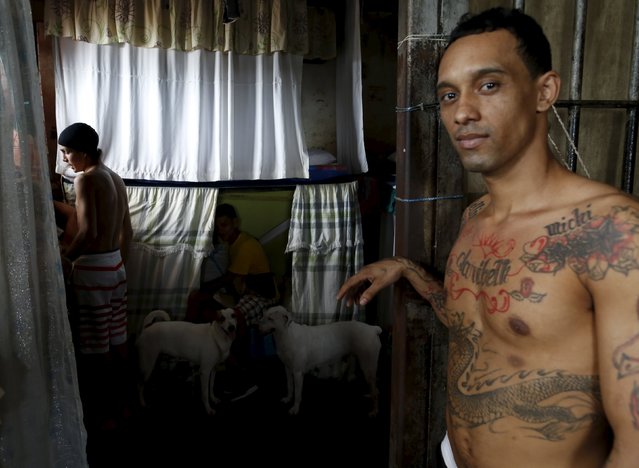
Inmates are seen at the transgender gallery in La Joya prison on the outskirts of Panama City, Panama February 3, 2016. (Photo by Carlos Jasso/Reuters)

Inmates are seen at the transgender gallery in La Joya prison on the outskirts of Panama City, Panama February 3, 2016. Inmates of La Joya prison on the outskirts of Panama City are housed in makeshift cells amid heavy overcrowding, living in grimy conditions and with limited medical attention. Many prisoners in the Central American nation languish for years without being sentenced. (Photo by Carlos Jasso/Reuters)
Details
14 Apr 2016 11:51:00


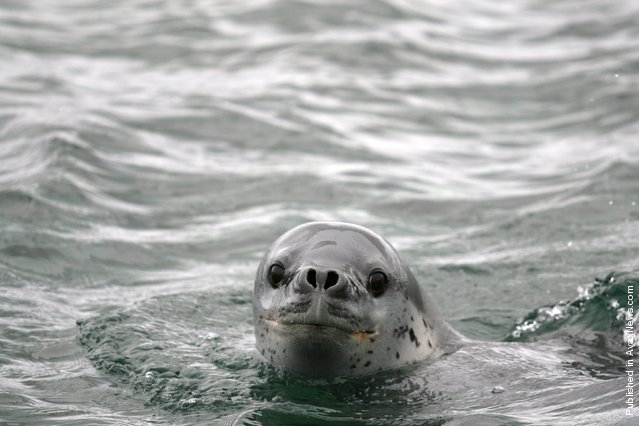
“The leopard seal (Hydrurga leptonyx), also referred to as the sea leopard, is the second largest species of seal in the Antarctic (after the southern elephant seal). It is most common in the southern hemisphere along the coast of Antarctica and on most sub-Antarctic islands, but can also be found on the coasts of southern Australia, Tasmania, South Africa, New Zealand, Lord Howe Island, Tierra del Fuego, the Cook Islands, and the Atlantic coast of South America. It can live twenty-six years, possibly more. Orcas and large sharks are the only natural predators of leopard seals”. – Wikipedia

Photo by: Gilad Rom; Source: Flickr
Details
13 Nov 2011 11:24:00
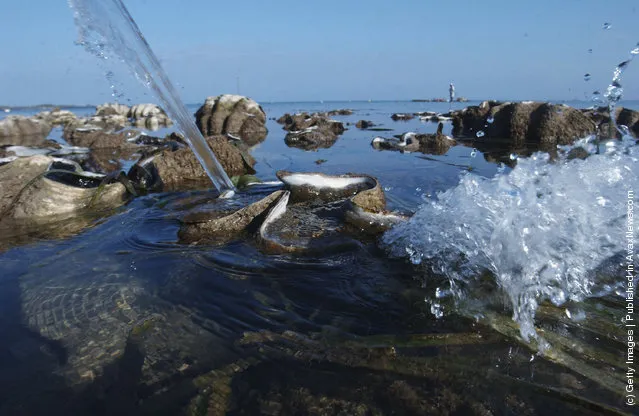
Tridacna Gigas, or Giant Clams

“The giant clam, Tridacna gigas (known as pā’ua in Cook Islands Māori), is the largest living bivalve mollusc. T. gigas is one of the most endangered clam species. It was mentioned as early as 1825 in scientific reports. One of a number of large clam species native to the shallow coral reefs of the South Pacific and Indian oceans, they can weigh more than 200 kilograms (440 lb) measure as much as 120 cm (47 in) across, and have an average lifespan in the wild of 100 years or more”. – Wikipedia

Photo: Tridacna Gigas, or Giant Clams spew water as a traditional fisherman passes by a small sanctuary on January 23, 2004 near Bolinao in the Northern Philippines. The clams, prime builders for coral reefs and providing shelter for spawning fish and other marine life, are exposed by low tides in the sanctuary. Overfishing and pollution throughout the country are not only threatening food security, but are also starting to choke one of the few working clam sanctuaries in the world. (Photo by David Greedy/Getty Images)
Details
01 Oct 2011 13:10:00