A woman spreads out fish to dry at Ngapali Beach near a fishing village in Myanmar's western Rakhine State, Saturday, December 31, 2022. (Photo by Aung Shine Oo/AP Photo)
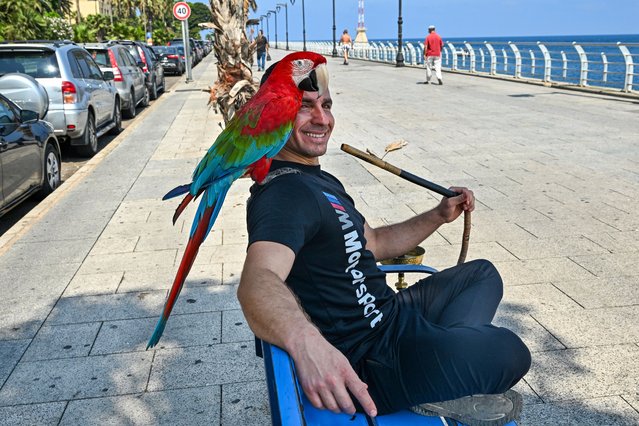
A man smokes a water pipe sitting on a bench with his pet parrot at the Ain al Mreisseh seaside promenade in Beirut on June 28, 2024. (Photo by Joseph Eid/AFP Photo)
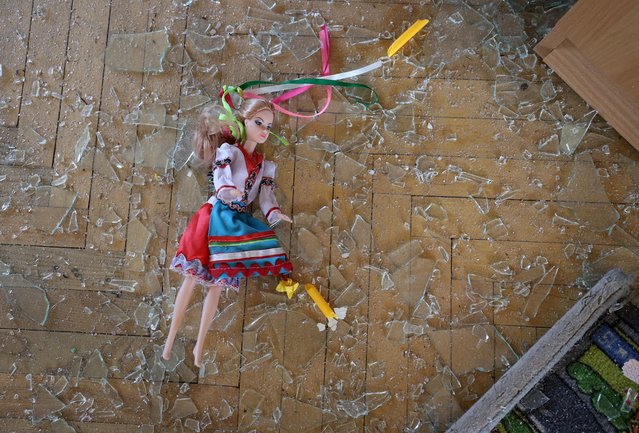
A doll dressed in Ukraine's national dress lies on the floor amid broken glass inside a kindergarten destroyed by a missile strike, in Kyiv on July 10, 2024, amid the Russian invasion in Ukraine. Russia struck cities across Ukraine on July 8, 2024, with a missile barrage that killed 33 people and ripped open a children's hospital in Kyiv. (Photo by Anatolii Stepanov/AFP Photo)
I know, this answer was a little too short, so let me explain in a little more detail.
Imagine tossing a coin. Normally, any normal coin toss has two possible outcomes - heads or tails - with each one having a 50% chance of happening. Ideally, that is, because factors like the force of your finger tossing the coin, gravity, the wind, the moon phase and a passing TARDIS can all influence the outcome of the toss - but I have deviated from the subject.
Labourers work at the installation site of Liquefied Petroleum Gas (LPG) pipeline on May Day or Labour Day in Chandigarh, India, May 1, 2015. (Photo by Ajay Verma/Reuters)
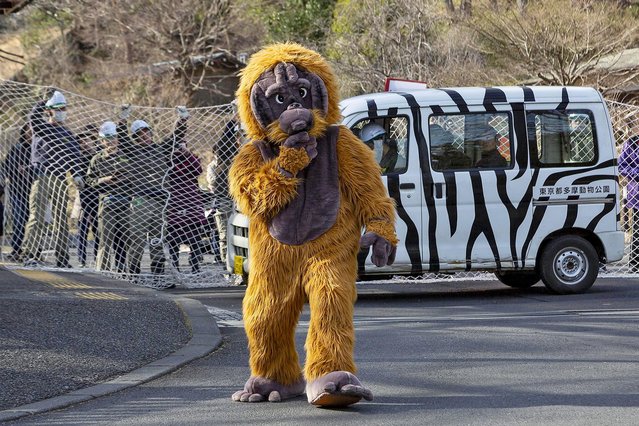
A zookeeper wearing orangutan costume tries to escape while zookeepers hold up a net in an attempt to capture it during an Escaped Animal Drill at Tama Zoological Park in Tokyo, Japan on February 22, 2019. The annual escape drill is held to train zookeepers what to do in the event of an animal escape. This year a member of staff wearing an orangutan costume was captured and subdued with large nets, sticks and tranquilizer guns to make sure the orangutan did not get away. (Photo by Rodrigo Reyes Marin/ZUMA Wire/Alamy Live News)