Loading...
Done
The fin of a tuna is seen on display in the outer part of the Tsukiji fish market, the Jogai Shijo, in Tokyo January 4, 2015. The famous Tsukiji wholesale fish and seafood market, is scheduled to leave its fabled 80-year-old halls to move into bigger, more modern facilities next year ahead of the 2020 Tokyo Olympics. (Photo by Thomas Peter/Reuters)

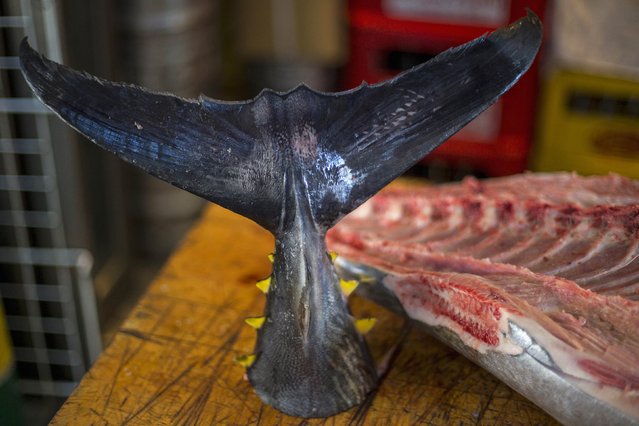
The fin of a tuna is seen on display in the outer part of the Tsukiji fish market, the Jogai Shijo, in Tokyo January 4, 2015. The famous Tsukiji wholesale fish and seafood market, is scheduled to leave its fabled 80-year-old halls to move into bigger, more modern facilities next year ahead of the 2020 Tokyo Olympics. The outer part of the market, the Jogai Shijo, that caters to the public will stay in its old place, but critics wonder about its chances for survival without the world's biggest fish trading place at its doorsteps. (Photo by Thomas Peter/Reuters)
Details
08 Jan 2015 14:50:00
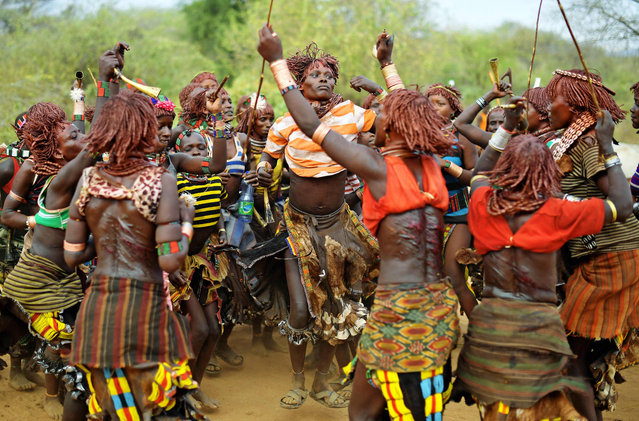
Hamar women dance before a bull jumping ceremony in Ethiopia's southern Omo Valley region near Turmi on September 19, 2016. The Hamar are a Nilotic ethnic group in Ethiopia. The construction of the Gibe III dam, the third largest hydroelectric plant in Africa, and large areas of very “thirsty” cotton and sugar plantations and factories along the Omo river are impacting heavily on the lives of tribes living in the Omo Valley who depend on the river for their survival and way of life. Human rights groups fear for the future of the tribes if they are forced to scatter, give up traditional ways through loss of land or ability to keep cattle as globalisation and development increases. (Photo by Carl De Souza/AFP Photo)

Hamar women dance before a bull jumping ceremony in Ethiopia's southern Omo Valley region near Turmi on September 19, 2016. The Hamar are a Nilotic ethnic group in Ethiopia. The construction of the Gibe III dam, the third largest hydroelectric plant in Africa, and large areas of very “thirsty” cotton and sugar plantations and factories along the Omo river are impacting heavily on the lives of tribes living in the Omo Valley who depend on the river for their survival and way of life. (Photo by Carl De Souza/AFP Photo)
Details
02 Oct 2016 08:45:00
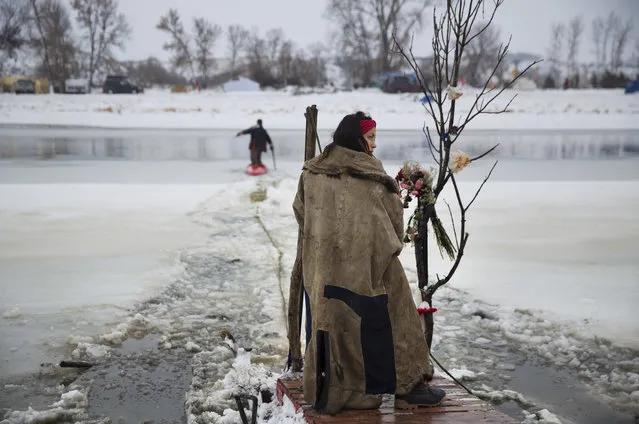
In this Thursday, December 1, 2016 photo, Cat Bigney, part of the Oglala Native American tribe, waits on the shore of the Cannonball river for travelers to arrive by canoe at the Oceti Sakowin camp where people have gathered to protest the Dakota Access oil pipeline in Cannon Ball, N.D. So far, those at the camp have shrugged off the heavy snow, icy winds and frigid temperatures. But if they defy next week's government deadline to abandon the camp, demonstrators know the real deep freeze lies ahead. Life-threatening wind chills and towering snow drifts could mean the greatest challenge is simple survival. (Photo by David Goldman/AP Photo)

In this Thursday, December 1, 2016 photo, Cat Bigney, part of the Oglala Native American tribe, waits on the shore of the Cannonball river for travelers to arrive by canoe at the Oceti Sakowin camp where people have gathered to protest the Dakota Access oil pipeline in Cannon Ball, N.D. So far, those at the camp have shrugged off the heavy snow, icy winds and frigid temperatures. But if they defy next week's government deadline to abandon the camp, demonstrators know the real deep freeze lies ahead. Life-threatening wind chills and towering snow drifts could mean the greatest challenge is simple survival. (Photo by David Goldman/AP Photo)
Details
06 Dec 2016 10:22:00
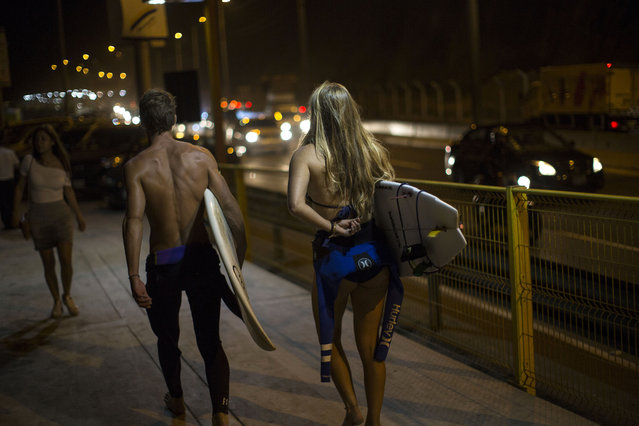
In this Feb. 17, 2017 photo, surfers walk to La Pampilla beach in Lima, Peru. Night surfing apparently came about in Lima because of a dispute with the capital municipality that in 2015 increased the width of a road that runs along the coast. The surfers protested the construction for months by camping on the asphalted beach area, but in the end the municipality prevailed, with support from the police. At the end of 2016, perhaps to win over the surfers, Lima's mayor set up beach lights that allows for night surfing. (Photo by Rodrigo Abd/AP Photo)

In this Feb. 17, 2017 photo, surfers walk to La Pampilla beach in Lima, Peru. Night surfing apparently came about in Lima because of a dispute with the capital municipality that in 2015 increased the width of a road that runs along the coast. The surfers protested the construction for months by camping on the asphalted beach area, but in the end the municipality prevailed, with support from the police. At the end of 2016, perhaps to win over the surfers, Lima's mayor set up beach lights that allows for night surfing. (Photo by Rodrigo Abd/AP Photo)
Details
04 May 2017 09:23:00
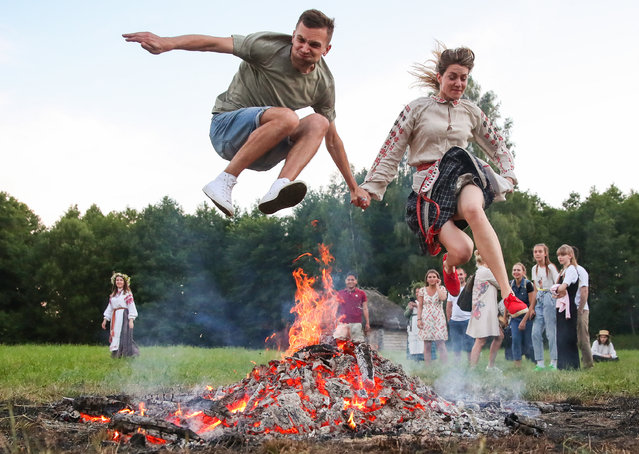
A man and a woman jump over a bonfire during Ivan Kupala Day celebrations held by the Belarusian State Museum of Folk Architecture and Rural Lifestyle in the village of Ozertso near Minsk, Belarus on July 4, 2020. Ivan Kupala Day, also known as Ivana-Kupala or Kupala Night, is a traditional pagan holiday celebrated in eastern Slavic cultures. Various rituals are traditionally performed on Kupala Night, including making flower wreaths, fortune-telling, jumping over bonfires, and burning a wheel-like effigy symbolizing the sun. (Photo by Natalia Fedosenko/TASS)

A man and a woman jump over a bonfire during Ivan Kupala Day celebrations held by the Belarusian State Museum of Folk Architecture and Rural Lifestyle in the village of Ozertso near Minsk, Belarus on July 4, 2020. Ivan Kupala Day, also known as Ivana-Kupala or Kupala Night, is a traditional pagan holiday celebrated in eastern Slavic cultures. Various rituals are traditionally performed on Kupala Night, including making flower wreaths, fortune-telling, jumping over bonfires, and burning a wheel-like effigy symbolizing the sun. (Photo by Natalia Fedosenko/TASS)
Details
23 Jan 2021 09:53:00
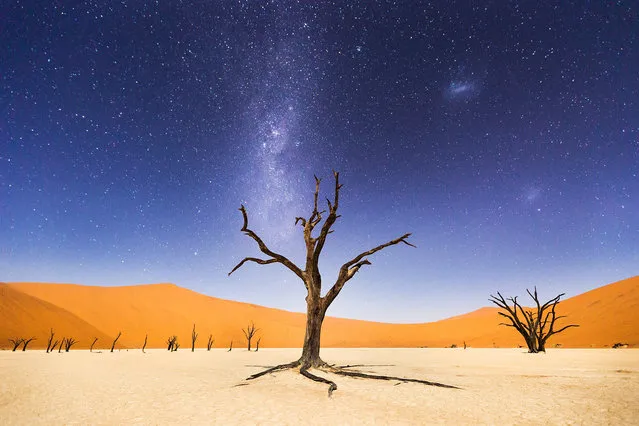
Merit: A Night at Deadvlei. The night before returning to Windhoek, we spent several hours at Deadveli. The moon was bright enough to illuminate the sand dunes in the distance, but the skies were still dark enough to clearly see the milky way and magellanic clouds. Deadveli means “dead marsh. (Photo and caption by Beth McCarley/National Geographic Traveler Photo Contest)

Merit: A Night at Deadvlei. The night before returning to Windhoek, we spent several hours at Deadveli. The moon was bright enough to illuminate the sand dunes in the distance, but the skies were still dark enough to clearly see the milky way and magellanic clouds. Deadveli means “dead marsh. The camelthorn trees are believed to be about 900 years old, but have not decomposed because the environment is so dry. (Photo and caption by Beth McCarley/National Geographic Traveler Photo Contest)
Details
04 Aug 2015 11:50:00
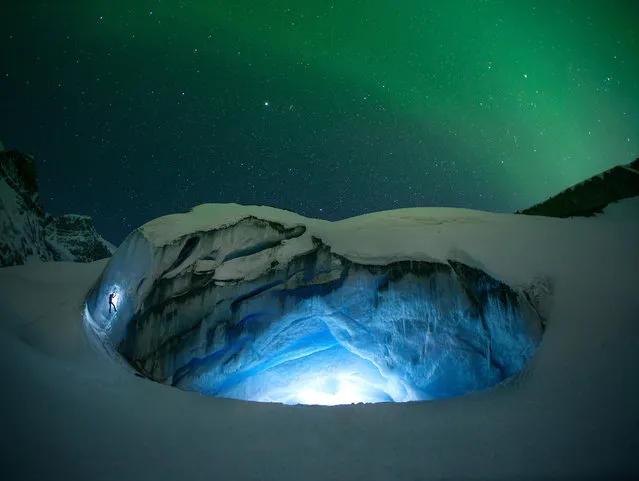
A pair of ice climbers have been snapped in front of a stunning aurora. Mike Stuart and Takeshi Tani were climbing the Athabasca Glacier in Alberta, Canada, when the aurora lit up the nights sky. They were photographed by famed night-time photographer Paul Zizka, who specialises in photographing auroras in some of Canadas most beautiful parks. (Photo by Paul Zizka/Caters News)

A pair of ice climbers have been snapped in front of a stunning aurora. Mike Stuart and Takeshi Tani were climbing the Athabasca Glacier in Alberta, Canada, when the aurora lit up the nights sky. They were photographed by famed night-time photographer Paul Zizka, who specialises in photographing auroras in some of Canadas most beautiful parks. (Photo by Paul Zizka/Caters News)
Details
21 Apr 2015 12:03:00
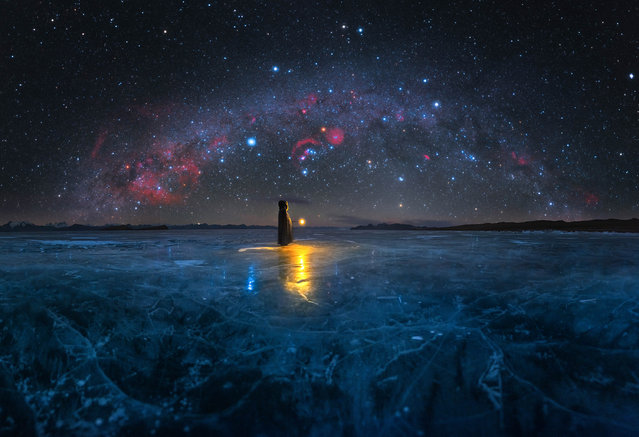
Ice Age – Tibet, China. “This is the Chinese version of the blue ice lake, Pumoungcuo, at an altitude of 5,070 metres (16,600 feet). This lake in Tibet freezes every winter. At night, under the low temperatures of -20C, you can listen to the sound of the ice cracking while capturing the most beautiful winter sky. The blue ice surface and dazzling Orion constellation create a fantasy landscape. I felt so happy to have the stars as my companion on this magical night”. (Photo by Daniel Zafra Portill/Milky Way Photographer of the Year)

Ice Age – Tibet, China. “This is the Chinese version of the blue ice lake, Pumoungcuo, at an altitude of 5,070 metres (16,600 feet). This lake in Tibet freezes every winter. At night, under the low temperatures of -20C, you can listen to the sound of the ice cracking while capturing the most beautiful winter sky. The blue ice surface and dazzling Orion constellation create a fantasy landscape. I felt so happy to have the stars as my companion on this magical night”. (Photo by Daniel Zafra Portill/Milky Way Photographer of the Year)
Details
21 May 2022 05:10:00