Loading...
Done


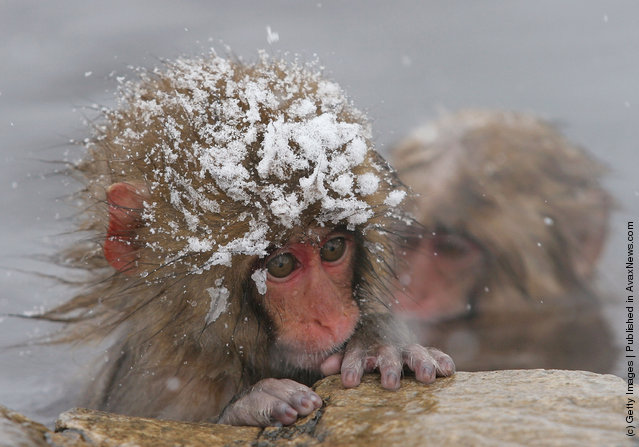
Japanese macaque monkeys enjoy sitting in the hot springs at Jigokudani-Onsen (Hell Valley) on January 23, 2005 in Jigokudani, Nagano-Prefecture, Japan. Japanese Macaques, also known as snow monkeys are the most northerly nonhuman primate in the world. In 1963 a female Macaque ventured into the hot springs to retrieve some soybeans. This behaviour was adopted by other monkeys, and eventually by the entire troop. This Macaque troop regularly visits the Jigokudani-Onsen springs to escape the cold. The hot springs are said to help relieve nerve pain and fatigue. (Photo by Koichi Kamoshida/Getty Images)
Details
20 May 2011 08:04:00
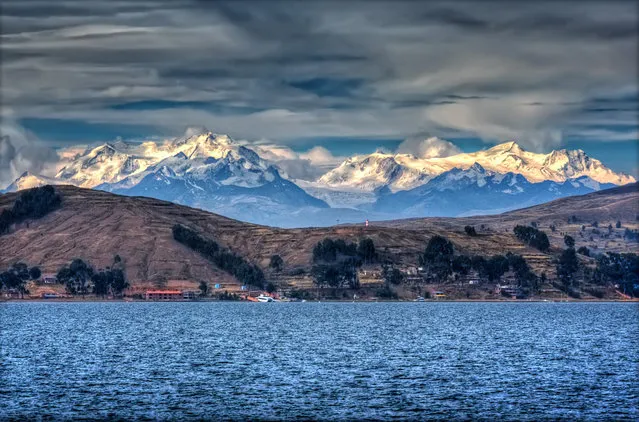
Lake Titicaca

Titicaca or Titiqaqa is a large, deep lake in the Andes on the border of Peru and Bolivia. By volume of water, it is the largest lake in South America. Lake Maracaibo has a larger surface area, though some consider it to be a large brackish bay due to its direct connection with the sea.
Details
22 Jul 2015 12:20:00
Kamo Mphela, a South African dancer and singer performs Amapiano, a South African musical export that has crossed borders and cultural barriers, reaching as far as Japan, during a music concert in Pretoria, South Africa, July 22, 2022. (Photo by Shafiek Tassiem/Reuters)

Kamo Mphela, a South African dancer and singer performs Amapiano, a South African musical export that has crossed borders and cultural barriers, reaching as far as Japan, during a music concert in Pretoria, South Africa, July 22, 2022. (Photo by Shafiek Tassiem/Reuters)
Details
10 Aug 2022 05:15:00
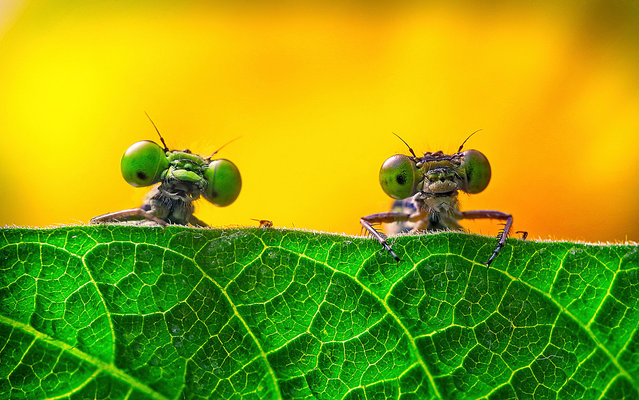
Shortlisted: “Two big eyes” by Miao Yong (Zejiang province, China). Damselflies look over the leaves. “I was photographing insects in a park near my home when suddenly I found two damselflies in the grass. They kept flying and it was very difficult to focus until suddenly they parked behind a leaf”. (Photo by Miao Yong/2017 Royal Society of Biology Photographer of the Year)

Shortlisted: “Two big eyes” by Miao Yong (Zejiang province, China). Damselflies look over the leaves. “I was photographing insects in a park near my home when suddenly I found two damselflies in the grass. They kept flying and it was very difficult to focus until suddenly they parked behind a leaf”. (Photo by Miao Yong/2017 Royal Society of Biology Photographer of the Year)
Details
16 Oct 2017 09:04:00
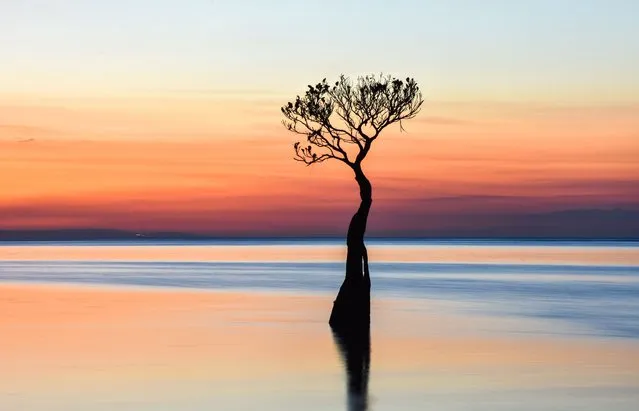
Mangrove in Walakiri Beach after Sunset in East Sumba, Indonesia in 2018. (Photo by Sarubabel Malau/Rex Features/Shutterstock)

Mangrove in Walakiri Beach after Sunset in East Sumba, Indonesia in 2018. (Photo by Sarubabel Malau/Rex Features/Shutterstock)
Details
04 Apr 2022 05:47:00
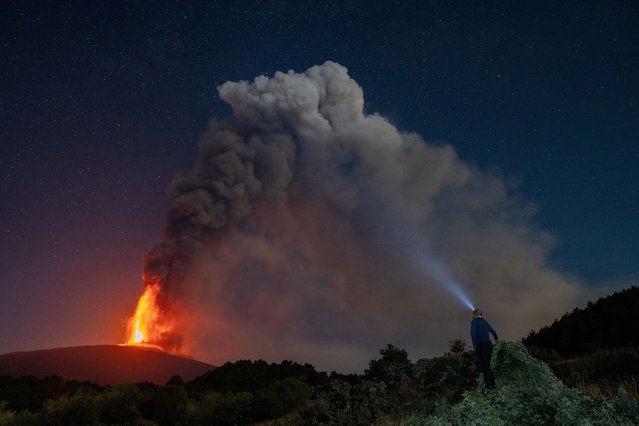
A person looks on as lava and plumes of smoke rise from a crater of Mount Etna, Europe's most active volcano, Italy on July 15, 2024. (Photo by Giuseppe Di Stefano/Etna Walk via Reuters)

A person looks on as lava and plumes of smoke rise from a crater of Mount Etna, Europe's most active volcano, Italy on July 15, 2024. (Photo by Giuseppe Di Stefano/Etna Walk via Reuters)
Details
21 Sep 2024 04:05:00
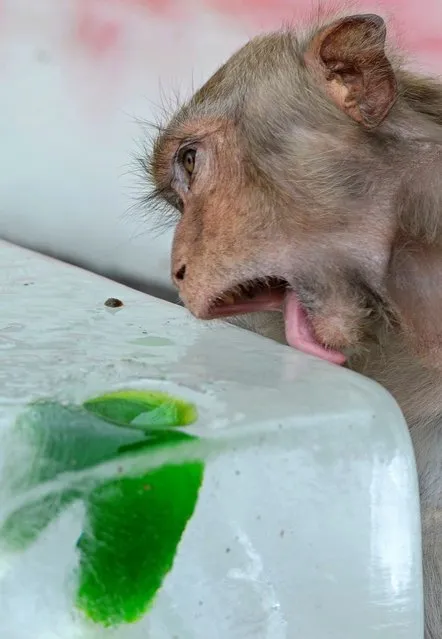
A monkey licks ice during the annual “monkey buffet” in Lopburi province, some 150 kms north of Bangkok on November 24, 2013. More than 2,000 kilos of fruits and vegetables were offered to the monkeys during the annual festival to help promote tourism in the area. (Photo by Pornchai Kittiwongsakul/AFP Photo)

A monkey licks ice during the annual “monkey buffet” in Lopburi province, some 150 kms north of Bangkok on November 24, 2013. More than 2,000 kilos of fruits and vegetables were offered to the monkeys during the annual festival to help promote tourism in the area. (Photo by Pornchai Kittiwongsakul/AFP Photo)
Details
30 Nov 2013 13:41:00
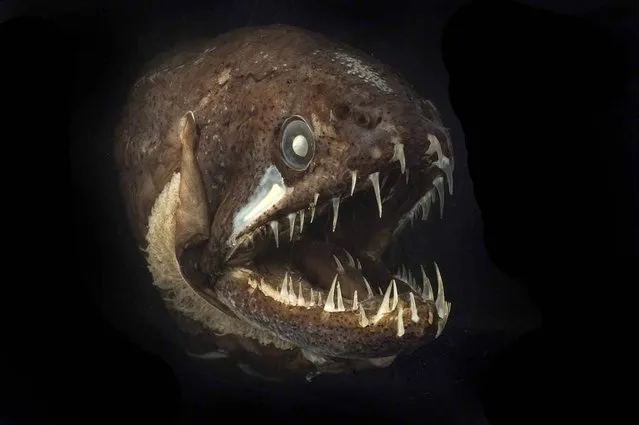
Imagine living in the sea where it is permanently dark, cold, and food is hard to find. For many animals at depth, it may be weeks to months between meals. If you find something to eat, you have to hang on to it

Imagine living in the sea where it is permanently dark, cold, and food is hard to find. For many animals at depth, it may be weeks to months between meals. If you find something to eat, you have to hang on to it. This is why so many deep-sea fishes have lots of big teeth. This dragonfish, spotted off the coast of Australia, even has teeth on its tongue. They would be terrifying animals ... if they weren’t the size of a banana. (Photo by Julian Finn/Museum Victoria)
Details
21 May 2012 12:14:00