Loading...
Done
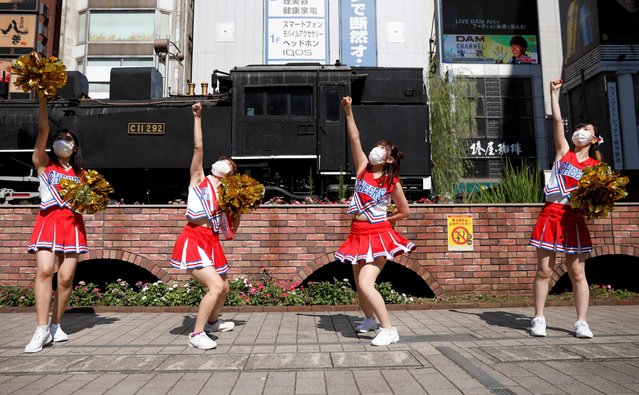
Cheerleaders from the “All Japan Cheer Organization” perform in protective masks due to COVID-19, to cheer people up in front of Shimbashi Station, one day before the start of the Tokyo 2020 Olympics in Tokyo, Japan on July 22, 2021. (Photo by Androniki Christodoulou/Reuters)

Cheerleaders from the “All Japan Cheer Organization” perform in protective masks due to COVID-19, to cheer people up in front of Shimbashi Station, one day before the start of the Tokyo 2020 Olympics in Tokyo, Japan on July 22, 2021. (Photo by Androniki Christodoulou/Reuters)
Details
23 Jul 2021 09:21:00
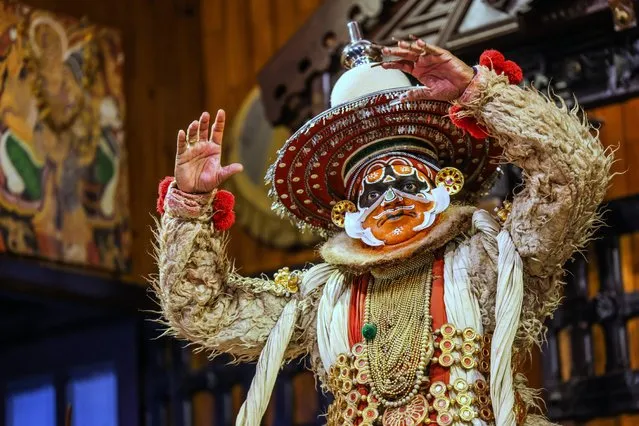
A Kathakali dancer in Kochi, India, performs a traditional story play on August 10, 2023. Kerala Kathakali originated in the Early 17th Century. A story acted that contains Mime, Acting Drama and music, The Stories are mainly taken from Hindu Mythology and Puranas. (Photo by Paul Quezada-Neiman/Alamy Live News)

A Kathakali dancer in Kochi, India, performs a traditional story play on August 10, 2023. Kerala Kathakali originated in the Early 17th Century. A story acted that contains Mime, Acting Drama and music, The Stories are mainly taken from Hindu Mythology and Puranas. (Photo by Paul Quezada-Neiman/Alamy Live News)
Details
16 Aug 2023 04:04:00
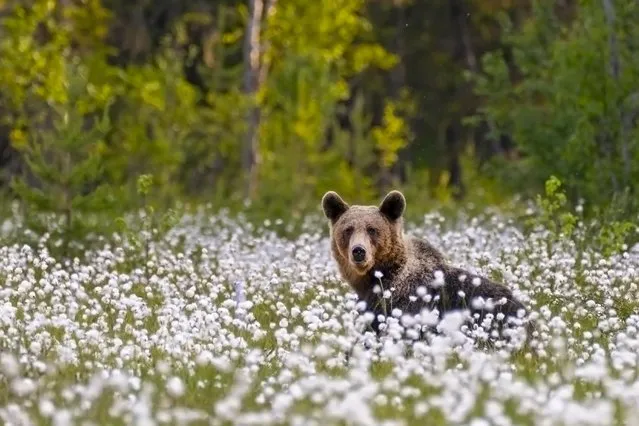
Contrasted against the white flowers in a cotton field, a brown bear is out for a ramble just after midnight in the second decade of July 2023 in Kainuu, Finland, where the sun does not fully set for more than 70 days in the summer months. (Photo by Jane Jeffrey/Animal News Agency)

Contrasted against the white flowers in a cotton field, a brown bear is out for a ramble just after midnight in the second decade of July 2023 in Kainuu, Finland, where the sun does not fully set for more than 70 days in the summer months. (Photo by Jane Jeffrey/Animal News Agency)
Details
20 Oct 2023 00:43:00
Paul Dixon is an engineer by day and an astrophotographer by night. He shot this broken boat on Dungeness beach, Kent in the last decade of August 2024, 17 times, stacking the images upon each other before combining them with a similar composite of the Milky Way. (Photo by Paul Dixon/Media Drum Images)

Paul Dixon is an engineer by day and an astrophotographer by night. He shot this broken boat on Dungeness beach, Kent in the last decade of August 2024, 17 times, stacking the images upon each other before combining them with a similar composite of the Milky Way. (Photo by Paul Dixon/Media Drum Images)
Details
10 Jul 2025 04:02:00
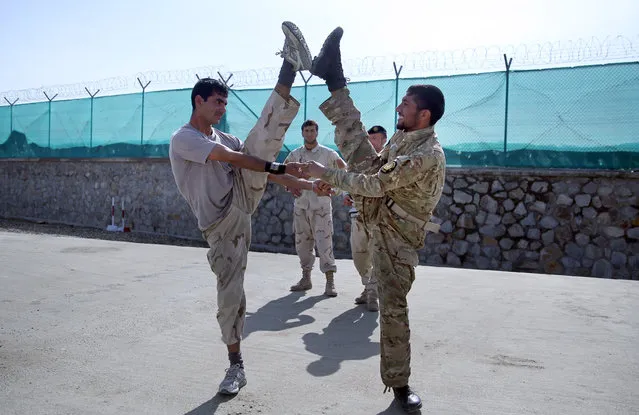
Afghanistan's interior ministry special forces demonstrate their skills during a military exercise in Kabul, Afghanistan, Thursday, April 2, 2015. Afghanistan's security forces took over full responsibility for the country's security on January 1, 2015. (Photo by Massoud Hossaini/AP Photo)

Afghanistan's interior ministry special forces demonstrate their skills during a military exercise in Kabul, Afghanistan, Thursday, April 2, 2015. Afghanistan's security forces took over full responsibility for the country's security on January 1, 2015. (Photo by Massoud Hossaini/AP Photo)
Details
03 Apr 2015 12:36:00


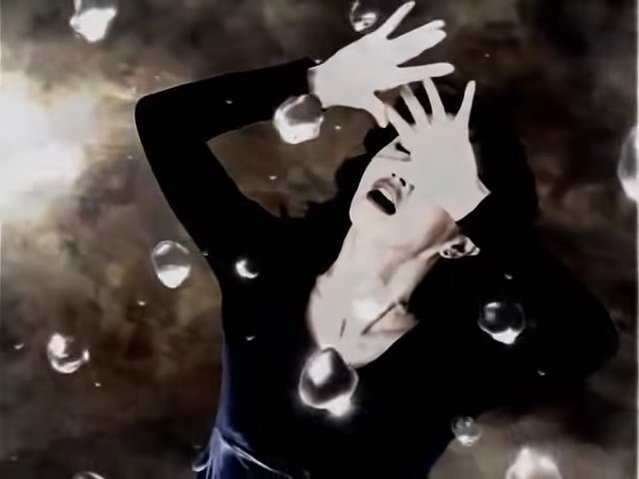
中島 みゆき (Nakajima Miyuki) – 地上の星 (The Stars On The Earth)
Details
04 Mar 2019 00:01:00
Second Place Winner: “Thunderstorm at False Kiva”. I hiked out to these ruins at night hoping to photograph them with the Milky Way, but instead a thunderstorm rolled through, creating this dramatic image. – Max Seigal. (Photo and caption by Max Seigal/National Geographic Traveler Photo Contest)

Second Place Winner: “Thunderstorm at False Kiva”. I hiked out to these ruins at night hoping to photograph them with the Milky Way, but instead a thunderstorm rolled through, creating this dramatic image. – Max Seigal. National Geographic Traveler Director of Photography Dan Westergren, one of this year's judges, shares his thoughts on the second place winner: “This photo combines two different scenes into one: the small kiva in a cliff dwelling and the grand vista of Canyonlands National Park across the valley. I really like the two different color palettes – warm inside and purple outside. This two-for-one scene was caused by the lightning storm outside the dwelling, which lit up the landscape like it was a huge electronic flash. Looking at this picture I can imagine what a wonderful sight it must have been for the ancient people who lived here. It doesn't seem too amazing now in our modern world, but might have been mind-blowing for the prehistoric residents”. Location: Utah. (Photo and caption by Max Seigal/National Geographic Traveler Photo Contest)

Details
02 Aug 2013 06:16:00
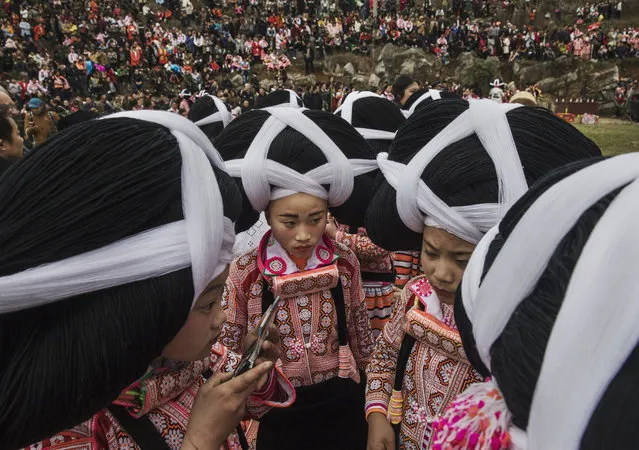
Girls of the Long Horn Miao ethnic minority group wear headdresses as they prepare gather for Tiaohua or Flower Festival as part of the Lunar New Year on February 6, 2017 in Longga village, Guizhou province, southern China. The Long Horn Miao are recognized for their declining practice of wrapping a blend of linen, wool, and the hair of their ancestors around animal horns or a wooden clip to make headdresses. Many young women say they now wear the headdresses only for special occasions and festivals, as the ornaments, which are attached by the horns to their real hair, have proved impractical for modern daily life in a fast changing world. China officially recognizes 56 different ethnic minorities, and statistics show over 7 million Chinese identifying themselves as Miao. But the small Long Horn Miao community counts only around 5000 people living in 12 villages, whose age-old traditions, language, and culture are fading. It is increasingly difficult in a modernizing China, as young people are drawn from remote rural villages to opportunities in bigger cities amongst wide-scale urbanization. Farming and labour remain the mainstays of life for the Long Horn Miao, leaving the area relatively poor in comparison with many parts of China. The government has invested significant amounts into local infrastructure and the tourism industry to try to bolster the local economy. (Photo by Kevin Frayer/Getty Images)

Girls of the Long Horn Miao ethnic minority group wear headdresses as they prepare gather for Tiaohua or Flower Festival as part of the Lunar New Year on February 6, 2017 in Longga village, Guizhou province, southern China. (Photo by Kevin Frayer/Getty Images)
Details
13 Feb 2017 00:01:00