Loading...
Done
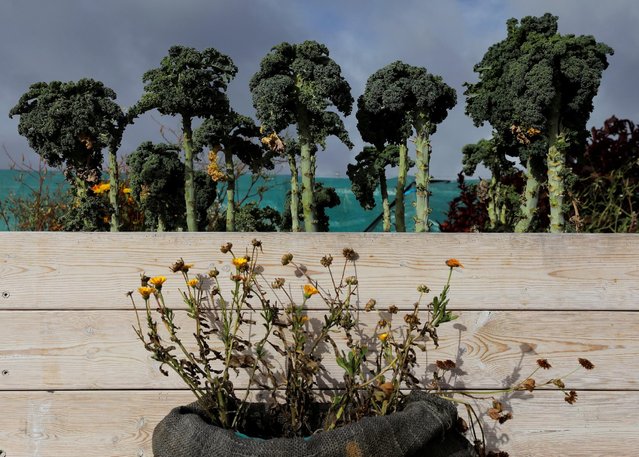
Kale grows at Kajodlingen farm in Gothenburg, Sweden, September 28, 2016. (Photo by Maxim Shemetov/Reuters)

Kale grows at Kajodlingen farm in Gothenburg, Sweden, September 28, 2016. They are doing it on the rooftops, on tower block balconies and even on a disused railway: Swedes have discovered a passion for urban gardening as a way of growing fresh food and getting back in touch with nature. Part of a global movement, an increasing number of Swedish city-dwellers are growing their own in window boxes and allotments or are visiting public gardens built in or on industrial or office spaces. (Photo by Maxim Shemetov/Reuters)
Details
11 Nov 2016 07:58:00
People fall down as they try to form a human pyramid to break the “Dahi handi”, an earthen pot filled with curd, an integral part of celebrations to mark Janmashtami in Mumbai, India, Monday, August 18, 2014. (Photo by Rafiq Maqbool/AP Photo)

People fall down as they try to form a human pyramid to break the “Dahi handi”, an earthen pot filled with curd, an integral part of celebrations to mark Janmashtami in Mumbai, India, Monday, August 18, 2014. Hindu devotees take part in the celebration in which an earthen pot is suspended high above the ground and groups of young men and children form a human pyramid to reach the pot and break it. The festival celebrates the birth of Hindu god Lord Krishna, one of the most popular gods in Hinduism. (Photo by Rafiq Maqbool/AP Photo)
Details
21 Aug 2014 09:38:00
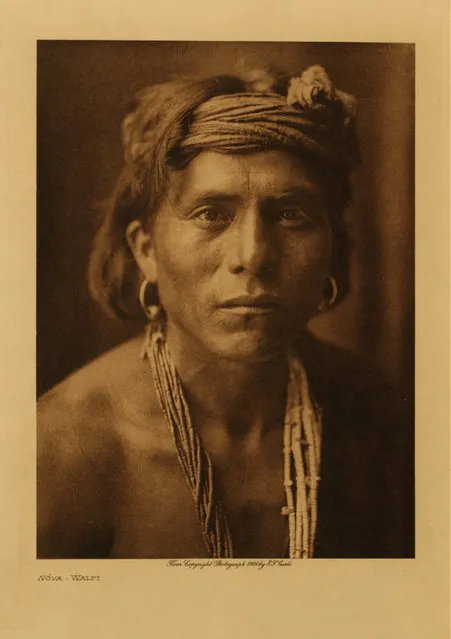
Nova, a Walpi, in 1906. (Photo by Edward S. Curtis)

At the beginning of the 20th century, Edward S. Curtis set out to document what he saw as a disappearing race: the Native American. From 1907 to 1930, Curtis took more than 2,000 photos of 80 tribes stretching from the Great Plains to the Pacific Northwest and Alaska. He then published and sold these photos, along with narrative text, in 20 volumes of work known as “The North American Indian”. It is one of the most significant collections of its kind, “probably the most important photographic document of its age and its topic,” said Jeffrey Garrett, associate university librarian for Special Libraries at Northwestern University. (Photo by Edward S. Curtis)
Details
07 Sep 2014 12:57:00
Corona del Mar High School students Kim Robertson, Pat Auvenshine and Pam Pepin wear “hippie” fashions, 1969. (Photo by Arthur Schatz/Time & Life Pictures/Getty Images)

“By 1969, the fashion choices of tens of millions of young American men and women were as variegated and ever-evolving as the world around them. Cultural transformation was an irresistible force during the Sixties, and across America and around the globe civil rights, women’s and gay liberation, the sexual revolution and, of course, the explosive soundtrack of R&B, soul and rock and roll informed everything from politics to fashion”. – LIFE. Photo: Corona del Mar High School students Kim Robertson, Pat Auvenshine and Pam Pepin wear “hippie” fashions, 1969. (Photo by Arthur Schatz/Time & Life Pictures)
Details
11 Aug 2013 12:43:00


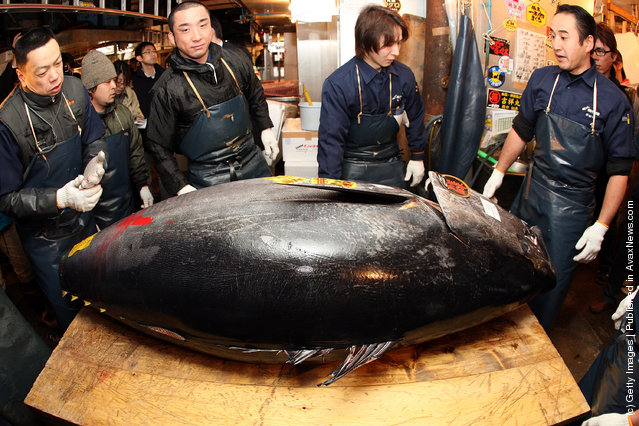
“The Tokyo Metropolitan Central Wholesale Market, commonly known as the Tsukiji Market, is the biggest wholesale fish and seafood market in the world and also one of the largest wholesale food markets of any kind. The market is located in Tsukiji in central Tokyo, and is a major attraction for foreign visitors”. – Wikipedia

Photo: A 232kg blue-fin tuna is displayed during the new year's first auction at the Tsukiji fish market on January 5, 2010 in Tokyo, Japan. (Photo by Koichi Kamoshida/Getty Images)
Details
19 Jul 2011 12:29:00


A New Year, New Hope
or, abandon all hope, ye who enter here? Intrigue!

But that's okay, we'll soon find out. Happy New Year! And now disco.
Details
31 Dec 2021 06:11:00
Marc Berthod of Switzerland during the Audi FIS Alpine Ski World Cup Men's Super Combined

Marc Berthod of Switzerland during the Audi FIS Alpine Ski World Cup Men's Super Combined on February 12, 2012 in Sochi, Russia. (Photo by Vianney Thibaut/Agence Zoom/Getty Images)
Details
13 Feb 2012 13:02:00
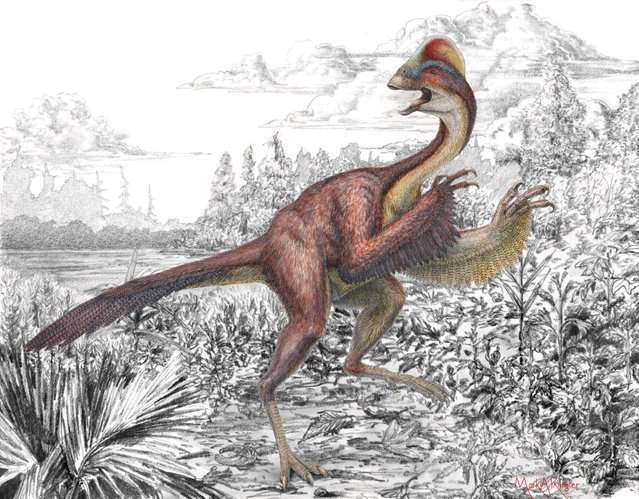
Life reconstruction of the new oviraptorosaurian dinosaur species Anzu wyliei in its 66 million-year-old environment in western North America as seen in an undated handout illustration by Mark A. Klinger, Carnegie Museum of Natural History. Some 18,000 species, great and small, were discovered in 2014, adding to the 2 million already known, scientists said on May 21, 2015 as they released a “Top 10” list that highlights the diversity of life. (Photo by Mark A. Klingler/Reuters/Carnegie Museum of Natural History)

Life reconstruction of the new oviraptorosaurian dinosaur species Anzu wyliei in its 66 million-year-old environment in western North America as seen in an undated handout illustration by Mark A. Klinger, Carnegie Museum of Natural History. Some 18,000 species, great and small, were discovered in 2014, adding to the 2 million already known, scientists said on May 21, 2015 as they released a “Top 10” list that highlights the diversity of life. Anzu wyliei, one of the top 10, dubbed “the chicken from hell”, is extinct. The feathered dinosaur whose partial skeletons were unearthed in the Dakotas was a contemporary of T. rex and Triceratops. (Photo by Mark A. Klingler/Reuters/Carnegie Museum of Natural History)
Details
22 May 2015 12:31:00