A dog wearing a mask is seen on a street following an outbreak of the novel coronavirus disease (COVID-19), in Shanghai, China on March 22, 2020. (Photo by Aly Song/Reuters)
Passengers wear protective masks while riding a subway train on April 21, 2020 in Shanghai, China. Health authorities of China said the country has passed the peak of the COVID-19 epidemic on March 12. As of today, the Coronavirus (COVID-19) pandemic has spread to many countries across the world, claiming over 171,000 lives and infecting over 2.4 million people. (Photo by Yves Dean/Getty Images)
Ice swimmer Klaudia prepares to swim in a filled up water kettle in an ice cave inside the Nature Ice Palace, with a hight of 3,250 meters (10,663 feet) above sea level, at Hintertux Glacier near Hintertux, some 480 kilometers (298 miles) western of Vienna, Austria, 28 July 2018. (Photo by Christian Bruna/EPA/EFE)
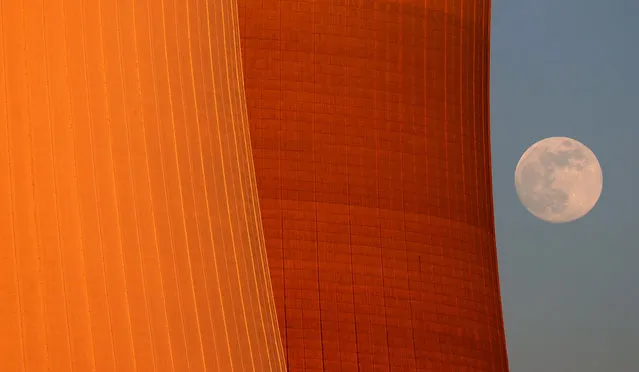
The full moon rises behind the cooling towers of the nuclear power station in Philippsburg, Germany, 06 May 2020. The nuclear power plant in Philippsburg was completely shut down by 31 December 2019. According to the operator EnBW, the two cooling towers are expected to be demolished by blasting on 14-15 May 2020. (Photo by Ronald Wittek/EPA/EFE)
Hundreds of gannets dive for mackerel off the coast of Shetland, Northern Isles of Scotland on July 2020, where they plunge into the water from heights of up to 100ft at speeds of 60mph. (Photo by David Keep/The Times)
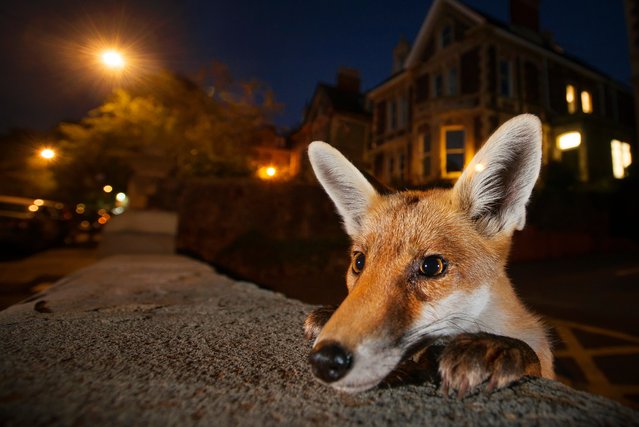
Nosy neighbour by Sam Hobson, UK. Sam knew exactly who to expect when he set his camera on the wall one summer’s evening in a suburban street in Bristol, the UK’s famous fox city. He wanted to capture the inquisitive nature of the urban red fox in a way that would pique the curiosity of its human neighbours about the wildlife around them. (Photo by Sam Hobson/2016 Wildlife Photographer of the Year)
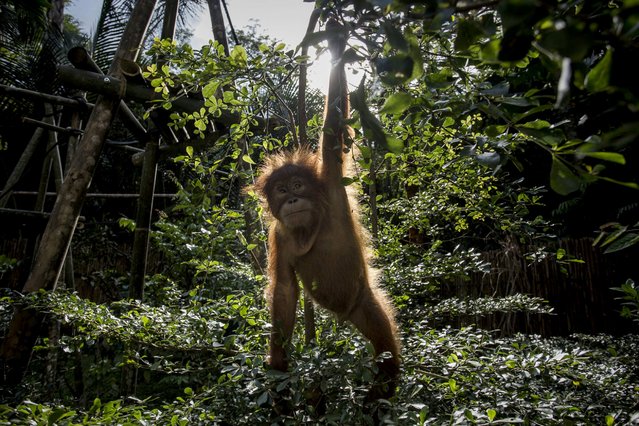
A Baby sumatran orangutan (Pongo abelii) plays around in a tree as they train at Sumatran Orangutan Conservation Programme's rehabilitation center on November 12, 2016 in Kuta Mbelin, North Sumatra, Indonesia. The Orangutans in Indonesia have been known to be on the verge of extinction as a result of deforestation and poaching. Found mostly in South-East Asia, where they live on the islands of Sumatra and Borneo, the endangered species continue to lose their habitat as a result of corporate expansion in a developing economy. Indonesia approved palm oil concessions on nearly 15 million acres of peatlands over the past years and thousands of square miles have been cleared for plantations, including the lowland areas that are the prime habitat for orangutans. (Photo by Ulet Ifansasti/Getty Images)