Loading...
Done
A poster for the IMAX presentation of “The Hunger Games: Catching Fire” (left), and a teaser poster for “The Hunger Games: Mockingjay, Part I”, both created by the Los Angeles-based design firm IGNITION. (Photo by Key Art Awards 2014)

A poster for the IMAX presentation of “The Hunger Games: Catching Fire” (left), and a teaser poster for “The Hunger Games: Mockingjay, Part I”, both created by the Los Angeles-based design firm IGNITION. Both are nominated for the 2014 Key Art Awards in the category of Theatrical Domestic One-Sheet. The Hollywood Reporter's annual competition for the best in film and TV advertising honors some of the most creative imagery used in movie posters. Here is a selection of some of this year's nominees. (Photo by Key Art Awards 2014)
Details
08 Oct 2014 12:25:00
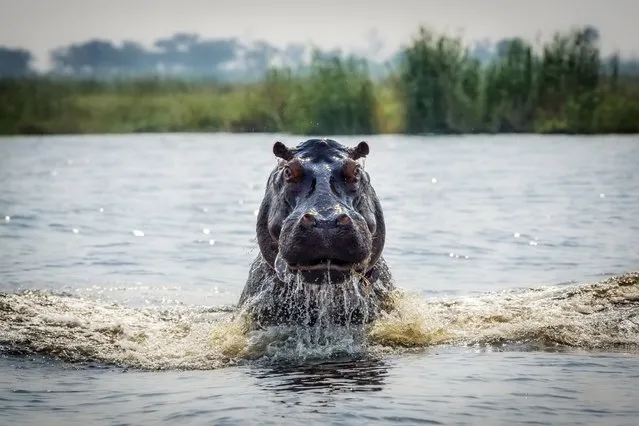
“Hippo Chase”. As we approached the camp the Selinda Reserve of northern Botswana our boat passed by a hippo resting in the water. I turned around to look back at the boat's wake and saw the hippo charging after us! The hippo must've been tired from an all-nighter because he was angry. (Photo and caption by Curtis Simmons/National Geographic Photo Contest)

“Hippo Chase”. As we approached the camp the Selinda Reserve of northern Botswana our boat passed by a hippo resting in the water. I turned around to look back at the boat's wake and saw the hippo charging after us! The hippo must've been tired from an all-nighter because he was angry. He rose way up out of the water three times trying to chase our boat! He was coming at us with such force that he created a wake of his own. Photo location: Selinda Reserve of northern Botswana. (Photo and caption by Curtis Simmons/National Geographic Photo Contest)
Details
06 Nov 2014 08:59:00
Alejandro Zelayaran, 43, dressed as Santa Claus, wears a protective face shield as he poses for a photograph on a street in Mexico City, Mexico, December 3, 2020. “Faith and hope must move the heart of the humanity”, said Zelayaran, who will don a face shield when he distributes dolls and other gifts at an orphanage in Mexico City. “I want to see families taking care of each other and knowing that even from afar, love and hope always survive”. (Photo by Edgard Garrido/Reuters)

Alejandro Zelayaran, 43, dressed as Santa Claus, wears a protective face shield as he poses for a photograph on a street in Mexico City, Mexico, December 3, 2020. “Faith and hope must move the heart of the humanity”, said Zelayaran, who will don a face shield when he distributes dolls and other gifts at an orphanage in Mexico City. “I want to see families taking care of each other and knowing that even from afar, love and hope always survive”. (Photo by Edgard Garrido/Reuters)
Details
28 Feb 2021 09:51:00
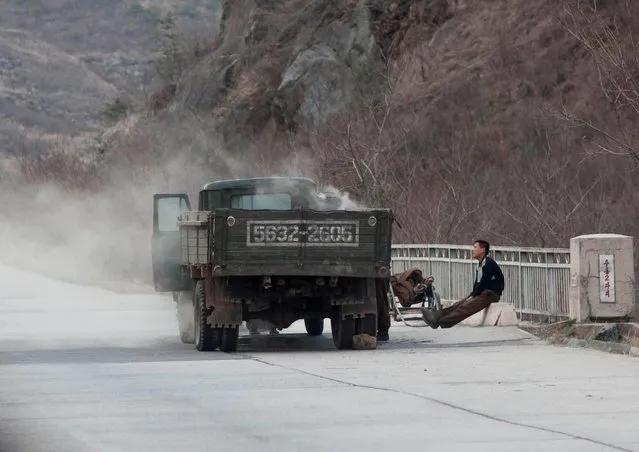
The kind of scene you can see along the highway. Overloaded trucks but broken down with lot of smoke coming out... I was allowed to make those pics as after lunch, my guides were enjoying the confort of the bus seats and snoring... (Photo by Eric Lafforgue/Exclusivepix Media)

Taking the highways in North Korea is a great experience as it allows to see the daily life of the country not controled by the government like in Pyongyang. They connect the main towns of the countries and are totally empty of cars. Here: The kind of scene you can see along the highway. Overloaded trucks but broken down with lot of smoke coming out... I was allowed to make those pics as after lunch, my guides were enjoying the confort of the bus seats and snoring... (Photo by Eric Lafforgue/Exclusivepix Media)
Details
24 Jul 2017 09:19:00
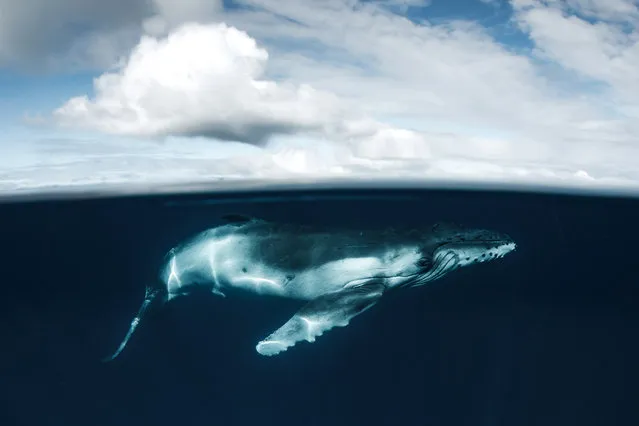
The images were taken off the coast of Tonga in the South Pacific. Photographer Grant Thomas said: “Through my images I aim to show off the amazing life we have on our planet in hope of inspiring more people to experience it for themselves and, most importantly, care for it. There is nothing to be afraid of with the humpback whales, as these animals are some of the most majestic and peaceful creatures in the sea. They will often be very curious of people in the water and will even seek out interactions with us”. (Photo by Grant Thomas/Caters News Agency)

The images were taken off the coast of Tonga in the South Pacific. Photographer Grant Thomas said: “Through my images I aim to show off the amazing life we have on our planet in hope of inspiring more people to experience it for themselves and, most importantly, care for it”. (Photo by Grant Thomas/Caters News Agency)
Details
28 Nov 2019 00:03:00
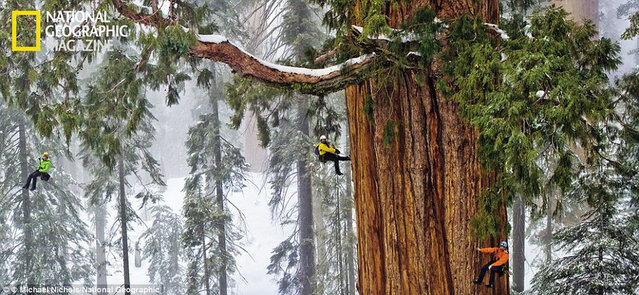
Tree 'The President'

The President tree is the name of a giant sequoia located in the Giant Forest of Sequoia National Park in the United States, east of Visalia, California. The tree is believed to be at least 3,200 years old.
The tree was named after President Warren G. Harding in 1923. Nearby trees include Chief Sequoyah, the 27th largest giant sequoia in the world, and the Congress Group, two dense stands of medium sized sequoias that represent the "House" and "Senate".
Details
31 Mar 2013 10:13:00
Sculpture By Jessica Joslin

More great and peculiar work from Chicago based sculptor Jessica Joslin. Joslin assembles her hybrid creatures from objects found in obscure junk shops, flea markets, attics, taxidermy supply houses, specialty hardware distributors…or even just walking through the woods. “Miniature machine bolts, springs and couplings comprise anatomical structures. Many of the beasts have hidden movements: a spring loaded beak, snapping jaws, jointed legs and adjustable tails. Some creatures are free-standing but have mechanisms to allow for movement or multiple positions.”
Details
03 Nov 2013 14:28:00
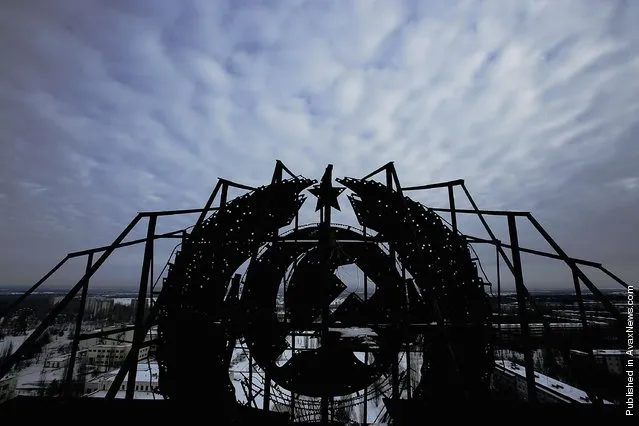
Chernobyl

Scaffolding holding a remnant of the Soviet Union, the hammer and sickle, is seen on a rooftop of an abandoned building in the town of Pripyat on January 25, 2006 near Chernobyl, Ukraine. The town of Pripyat, deserted since the 1986 catastrophe, once housed 30,000 people, the majority of being workers from the Chernobyl Nuclear Power Plant. Days after the catastrophe the inhabitants were relocated to other locations in the Soviet Union. The town of Pripyat has remained uninhabited since. Prypyat and the surrounding area will not be safe for human habitation for several centuries. Scientists estimate that the most dangerous radioactive elements will take up to 900 years to decay sufficiently to render the area safe.
Details
14 Mar 2011 10:20:00