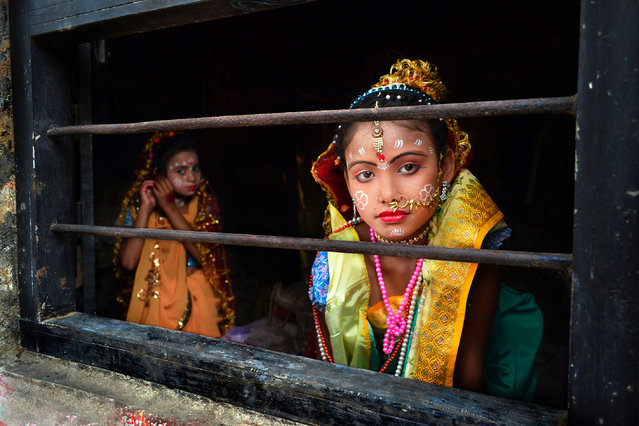
“Festive preparation”. Baghnapara, Bardhaman, West Bengal, India. Two girls prepare for the Gajan festival. They will perform a play based on Indian mythology. (Photo by Krishnasis Ghosh)
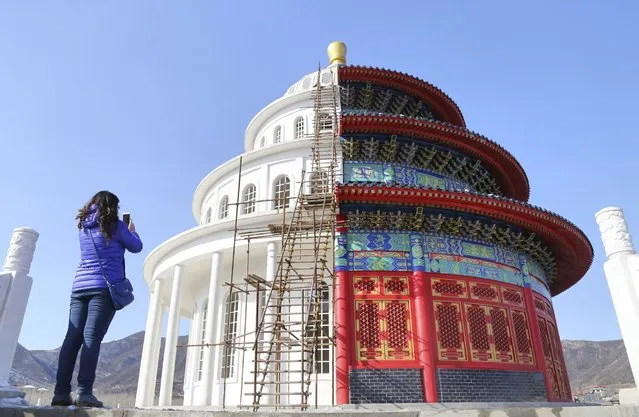
A woman takes pictures with her mobile phone at a building, which is made by half of a replica of the Qinian Hall of the Temple of the Heaven (R) and half of a western building, at a studio for productions of films and television shows on the outskirts of Shijiazhuang, Hebei province, China, December 3, 2015. (Photo by Reuters/Stringer)
From towering elephants to tiny insects, photographers will be offering a rare insight into the natural world at this year’s Wildscreen Photography Festival 2014. The festival, formerly known as WildPhotos, is the UK’s largest wildlife photography show. The Wildscreen Photography Festival 2014 will be taking place between 24-26 October at London’s Royal Geographical Society. (Photo by Sam Hobson/Wildscreen Photography Festival 2014)
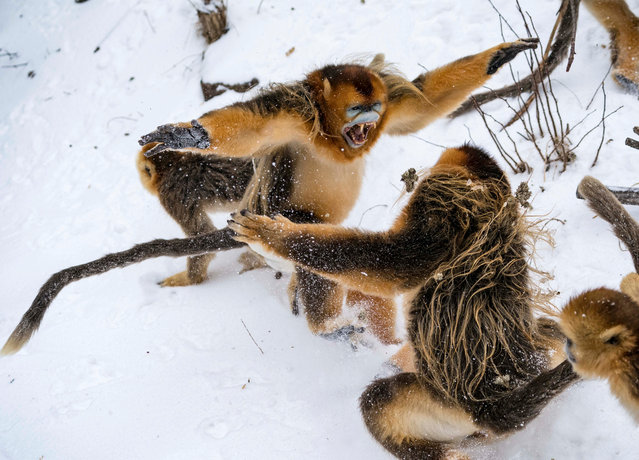
Golden monkeys play at a conservation base in Shennongjia, central China's Hubei Province, January 26, 2018. The golden monkey conservation base witnessed a snowfall recently. (Photo by Du Huaju/Xinhua/Barcroft Images)
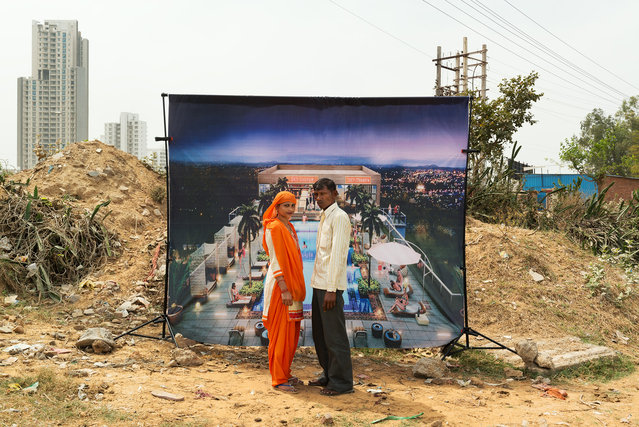
Inspired by traditional Indian travelling photography studios, Arthur Crestani photographed the inhabitants of Gurgaon, a city built almost entirely by private companies. Arthur Crestani’s “Bad City Dreams” contrasts the glossy ideal sold by developers with urban reality. Here: Luxury Living Bhiwadi: “Sky Club on 18th Floor”. (Photo by Arthur Crestani/The Guardian)
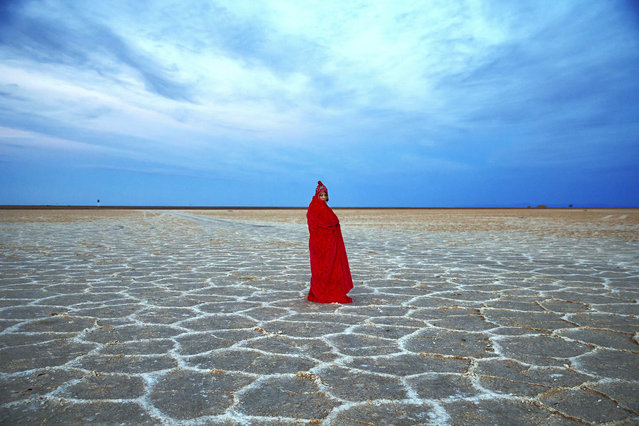
In this picture taken on Thursday, December 1, 2016, an Iranian woman covers herself with a blanket due to the cold, while visiting Khour salt lake during her tour of the Mesr desert about 305 miles (500 kilometers) southeast of the capital Tehran, Iran. Deserts make up parts of Iran which have recently become tourist destination for young Iranians looking for a break on their weekend. The increase in tourists to the desert has stimulated economic growth in the area. (Photo by Ebrahim Noroozi/AP Photo)
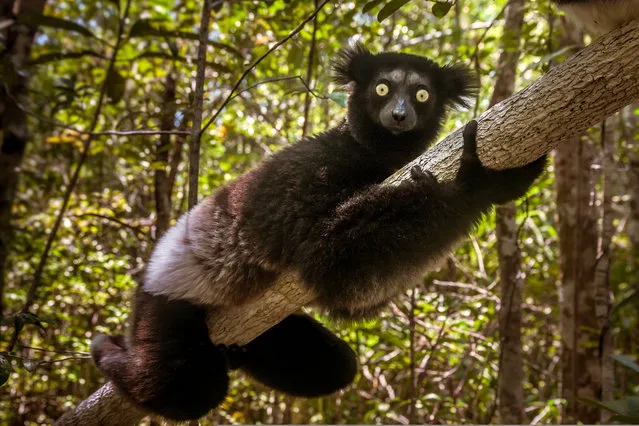
The secretive indri (Indri indri) of Madagascar, the largest living lemur. It is also critically endangered and highly evolutionarily distinct with no close relatives, which makes its branch one of most precarious on the mammal evolutionary tree. In the likely event that the indri goes extinct, we will lose 19m years of unique evolutionary history from the mammal tree of life. (Photo by Pierre-Yves Babelon/Aarhus University)