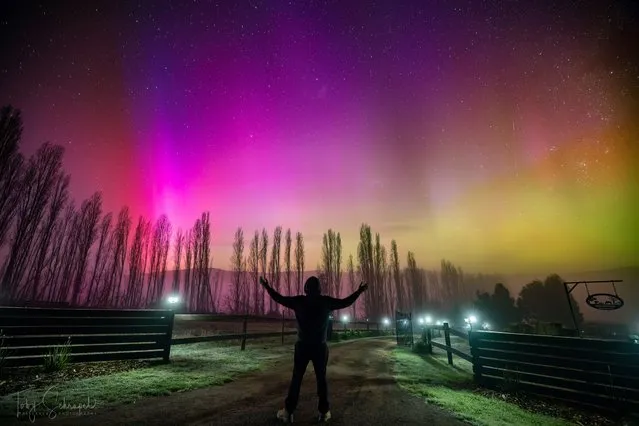
A person looks up at the Aurora Australis in Judbury in the Huon Valley, Tasmania on April 24, 2023. (Photo by Toby Schrapel freelance photography/The Guardian)
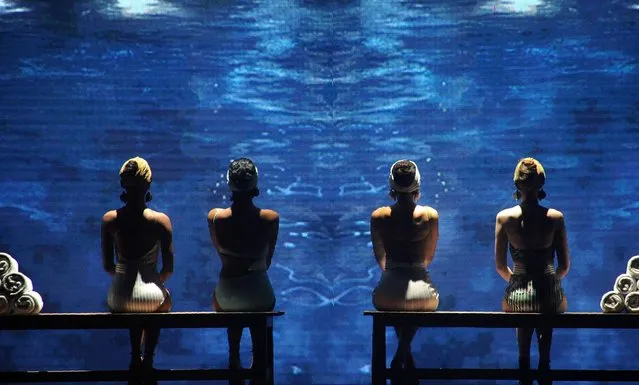
Aerialists of the Hungarian troupe Vincze Tunde Production perform on the opening night of Strand Festival in Zamardi, Hungary, 20 August 2025. (Photo by Tamas Vasvari/EPA)
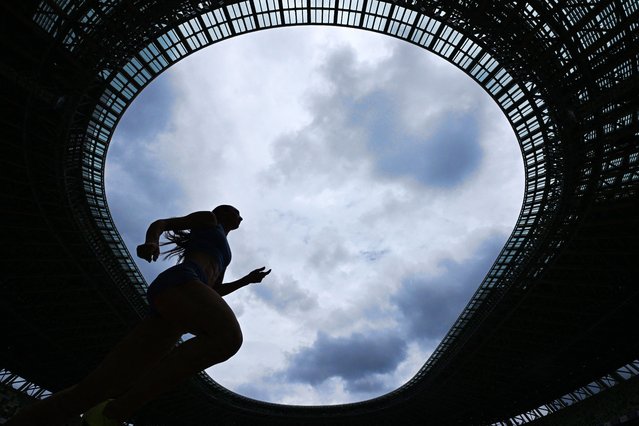
An athlete takes part in a warm-up around the track of the National Stadium in Tokyo on September 12, 2025, ahead of the World Athletics Championships. (Photo by Kirill Kudryavtsev/AFP Photo)
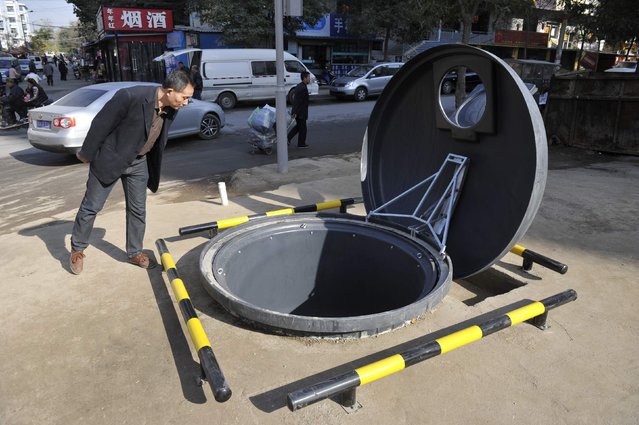
A resident looks into a newly-built giant trash can, partially buried underground, next to a street in Taiyuan, Shanxi province November 6, 2014. The trash can, which has a diameter of 1.9 meters and a depth of 2.8 meters, could contain approximately 10 cubic metres of garbage. It was built to replace an open-air garbage dump site, local media reported. (Photo by Reuters/Stringer)
Indian models showcase creations by designer Shivan & Naresh during the Lakme Fashion Week (LFW) Winter/Festive 2016 in Mumbai on August 27, 2016. (Photo by Sujit Jaiswal/AFP Photo)
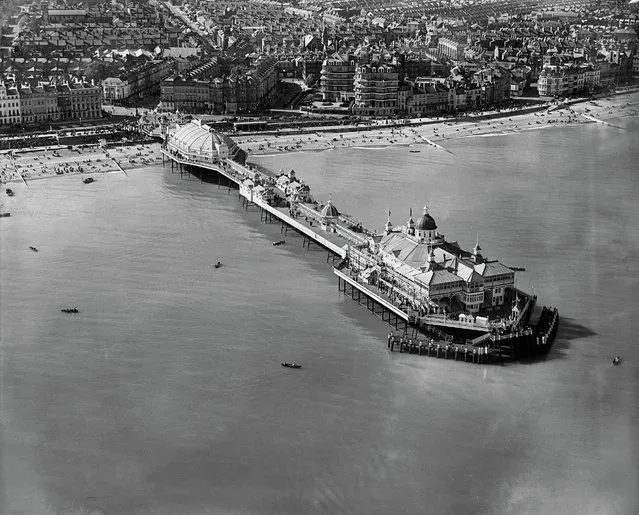
While the lido was described as bringing “modernism to the masses” on the British coast it was just the latest example of a trend that had been developing since Victorian times – transforming seaside towns into resorts for leisure and entertainment. In the latter half of the nineteenth century, the fashion was for local authorities to build great piers stretching from the promenade out into the sea. The Eastbourne Pier, pictured here in May 1931, was erected between 1866 and 1870 to an ingenious design by Eugenius Birch, which saw the structure sitting on special cups allowing the supporting struts to “move” in bad weather. Arranged on the pier's 1,000-foot length were kiosks, a theatre, a ballroom and a camera obscura. 1931. (Photo by Aerofilms Collection via “A History of Britain From Above”)