Loading...
Done
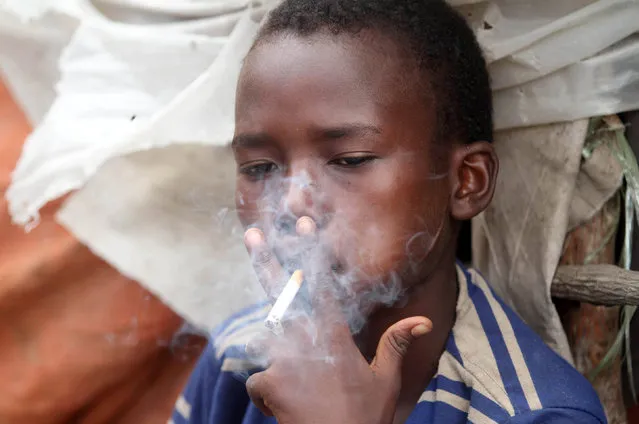
Abdulahi Yaroow, 13, smokes a cigarette while chewing khat at the same time in Mogadishu August 10, 2014. (Photo by Thomas Mukoya/Reuters)

Abdulahi Yaroow, 13, smokes a cigarette while chewing khat at the same time in Mogadishu August 10, 2014. Grown on plantations in the highlands of Kenya and Ethiopia, tonnes of khat, or qat, dubbed “the flower of paradise” by its users, are flown daily into Mogadishu airport, to be distributed from there in convoys of lorries to markets across Somalia. Britain, whose large ethnic Somali community sustained a lucrative demand for the leaves, banned khat from July as an illegal drug. This prohibition jolted the khat market, creating a supply glut in Somalia and pushing down prices, to the delight of the many connoisseurs of its amphetamine-like high. (Photo by Thomas Mukoya/Reuters)
Details
28 Aug 2014 10:35:00
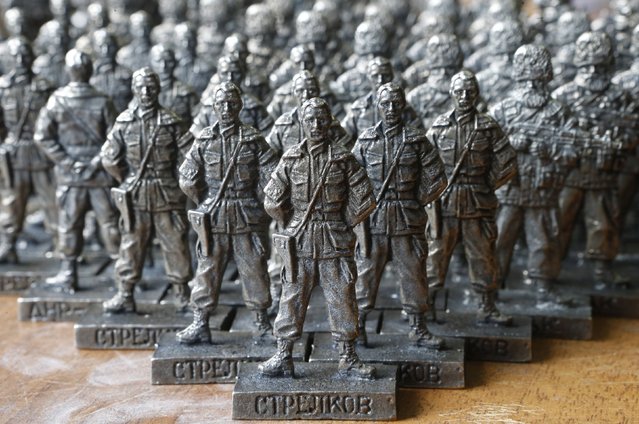
Figurines of former pro-Russian separatist commander Igor Strelkov from the collection entitled “Toy Soldiers of Novorossiya” are on display at a workshop in Moscow August 29, 2014. (Photo by Sergei Karpukhin/Reuters)

Figurines of former pro-Russian separatist commander Igor Strelkov from the collection entitled “Toy Soldiers of Novorossiya” are on display at a workshop in Moscow August 29, 2014. A Moscow-based maker of toy soldiers has sought inspiration for his creations from Ukrainian rebels fighting government troops in the east of Ukraine. Toy soldier maker, Timur Zamilov, displayed his new collection of rebel fighters cast in metal on Friday, before they are due to go on sale. His new collection is entitled “Toy Soldiers of Novorossiya” (New Russia), a reference to regions in eastern Ukraine where pro-Russian separatist fighters want full independence. Zamilov's selection includes models of Cossack soldiers, volunteers, soldiers bearing anti-aircraft missiles and even a miniature of prominent rebel leader Igor Strelkov. (Photo by Sergei Karpukhin/Reuters)
Details
01 Sep 2014 10:21:00
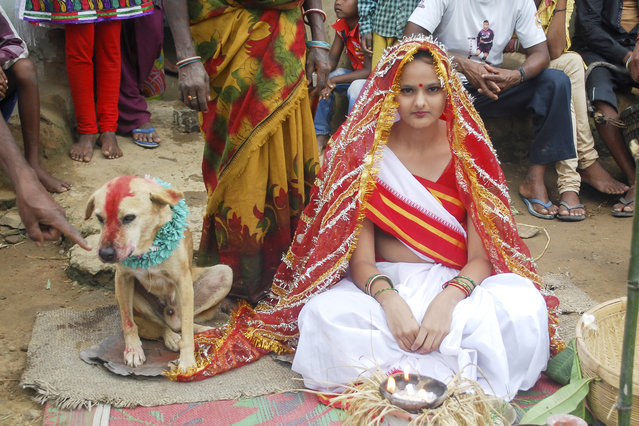
Mangli Munda poses on her wedding day with a stray dog in Jharkhand, India on August 30, 2014. An 18-year-old Indian girl has married a stray dog as a part of a tribal ritual designed to ward off an evil spell. (Photo by Barcroft Media/ABACAPress)

Mangli Munda poses on her wedding day with a stray dog in Jharkhand, India on August 30, 2014. An 18-year-old Indian girl has married a stray dog as a part of a tribal ritual designed to ward off an evil spell. Village elders hastily organised the wedding between Mangli Munda and the canine as the teenager is believed to be bringing bad luck to her community in a remote village in Jharkhand state. Mangli's father Sri Amnmunda agreed and even found a stray dog named Sheru as a match for his daughter. And while Mangli was a hesitant bride, she believes that the ceremony will help ensure that her future human husband will have a long life. (Photo by Barcroft Media/ABACAPress)
Details
04 Sep 2014 08:31:00
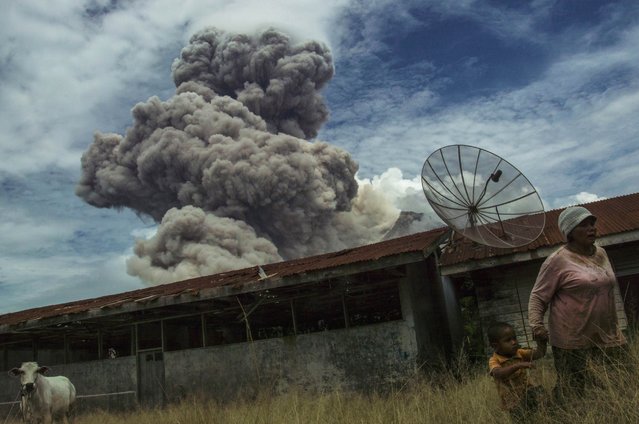
In this photograph taken on April 1, 2015, an Indonesian resident and child walk away from an abandoned school building as Mount Sinabung erupts in Karo district on the Indonesian island of Sumatra. According to authorities about 3,500 people were displaced after the February 2014 eruption of Mount Sinabung volcano and many are still living in evacuation centers as the volcano remains active. (Photo by Sutanta Aditya/AFP Photo)

In this photograph taken on April 1, 2015, an Indonesian resident and child walk away from an abandoned school building as Mount Sinabung erupts in Karo district on the Indonesian island of Sumatra. According to authorities about 3,500 people were displaced after the February 2014 eruption of Mount Sinabung volcano and many are still living in evacuation centers as the volcano remains active. (Photo by Sutanta Aditya/AFP Photo)
Details
04 Apr 2015 10:32:00
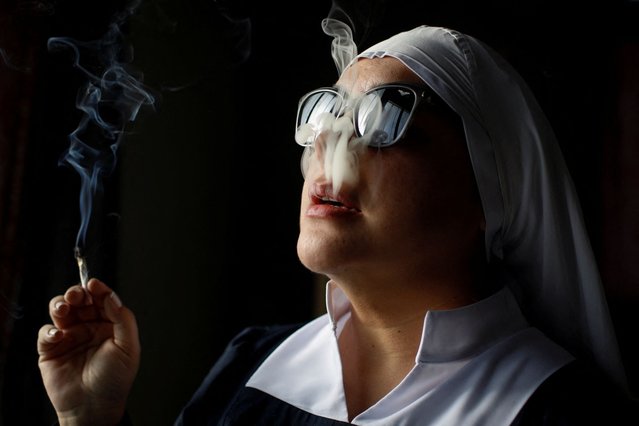
A member of Sisters of the Valley, a non-religious international group founded in 2014 which has pledged to spread the gospel of the healing powers of cannabis, who uses the moniker “Sister Bernardet” online and asked not to give her name for fear of reprisal, smokes a joint at the Sisters of the Valley's farm on the outskirts of a village in central Mexico on September 3, 2023. (Photo by Raquel Cunha/Reuters)

A member of Sisters of the Valley, a non-religious international group founded in 2014 which has pledged to spread the gospel of the healing powers of cannabis, who uses the moniker “Sister Bernardet” online and asked not to give her name for fear of reprisal, smokes a joint at the Sisters of the Valley's farm on the outskirts of a village in central Mexico on September 3, 2023. (Photo by Raquel Cunha/Reuters)
Details
22 Sep 2024 03:53:00
Tunnel-Boring Machine

A worker prepares the “Cutter Head” of the Port Tunnel boring machine for attachment to the tunneling machine on September 1, 2011 in Miami, Florida. The $45 million machine is longer than a football field and about as tall as a four-story building and it will carve the twin tunnels connecting Watson Island and Dodge Island. The the new $1 billion Port of Miami tunnel is expected to be completed in May of 2014. (Photo by Joe Raedle/Getty Images)
Details
02 Sep 2011 10:02:00
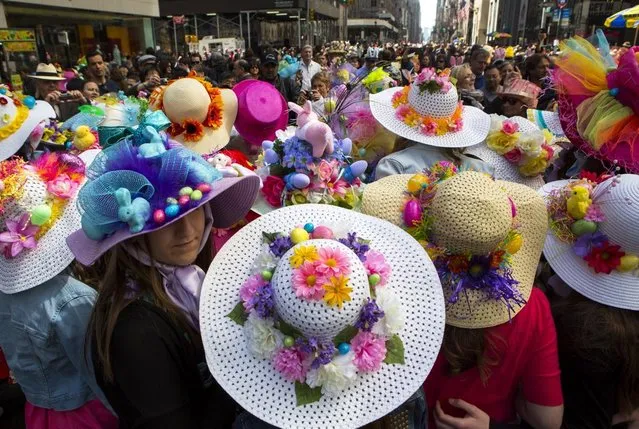
Easter Parade And Bonnet Festival In New York City

On Easter Sunday, (April 20, 2014) you have the opportunity to see Easter bonnets to the New York City extreme as "paraders" wander along Fifth Avenue from 49th to 57th Streets. The area around St. Patrick's Cathedral is the ideal place to see the parade.
Details
24 Aug 2014 18:30:00
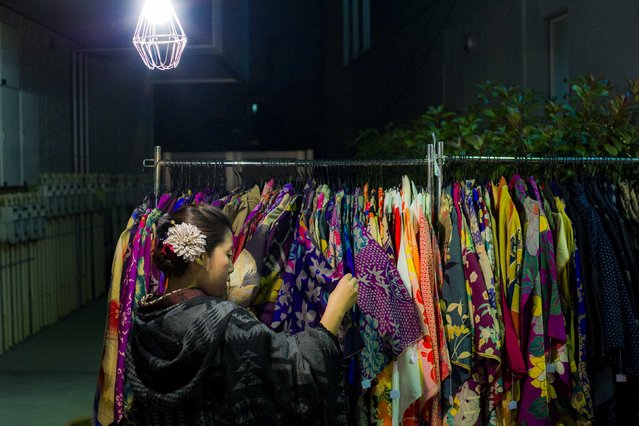
A woman browses through kimonos for sale at Boroichi flea market in Tokyo December 15, 2014. In the 16th century, Boroichi was a place for farmers to buy and sell rags, known as boro, for mending clothes and weaving sandals. Now in its 436th year, the original spirit lingers, with about 700 stands hawking fabric, used clothes and piles of rags. Others sell kitchen tools, pottery, seaweed and spices. (Photo by Thomas Peter/Reuters)

A woman browses through kimonos for sale at Boroichi flea market in Tokyo December 15, 2014. In the 16th century, Boroichi was a place for farmers to buy and sell rags, known as boro, for mending clothes and weaving sandals. Now in its 436th year, the original spirit lingers, with about 700 stands hawking fabric, used clothes and piles of rags. Others sell kitchen tools, pottery, seaweed and spices. About 200,000 people flock to the market, which is only open for four mid-winter days a year – two in December and two in January. (Photo by Thomas Peter/Reuters)
Details
19 Dec 2014 12:50:00